Best japanese petty knife: what it is & how to choose
What counts as a Japanese petty knife?
The best japanese petty knife is usually the one that vanishes in your hand and makes small prep feel unfairly easy. In practice, that means a compact blade that’s quick, pointed, and simple to steer, not a tiny chef’s knife pretending it can do everything. A japanese petty knife is a versatile, compact tool built for precision tasks like peeling, trimming, and slicing smaller ingredients.
A petty knife lives in a very specific size lane. It’s smaller than chef's knives but larger than paring knives, most often in the 5.5–6 inch range. The name “petty knife” likely comes from a French word, petit, meaning “small,” which fits the job better than the vibe.
In Japanese knife lineups, the japanese petty bridges the gap between board work and in-hand detail. It handles the stuff that’s too fussy for a gyuto, but too “big picture” for a paring knife. That in-between zone is where a lot of real cooking happens.
Why not just use chef's knives?
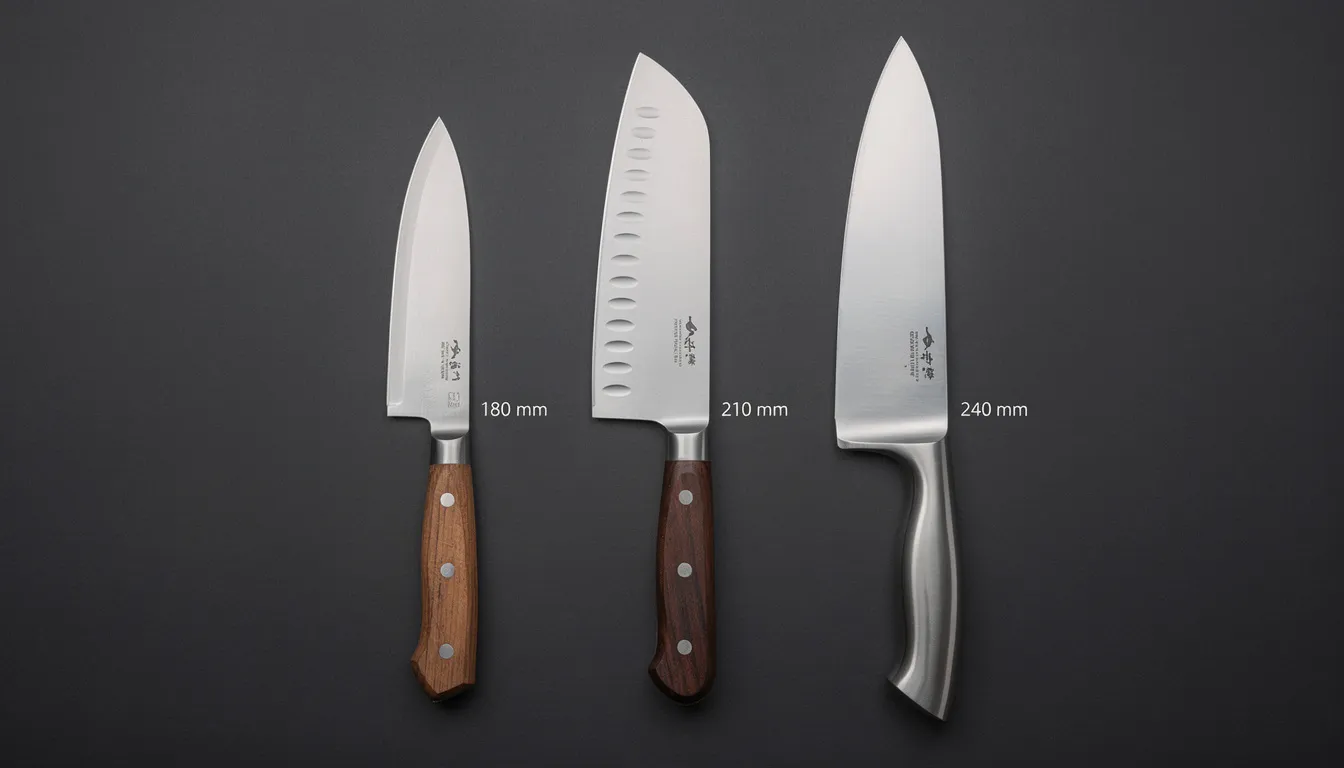
A gyuto (or a western style chef knife) is built to cover ground: 180/210/240 mm lengths, long strokes, and clean board contact. But there’s a point where more blade becomes more awkward—especially when the cut is delicate or your workspace is tight. The Gyuto is a larger, all-purpose knife, while the Petty is intended for detailed and delicate tasks that the Gyuto is too big for.
A petty knife can still do plenty of board work. Petty knives can handle many of the same tasks as chef's knives, like mincing shallots, chopping herbs, and cutting smaller fruits and vegetables. The difference is it does them with less “swing,” so the tip stays exactly where you put it.
It also shines in cramped reality: small apartment counters, crowded prep stations, or a cutting board wedged between a rice cooker and a sink. That’s where compact control turns into speed.
How did petty knives show up in Japan?
Petty knives weren’t born as a “traditional” form like yanagiba or deba. Petty knives were created in Japan in the late 19th century in response to Western-style utility knives. Japanese makers grabbed the idea—small utility knife—and tuned it to Japanese geometry and cutting feel.
That tuning shows up in the profile. A japanese petty is typically pointed, narrow, and agile, with a tip that wants to do precise work. It’s a simple shape, but it changes how the knife moves through soft ingredients like mushrooms, scallions, and citrus.
By 2026, more cooks also understand why this form exists. The petty isn’t “a small gyuto,” and it’s not “a big paring knife,” either. It’s a purpose-built middle tool that earns its drawer space.
What blade length makes sense?
Most japanese petty knife models sit between 120 mm and 150 mm. Those numbers look close on paper, but they feel different in use—especially when switching between in-hand work and cutting board work. Japanese petty knives typically range in length from 120mm to 150mm.
120 mm is a sweet spot for delicate detail. It shines at peeling, trimming silver skin, and turning small vegetables where the tip stays in a tight orbit. The ideal blade length for delicate work is 120mm.
150 mm is the “do-most-things” length. It gives you enough edge to slice an apple cleanly, portion chicken thighs, or cut a small onion without feeling cramped. The 150mm length is suitable for general use.
For beginners, the most forgiving pick is often a 150 mm petty in stainless or semi-stainless. For beginners, a stainless or semi-stainless steel petty knife with a blade length of 150mm is ideal for balance. It’s long enough to learn technique and still short enough to stay controlled.

Where does a petty knife beat a paring knife?
A paring knife is designed for tight in-hand work: tourné cuts, peeling, detail carving. A japanese petty knife can do that too, but it usually brings more slicing length, a finer tip, and a lighter feel through product. Petty knives are often compared to paring knives, but they are generally sharper, lighter, and more versatile.
The biggest upgrade is reach. A petty knife splits the difference between fingertip control and board stability. It’s the tool that can trim a strawberry in the air, then drop to the cutting board and finish the dice without a gear change.
This is why home cooks often latch onto the petty early. Home cooks prefer the Japanese petty knife for ease of use and precision on small items. It’s a practical antidote to clutter and over-tooling.
What jobs are petty knives made for?
A petty knife is essentially a compact utility knife with Japanese geometry. Japanese petty knives are nimble and versatile, making them suitable for a wide range of kitchen tasks. The petty knife is often used for tasks that are too small for a chef's knife but too large for a paring knife.
In daily prep, petty knives are ideal for precision tasks such as peeling, trimming, and slicing smaller ingredients. They’re also great for quick board tasks: Petty knives can be used for mincing shallots, chopping herbs, cutting scallions, and breaking down whole chickens. That last bit needs a footnote: portions and joints, yes; bones, no.
Professional chefs keep a petty close for finesse. Professional chefs rely on petty knives for delicate protein preparation and intricate garnishing. When a garnish needs clean edges, the narrow blade and tip give control without forcing your wrist into awkward angles.
What about straight vs wavy edges?
Most japanese petty knife options are straight-edged, and for good reason: straight edges sharpen cleanly and bite predictably into onions, herbs, and citrus. The blade of a petty knife can be either straight-edged or wavy-edged. Straight edges are suitable for general peeling.
Wavy edges sometimes show up for softer skins like tomatoes. Wavy edges can help with cutting softer items like tomatoes, but they also complicate sharpening and can feel grabby during fine slicing. In a japanese petty, that tradeoff usually favors straight edges almost every time.
In the forge, edge style also affects finishing. A clean straight edge lets the maker keep geometry consistent all the way to the tip, and that consistency is where sharpness starts feeling “real,” not theoretical.
What steel works best in 2026?
Steel choice is less about hype and more about matching habits. Carbon steel can deliver extreme sharpness and strong edge retention, but it demands diligent cleaning to prevent rust. That’s a great match for someone who wipes the blade, doesn’t leave it wet, and actually enjoys patina.
For most home kitchens, stainless steel is the calmer option. Stainless steel types like VG-10 and AUS-8 are rust-resistant and easy to maintain, making them suitable for most home cooks. In a petty knife that’s constantly meeting citrus, wet herbs, and fruit juice, this matters more than people like to admit.
A practical rule still holds: if the knife will live on a cutting board near the sink, stainless steel reduces stress. If it’ll be carried, wiped, dried, and stored properly, carbon steel can be ridiculously rewarding. Either way, geometry beats buzzwords.
Where do Tamahagane and Damascus fit?
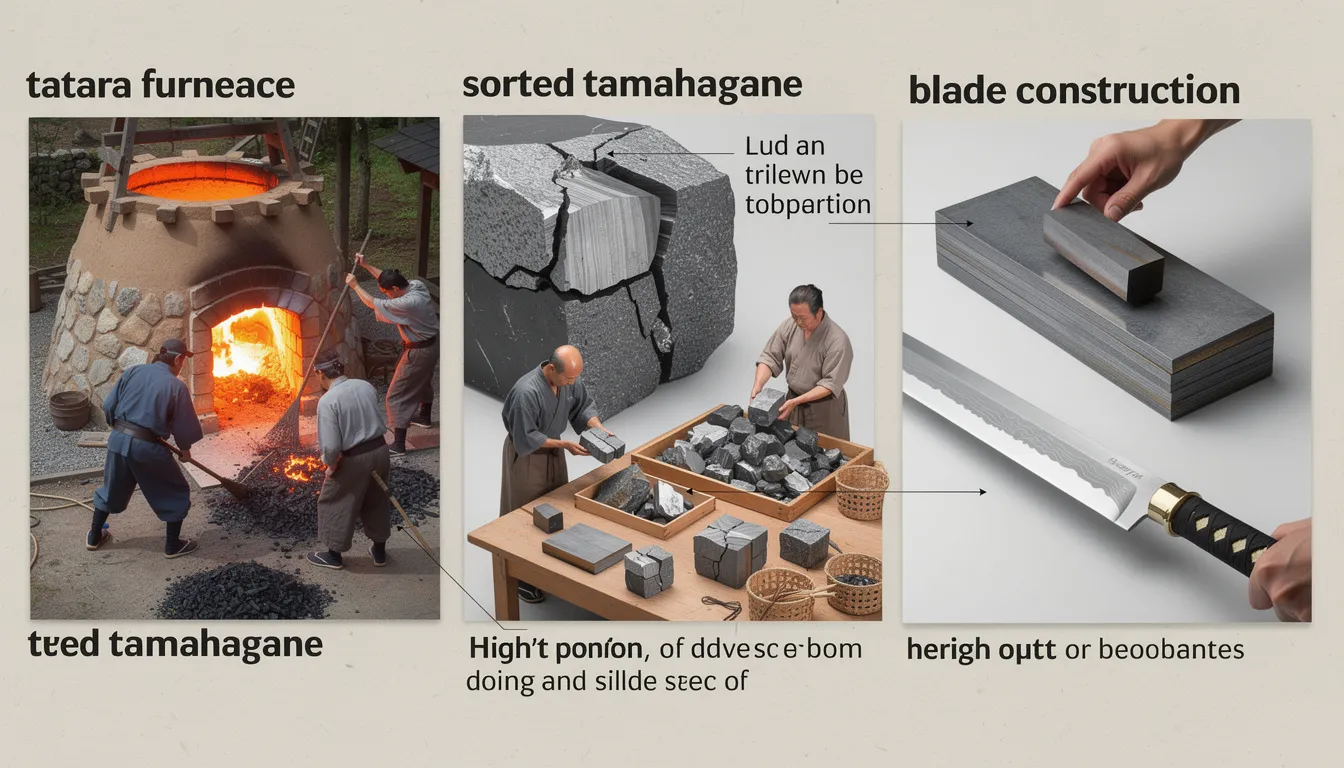
Some people fall into japanese knives through materials, not shapes. Tamahagane, wrought-like fibrous iron, and forge-welded laminate construction carry a story you can literally see on the blade. In craft shops, these materials aren’t just decoration—they change how a maker thinks about grinding, heat, and finishing.
Tamahagane is traditionally tied to a bloomery process and careful sorting, which affects how the blade is built. Fibrous iron as clad can put a softer jacket around a harder core, changing feedback on the stones and how the knife “rings” in cutting. Damascus (pattern-welded layers) can look stunning, but the cutting performance still comes from the core steel and the grind.
In MG Forge work, these choices start long before a knife looks pretty. The pattern is a bonus; the daily value is thinness behind the edge and stable heat treated results. That’s what decides whether a petty feels lively or dead.
What does hardness change in a petty?
Japanese-style knives, including petty knives, are generally harder and thus more brittle than Western-style knives. That hardness helps the edge hold a crisp apex, which is why even a small petty knife can feel ultra sharp on onions and herbs. But it comes with a limit.
Japanese petty knives are generally harder and more brittle than Western-style knives, making them less ideal for cutting through bones or hard produce. Japanese petty knives are not ideal for hacking through bones or tackling harder produce, as they might chip. The petty’s thin tip is especially vulnerable if it hits a pit, a frozen edge, or a hard seed at speed.
Here’s the hook: hardness isn’t “good” or “bad.” It’s a dial. The maker tunes the heat treatment to balance bite, retention, and toughness, and your job is not to use a petty like a cleaver.
What geometry makes a petty feel sharp?
“Sharp” isn’t only the last micron at the edge. It’s also how thin the blade is behind the edge, how it tapers to the tip, and how smoothly it moves food sideways. The blade profile of a Japanese petty knife is typically pointed, narrow, and agile for control.
Most petty knives are double bevel, which makes them straightforward for general prep and ambidextrous use. They excel at push cuts, small rocking motions, and detail slicing where the tip leads. Single bevel knives still rule specific roles—yanagiba for sashimi, deba for fish breakdown—but the petty’s job is broad, not ceremonial.
A workshop note: when grinding a petty knife, the maker keeps a nervous eye on the tip. A thin grind makes shallots feel effortless, but too thin can feel twitchy and chip-prone. The best geometry stays confident without turning the point into a needle.
How do handles change control?
Handle shape matters more on a small knife than many people expect. A traditional Wa handle is light and typically octagonal, which often creates a forward-balanced feel and agile handling. That can make a 120–150 mm japanese petty knife pivot right where the pinch grip sits.
Western handles usually add a bit more weight and a fuller palm fit. For many cooks transitioning from Western chef's knives, that familiar contour reduces fatigue. For a practical utility knife, many people end up on a 150mm stainless steel petty with a Western handle.
Fit matters when you have larger hands. Some petty knives feel like toys if the handle is short, even when blade length is right. That’s where handle length and girth quietly decide whether a knife gets used daily or lives in a drawer.
Which petty knives are often recommended?
When people search for the best japanese petty knife, they usually want a shortlist that’s been proven on actual cutting boards, not just adored in product photos. A few models get repeated for good reasons, mainly consistent grinds and comfortable handling.
Common recommendations include:
Tojiro DP Petty/Utility Knife for sharpness, nimbleness, and comfort in use.
Mac Knife Professional Utility Knife for sharpness and ease of use.
Tojiro Fujitoro petty knife as a budget option, made with stainless steel and cobalt alloy.
There are also fit-based picks for hand size. The Takamura Hamono VG10 Stainless Steel Hammered Petty Knife is recommended for larger hands due to its longer handle. For smaller hands, the Miyabi 5000FC-D Damascus Steel knife is suggested as a small option, and the Kiya No. 160 Edelweiss Steel Japanese Petty Knife is also recommended due to its light design.
Worth noting: these are recommendations, not universal truths. Two petty knives with the same length can feel wildly different because of spine thickness, taper, and handle geometry.
How does a petty differ from other japanese knives?
Japanese knives are a family, and each shape has a job. The gyuto stays the all-rounder for board prep in 210–240 mm lengths. Yanagiba and sakimaru lean into long, single-bevel slicing for fish and sashimi, where finish and stroke matter. Deba is the heavier tool when breakdown needs strength and stability.
The petty sits below them as a detail knife. It trims sinew, cleans tenderloin, sections citrus, trims herbs, and slices garlic without crushing it. It can do many kitchen tasks, but it wisely avoids the bone-and-joint work that a deba was built for.
This is where knife ownership gets simpler. One gyuto plus one petty covers a shocking amount of home cooking. Add a bread knife, and maybe a heavier tool if the menu demands it—no need to collect other knives just to feel prepared.
What maintenance keeps the edge alive?
A petty knife rewards light, regular care. A petty knife should be sharpened using a whetstone or a ceramic sharpener. For most people, a medium stone for edge work and a finer stone for cleanup is enough to keep the knife feeling eager.
Between sharpenings, a honing rod can help maintain performance. In between sharpenings, you can use a honing rod to keep your knife in good shape. The caveat is pressure: Japanese-style knives are harder, so aggressive steeling can do more harm than good.
Storage isn’t optional if the blade is thin and hard. Storing knives on a magnetic knife holder is recommended to prevent dulling and damage to the blade. A good strip also keeps the edge from kissing other tools, which is a common cause of mystery micro-chips—especially when the knife gets shoved into a drawer like a steak knife.
What mistakes cause chips and frustration?
The most common mistake is asking a petty knife to do deba work. Petty knives are generally more delicate than chef's knives and are not recommended for cutting through bone or hard produce. The second mistake is twisting in a cut—especially in dense foods like carrots or squash—where the edge gets torqued and starts breaking at the apex.
Board choice and habits also matter. Hard boards and fast scraping motions dull edges quickly, and scraping with the edge itself can roll or chip a fine edge. Using the spine to move chopped food is slower, but it keeps the edge intact and your sharpness where it belongs.
From the forge side, there’s a pattern too: some people choose the hardest, thinnest option because it sounds “premium.” Harder can be better… until it isn’t. A slightly tougher, slightly thicker petty knife often wins in real home kitchens, especially when the steel is heat treated for balance rather than bragging rights.
What should “best japanese petty knife” mean?
By 2026, “best” is less about owning the fanciest steel and more about matching the knife to daily behavior. If the knife will be used for wet prep and stored on a rack, stainless steel and a 150 mm length are usually the safest bet. If it’ll be cherished, wiped constantly, and you actually sharpen often, carbon steel becomes a joy instead of a chore.
The best japanese petty knife also has to match hand size and grip style. A longer handle can transform comfort for larger hands, while a smaller, lighter build can reduce fatigue for smaller hands. The goal is a great knife you reach for every day, not a polished trophy with commitment issues.
In a small shop like MG Forge, that “best” conversation keeps circling back to three things: consistent heat treatment, honest geometry behind the edge, and a finish that doesn’t hide problems. Everything else—pattern, polish, even handle wood—is secondary to how the knife slices a shallot and feels doing it.
How do steel choice, geometry, and handling determine cutting performance in a Japanese petty knife?
A Japanese petty knife is a great knife for precision because a small blade stays light, thin, and controlled on a cutting board, and its cutting performance depends more on thin grind and a stable, heat treated edge than on a polished look; for wet prep and speed, softer stainless steel and stainless steel blades in stainless are calmer around fruits, vegetables, herbs, and meat, while steel that sharpens easily can still deliver great edge and sharpness if you sharpen and sharpen with good habits in Japan-inspired geometry, including a pointed tip and clean grind for slicing, chopping, mincing, peeling, trimming, and cutting vegetables without crushing. In practice, the shape and style help keep control and grip consistent near knuckles, and comfortably managing weight matters, especially for larger hands; pushing too hard, twisting, or breaking through hard parts when cutting chicken can cause a chip, so other knives (like a steak knife or santoku) may cover different tasks, while the petty stays versatile for crafted detail work and professionals who carry it for fine work; damascus can be clad over a core, but the point is performance, not hype, and MG Forge emphasizes that the line between sharp and fragile is a bit of geometry and heat treated balance (guys).