Japanese deba knife: uses, types, and single bevel
What is a japanese deba knife, really?
A japanese deba knife is a traditional tool built for one job first: breaking down fish. It’s meant for fish butchery—taking off fish heads, opening joints, and pulling clean fillets off the frame without the blade twisting off course. In 2026, a lot of cooks are hunting for “one knife that does everything,” but the japanese deba knife is basically the opposite: a specialist that wins by staying stubbornly narrow.
In practice, a deba knife announces itself the second it hits the cutting surface. Compared to a gyuto or other japanese style knives, it’s thicker, heavier, and built to move with controlled force rather than speed. That weight isn’t a defect; it’s a feature that keeps the blade steady when you’re working around bones.
A deba is also one of the three essential traditional japanese knives, alongside the yanagiba and usuba. That trio maps neatly onto whole fish, slicing (think sashimi), and cutting vegetables—each pattern with geometry tuned to its lane.
Where did the deba knife come from?
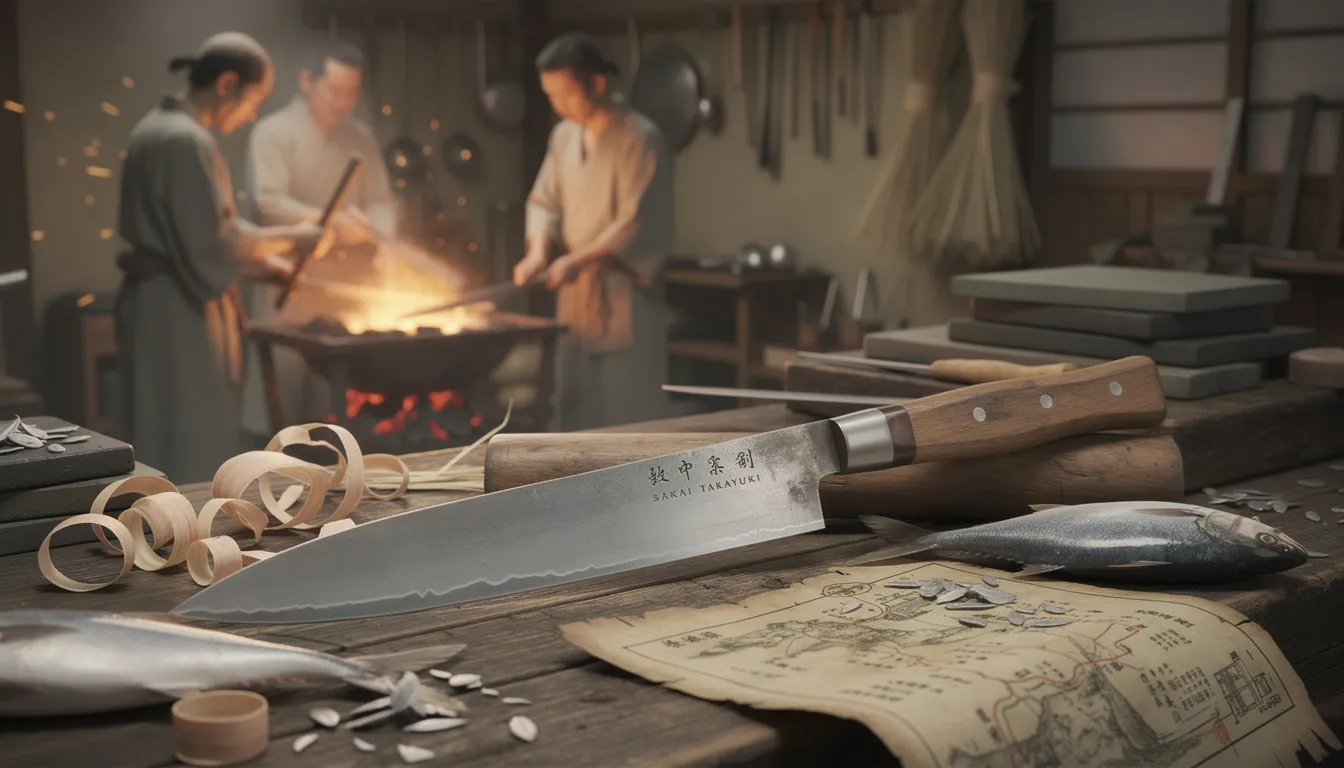
The deba has real history behind it, not just product-page mythology. Its roots are tied to the Genroku era, with Sakai city in Osaka known for knife production—names like Sakai Takayuki still echo that reputation today. The goal wasn’t novelty; it was reliability for fish prep, day after day.
Even the name carries a story. “Deba” is believed to have evolved from “Deppa,” a blacksmith nickname linked to distinctive teeth, which shaped how people talked about the blade shape. Names drift over centuries; the tool stayed remarkably consistent.
One reason the traditional deba held its ground is cultural: japanese cuisine has long treated fish as a whole ingredient. A deba knife supports using fish heads and bones for stocks and simmered dishes, not just trimming fillet and tossing the “non-photogenic” parts.
What makes deba geometry different?
A deba knife typically has a thick blade and a single bevel in its traditional form. That single beveled edge isn’t trivia; it changes how the knife tracks through flesh and along fish bones. When the geometry is right, the edge feels guided—less “freehand,” more “on rails.”
A detail people miss is the back of the blade, called urasuki, which is slightly concave. That concavity reduces drag and helps release the fillet during longer strokes, especially when you’re separating delicate flesh from bones without tearing.
Because of that geometry, debas are not the first pick for vegetables. The blade wants to wedge and steer, and a tall carrot doesn’t behave like a fish frame. For produce, other knives—bunka, kiritsuke, or gyuto—live in a more forgiving japanese style.
Why is the japanese deba knife so thick?
Deba knives are thicker and more durable than many japanese knives, and that’s exactly what lets them deal with fish bones. They’re designed to handle joints and tougher sections without chipping during normal fish work. This is also why a deba often carries more weight than a standard chef knife—mass helps with control, not chaos.
A simple kitchen rule: let the weight do the work. When you hit collar bones or contact the spine, pressure should be steady and vertical, not a sideways pry. The deba is tough, but lateral twisting is how people chip a sharp edge and then blame the steel.
A deba knife can also be used for poultry, especially joints and sectioning chicken. Still, it’s not a cleaver, and it shouldn’t be treated like one—thick bones are a different game than fish.

Which deba knives exist?
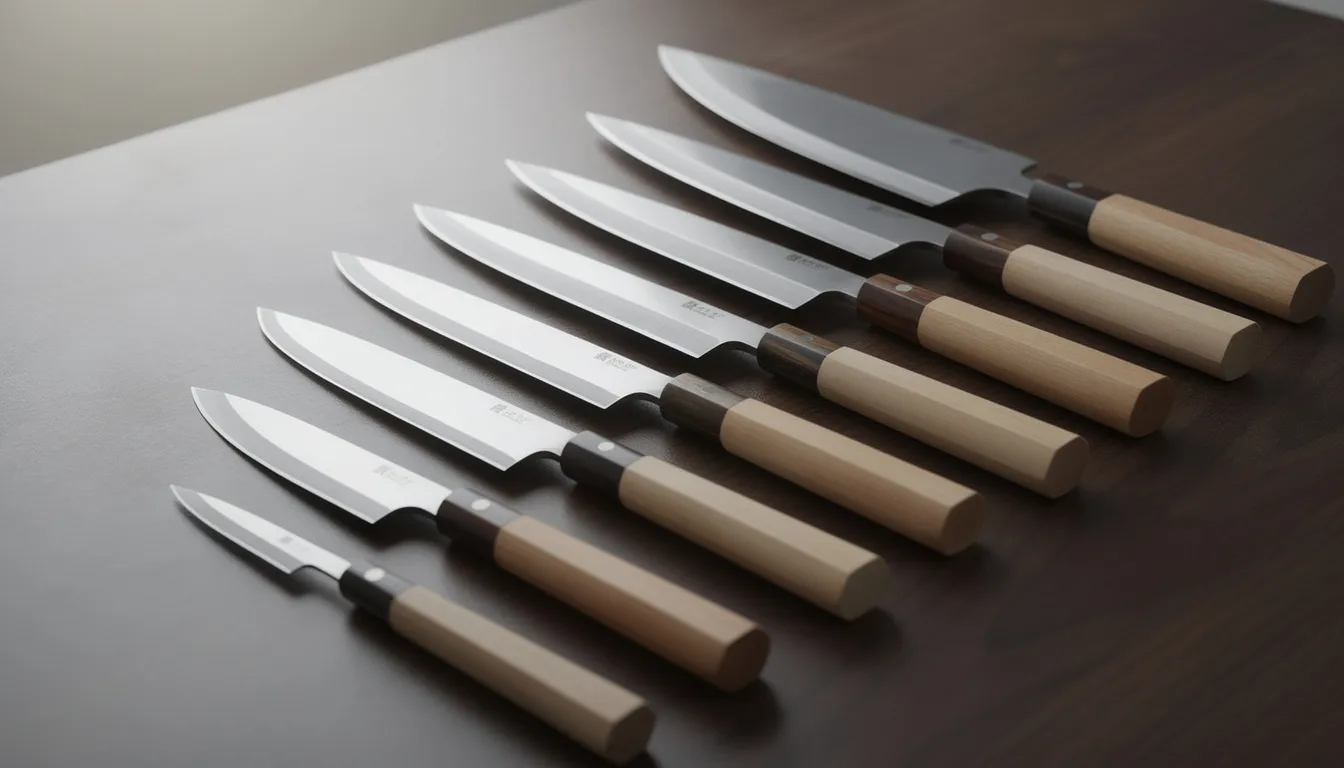
There are several deba knives, and the names actually tell you what the knife used is meant to do. A common lineup includes hon-deba (thickest for larger fish), ai deba (thinner for medium fish), ko deba (small fish), mioroshi deba (a hybrid that leans into cleaner filleting), and yo-deba—better known as the western deba. Having the list helps, but picking one still comes down to fish size and your comfort level with the grind.
The ai deba has a thinner and lighter blade than a regular deba. It’s often chosen when the work is mostly filleting fish with fewer bone-heavy cuts. The tradeoff is easier handling with a little less “confidence” when you’re right up against tougher structures.
Ko deba knives are smaller, generally with blade length around 105 mm to 120 mm. They’re great for small whole fish where a full-size deba would feel like bringing a sledgehammer to a thumbtack.
Then there’s mioroshi deba, a hybrid profile that leans toward cleaner slicing while still keeping deba strength. It’s a practical choice for cooks who break down fish and also want portions that look service-ready without swapping to a separate filleting knife.
How long should blade length be?
Deba knives come in a wide range, typically from about 105 mm to 300 mm in blade length. That range isn’t marketing; it reflects fish reality from small river fish up to bigger ocean species. Choosing “too big” usually makes precise cuts worse, not better.
For many home kitchens, 150–180 mm stays controllable. Professional fish prep often lands around 180–210 mm, balancing power and fine steering. Past that, the blade starts to demand a larger board, more space, and stronger technique—and it doesn’t politely ask.
Ko deba sits at the small end, while hon-deba scales up for bigger fish. A useful heuristic: match the knife length to the fish width so you can keep a cut continuous instead of constantly repositioning.
Single bevel or double bevel?
Traditional deba knives are single edged, and that’s the japanese style most people picture. A single bevel gives a clean, guided cut when following bones, but it also demands correct sharpening and correct hand orientation. In other words: it’s honest about your technique.
Western deba (yo-deba) knives are double-edged. That double bevel is more familiar to many cooks and can feel more versatile, especially if the knife gets shared between stations. Single edged knives dominate the tradition, but double-edged debas exist for practical reasons.
There’s also the not-small issue of handedness. A left handed deba knife is ground as a mirror image of the common right-handed version, with the bevel on the left side. Using the wrong one isn’t just awkward; it pulls the cut off line and makes skinning feel like fighting the knife instead of using a deba.
In a shop setting, left-handed grinds take extra attention because the geometry has to land clean on the opposite side. MG Forge occasionally gets asked for left handed layouts, and the constraint is always the same: keep the single-bevel steering true, not just “flipped and hoped.”
What steel makes sense for a deba knife?
Material matters because it changes sharpness and maintenance. Many deba knives are made from carbon steel, which asks for more care but rewards you with keen edges and satisfying stone feedback. Stainless steel options exist and can offer easier day-to-day life, but the feel on stones—and in the cut—won’t be identical.
In the forge world, steel choice is also about heat treatment consistency and intended abuse. A deba sees bone contact, so toughness and geometry work together; hardness alone doesn’t solve everything. Tight geometry can cut beautifully, but it can also invite chipping if you push it into the wrong job.
Some makers explore traditional inputs like tamahagane, fibrous iron cladding, or forge-welded damast patterns for visual depth. These can be gorgeous, but in practical terms the core steel and the grind decide how the knife behaves. If you’re chasing white steel or blue steel specifically, remember: the grind and heat treat still steer the outcome more than the marketing label.
For readers who like primary references on metallurgy, ASM International’s educational materials are a solid starting point: https://www.asminternational.org
Does the handle matter more than people think?
Yes—especially on a heavier knife. The handle’s material and shape directly impact safety and comfort when using a deba knife, because small rotations at the grip become big errors at the cutting edge. Oval vs D-shape can also change how stable the blade feels when it’s riding a backbone.
Many traditional handles use magnolia wood, often paired with a buffalo horn ferrule. Magnolia wood is light, stable, and comfortable even when wet, which fits fish prep conditions. It also helps keep the balance point from drifting too far back, which matters with a thick blade and a forward-working edge.
A quick shop note: when fitting handles, tiny alignment errors show up later as “the knife feels like it leans.” That sensation is usually geometry plus handle indexing fighting each other. Getting both right is what makes the grip feel like a sturdy grip instead of a compromise. MG Forge hears this most often from cooks who do repetitive fish work and want the knife to stay calm.
What is the deba knife used for in fish prep?
A deba knife is a traditional Japanese knife designed for filleting fish and breaking down whole fish. It’s essential knife territory for classic fish prep because it can fillet fish into three pieces and remove the head in a repeatable, clean workflow. That “three-piece fillet” approach is one reason the pattern never needed to reinvent itself.
Deba knives are primarily used for fish butchery and can also be used for poultry. They’re built to work through fish bones and joints efficiently, especially around collars, pin bones, and rib cages—places where a thinner blade can feel nervous or get deflected.
The knife used here is not a slicer like a yanagiba or sakimaru. For sashimi, the long, low-resistance draw cut belongs to yanagiba; deba is the breakdown tool that makes those clean slices possible later.
How is a deba used without crushing meat?
The biggest mistake is treating the deba like a western chef knife and sawing. A cleaner approach is short, confident pushes with the bevel guiding along structure, then lifting away. Keep the spine steady and let the weight fall through the cut instead of trying to manufacture speed.
It’s also worth remembering: sharpen the deba each time before filleting fish to ensure clean cuts and prevent crushing the fish flesh. A slightly dull edge doesn’t just slow you down—it bruises delicate meat and leaves rough surfaces that scream “I wrestled this fish.”
When the cut heads toward bones, pressure should go straight down. Sideways torque is what chips edges, even on a thick deba that feels “invincible.”
What care keeps carbon steel happy?
Deba knives should be washed and dried immediately after use to prevent rust and damage. Fish prep leaves salt and proteins that invite corrosion, especially near the heel where hands tend to pause. This is true for carbon steel knives in general, and debas don’t get a special exemption.
After washing, let the knife air-dry in a well-ventilated area to prevent moisture accumulation. Wiping helps, but trapped humidity under a towel can still cause spot rust, quietly, overnight, like it’s proud of itself.
If a carbon steel deba won’t be used again quickly, apply a thin coat of knife oil. For carbon steel deba knives, it’s also smart to rub the magnolia wood handle with food-safe mineral oil after washing to keep the wood stable over time.
Proper storage matters too: use a wooden saya or other blade cover to protect the edge and the single bevel face. And one clear don’t: debas should not be used to cut through frozen items, because that shock can damage the blade. Easy maintenance mostly means consistency, not magic.
How should deba knives be sharpened?
Deba knives require sharpening on a whetstone when needed, and single bevel makes stone work more specific. The goal is to maintain the main bevel’s flat contact while keeping the back clean, so the cutting edge still releases and tracks correctly.
In real sharpening sessions, most time goes into consistency, not speed. The bevel should meet the stone evenly, and the back should be touched lightly to manage the burr without over-flattening the urasuki. If the back gets treated like a wide flat plane, food release suffers and filleting becomes stickier than it needs to be.
A practical rhythm many cooks adopt is simple: touch up before fish work, then do a fuller session when small touch-ups stop restoring bite. That cycle matches how using a deba actually happens in kitchens.
How does a “good” deba feel in hand?
The best deba knives are defined by balance and sharpness, and being suited to the intended fish size. That last part is easy to ignore—an oversized hon-deba can feel impressive, but it may be the wrong tool for regular 1–2 kg fish.
A good deba also feels stable when the edge engages bones. It shouldn’t chatter, and it shouldn’t feel like it wants to roll off line. When grind, handle, and edge are right, the blade tracks like it has rails, even on tricky transitions near fish heads or small bones.
In MG Forge work, the most consistent feedback comes from cooks who notice the “quietness” of the cut. That calm feel usually comes from geometry that matches the job, not from flashy finishes or the loudest steel name on the tag.
What is a Japanese Deba knife used for?
It’s used primarily for breaking down whole fish: removing the head, opening joints, and filleting cleanly. The thick, single-bevel geometry supports controlled cuts along bones and helps you stay on line. It can also handle some poultry joint work, but it’s not made for cutting vegetables.
What knife does Gordon Ramsay use?
No single, verified “one knife” applies across all his kitchens and filming setups. In practice, he’s commonly seen using a Western-style chef knife for general prep. For Japanese tasks, sushi chef workflows and many japanese chefs typically choose specialized japanese knives like yanagiba for slicing and deba for fish breakdown, depending on the job.
Can a Deba knife cut bone?
It’s designed to cut through fish bones and joints, and that’s part of its purpose. It can handle poultry joints as well when used carefully and with straight-down pressure. It shouldn’t be used on frozen foods, and it’s not a substitute for a cleaver on thick, hard bones where breaking becomes brute-force.
What makes a good Deba knife?
Good balance, a clean grind that tracks along bones, and a blade length matched to the fish being processed. Steel choice matters: carbon steel can take a very sharp edge but needs prompt washing, drying, and occasional oiling; stainless steel can reduce upkeep but won’t feel identical on stones. Consistent whetstone sharpening keeps the edge sharpened and cutting cleanly without crushing the fillet.
How does edge geometry affect fish breakdown with a deba knife?
A deba’s traditional single beveled edge helps the blade track along bones for precise cuts, and its thicker build stays stable once it meets the cutting surface during japanese fish breakdown; this matters even more with carbon steel knives, because a dull edge tends to bruise flesh and push the knife off line, so consistent sharpening and straight-down pressure keep the cut controlled rather than forced.