
Guides & Notes from the Workshop
This blog is where I share practical explanations on Japanese kitchen knives, steel, geometry, care, and sharpening. No fluff. Just clear guidance based on real work at the anvil and the stone, so you can choose the right knife and keep it performing for years.

Forge welding in Japanese knives: how it works
What makes two hot bars become one solid piece under the hammer? This guide explains forge welding in plain terms—how it bonds metal without melting, and why it matters in Japanese knife construction. You’ll learn what really decides weld quality: clean surfaces, correct welding heat, and controlled pressure.
Tamahagane steel katana: why it still matters
Why does a tamahagane steel katana still matter in 2026—beyond whether it can cut? This guide breaks down how tamahagane is made, how the blade is built (including folds and hamon), and what trade-offs it brings versus modern steel.
Sakimaru: what it is and how it slices sashimi
A blade that looks like a small sword but cuts with scalpel control—why does that matter on a fish board? This guide explains what a sakimaru really is, how a sakimaru takohiki differs in geometry and feel, and why technique matters for clean, single-stroke slices. You’ll also learn what to expect from common lengths (270–330mm), steels, and care.

Yanagiba knife: uses, single bevel, and how to choose
One clean pull can be the difference between glossy sashimi and torn fish. This guide explains what a yanagiba knife really is, why its long single-bevel geometry matters, and what it’s built to do. You’ll also learn how to choose length and handedness, plus the basics of sharpening and care.

Best japanese petty knife: what it is & how to choose
Why does a small blade sometimes feel faster than a chef’s knife? This guide explains what the best japanese petty knife means in real prep—its role, typical 120–150 mm lengths, and where it outperforms a gyuto or paring knife. You’ll also learn how steel, hardness, geometry, and handle shape change control and maintenance.
Japanese deba knife: uses, types, and single bevel
Ever felt a knife “stay on rails” while working near bones? A japanese deba knife is built for breaking down whole fish—removing heads, opening joints, and pulling clean fillets without the blade wandering. This guide explains its geometry, main types, and how to choose length, bevel, steel, and care.
Bunka: what it is, k tip, and how it cuts
That sharp, angled tip isn’t just for looks—it changes how the knife works on the board. This guide explains what a bunka is, why the k tip boosts precision, and which cutting motions it favors. You’ll also see how it compares with santoku, gyuto, and petty knives in real prep.
Deba: what makes it different and how to use it
Why does a fish knife need to be thick, heavy, and single bevel? This guide explains what makes a deba different, how it rides close to bone, and where it shines in real fish prep. You’ll also learn what to look for in sizes and materials, plus how to keep the edge sharp and safe.
Sakimaru knife: what it is and how it slices sashimi
What makes a sashimi slice look clean in a single pull? A sakimaru knife is a long, single bevel Japanese slicer with a katana-like rounded tip designed for one-stroke cuts through delicate fish. This guide explains how its geometry changes feel, where it sits among common Japanese knife shapes, and how to care for the edge.

Kiritsuke: what makes it different from other knives
That sword-like K-tip isn’t just for looks—it changes how the knife lands, steers, and slices. This guide breaks down what makes a kiritsuke different: the flatter profile, push-cutting style, and how single vs double bevel affects control. You’ll also see which lengths (240–330 mm) fit real prep stations and why maintenance mistakes cause chips.
Western style chef knife: what makes it dependable
Why does a western style chef knife feel so steady on a cutting board? This guide explains the core design choices—double-bevel geometry, a curved profile for rocking cuts, and tougher, softer steels that handle daily use. You’ll see how weight, balance, and maintenance shape real-world performance.
Gyuto knife vs santoku: differences that matter
One blade can change your whole prep rhythm—longer strokes or compact control? This guide breaks down gyuto knife vs santoku by blade length (210–240 mm vs 160–180 mm), tip shape, and edge profile. Learn which knife matches your motion, kitchen space, and daily cooking.
Japanese santoku knife: size, control, and daily use
One knife that moves from onions to salmon to chicken without losing your rhythm? A japanese santoku knife is built for slicing, dicing, and chopping, with a compact profile that feels controlled on the board. This guide breaks down the practical details—typical 170mm length, weight and balance, edge geometry, steel choices, and the care habits that keep the edge intact.

How do you maintain a japanese knife: the basics
A Japanese knife can feel like a laser—until moisture, a hard board, or a crowded drawer ruins the edge. This guide explains how do you maintain a japanese knife with a simple routine: gentle cleaning, immediate drying, smart storage, and consistent edge work.
Japanese petty knife: what it is and what it’s for
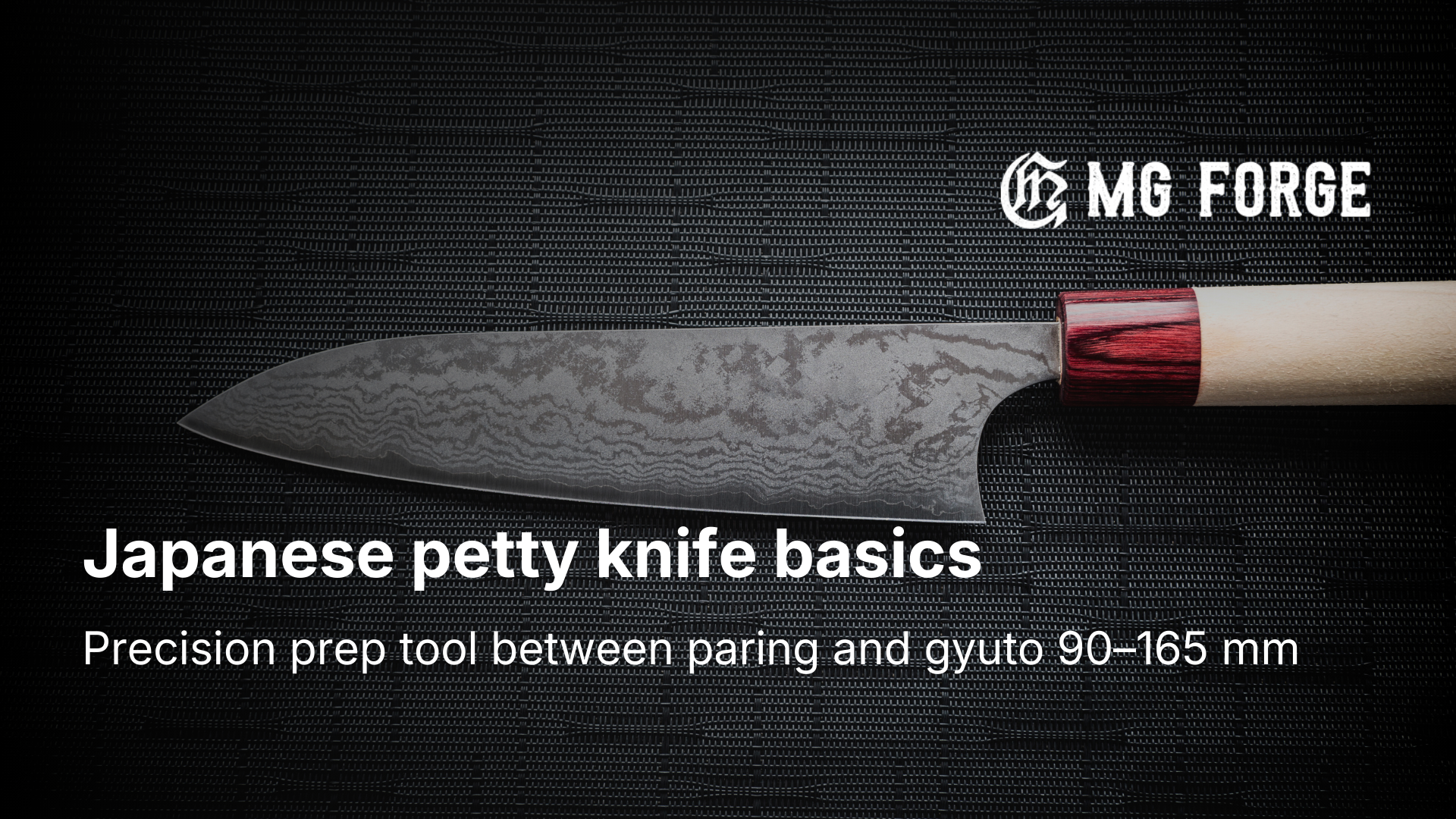
Why does one small knife end up doing so much in prep? A japanese petty knife fills the gap between a paring knife and a gyuto, giving you fast control for detailed work on the board and in-hand. This guide breaks down the typical sizes, blade shapes, steels, and the most common mistakes cooks make.
Bunka knife: what makes it special and how to use it
Need a compact knife that still feels precise on the board? A bunka knife blends a wide blade, a flatter edge, and a sharp k tip for day-to-day prep—veg, herbs, and boneless proteins. This guide explains where the shape came from, what specs matter, and how it compares with santoku and gyuto.
Japanese pocket knife: design, steel, and use
Why does a japanese pocket knife feel so quiet and precise in the cut? This guide explains the roots—from kozuka to Higonokami—plus the design logic behind hard steels, thin grinds, and simple mechanisms. You’ll also learn what these knives do best, what to avoid, and how to care for the edge.
Yanagiba sushi knife: what it is and how to use it
Ever wonder why sashimi slices look glossy instead of torn? This guide explains what a yanagiba sushi knife is, how its single-bevel geometry and urasuki affect the cut, and what that means on the board. You’ll also learn practical basics for sizing, use, sharpening, and daily care.
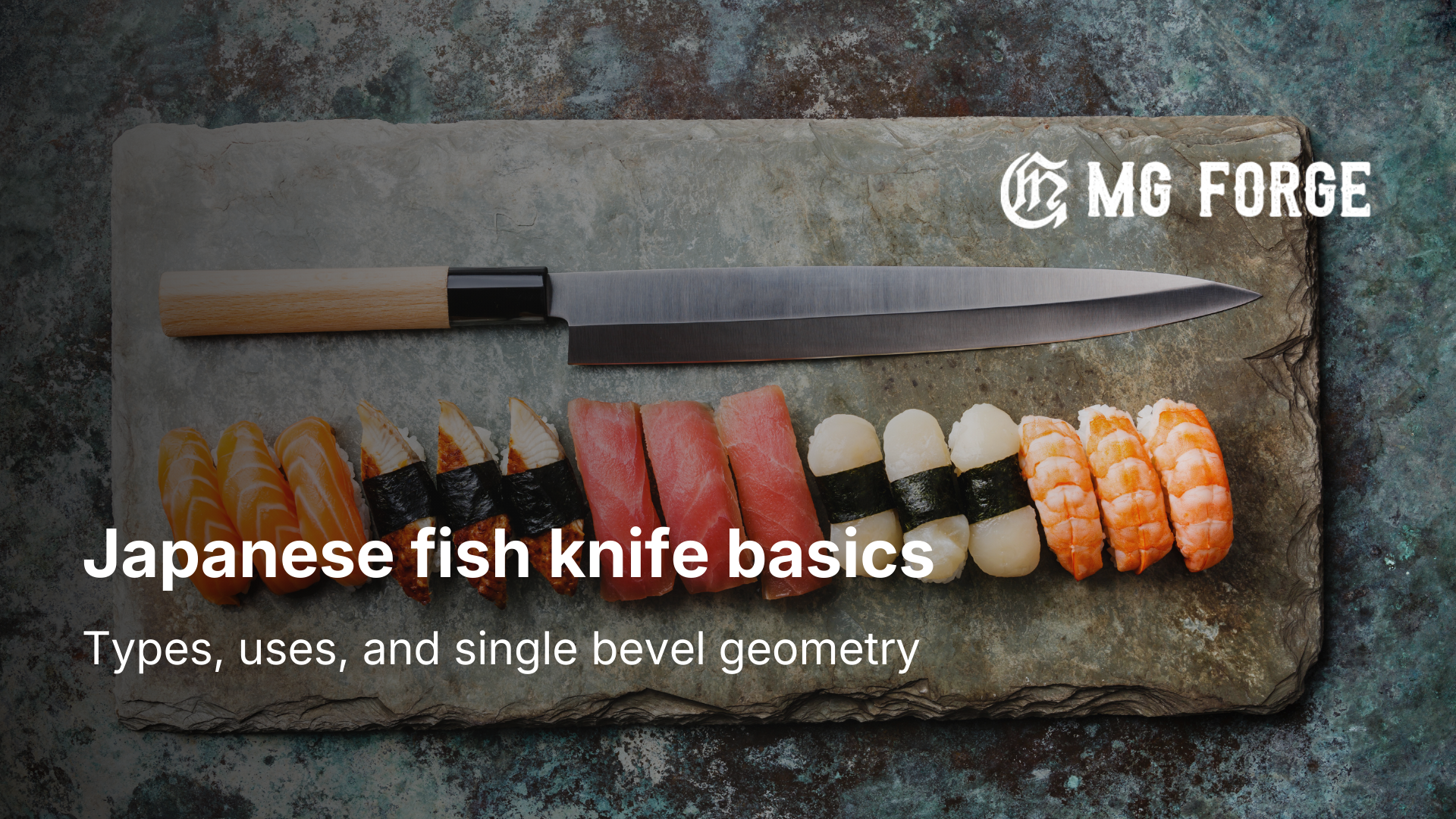
Japanese fish knife: types, uses, and key geometry
Fish shows every mistake: drag, tearing, and the glossy “paste” that comes from rough cuts. This guide explains what a japanese fish knife is, why geometry and single bevel grinds matter, and which blade fits each job—from breakdown to sashimi slicing.
Gyuto knife vs chef knife: differences that matter
Which blade really fits your board work—scalpel-like precision or rugged forgiveness? This guide breaks down gyuto knife vs chef knife across profile, length, weight, steel hardness, and edge retention. You’ll learn what each does best, how to maintain it, and where people most often go wrong.