
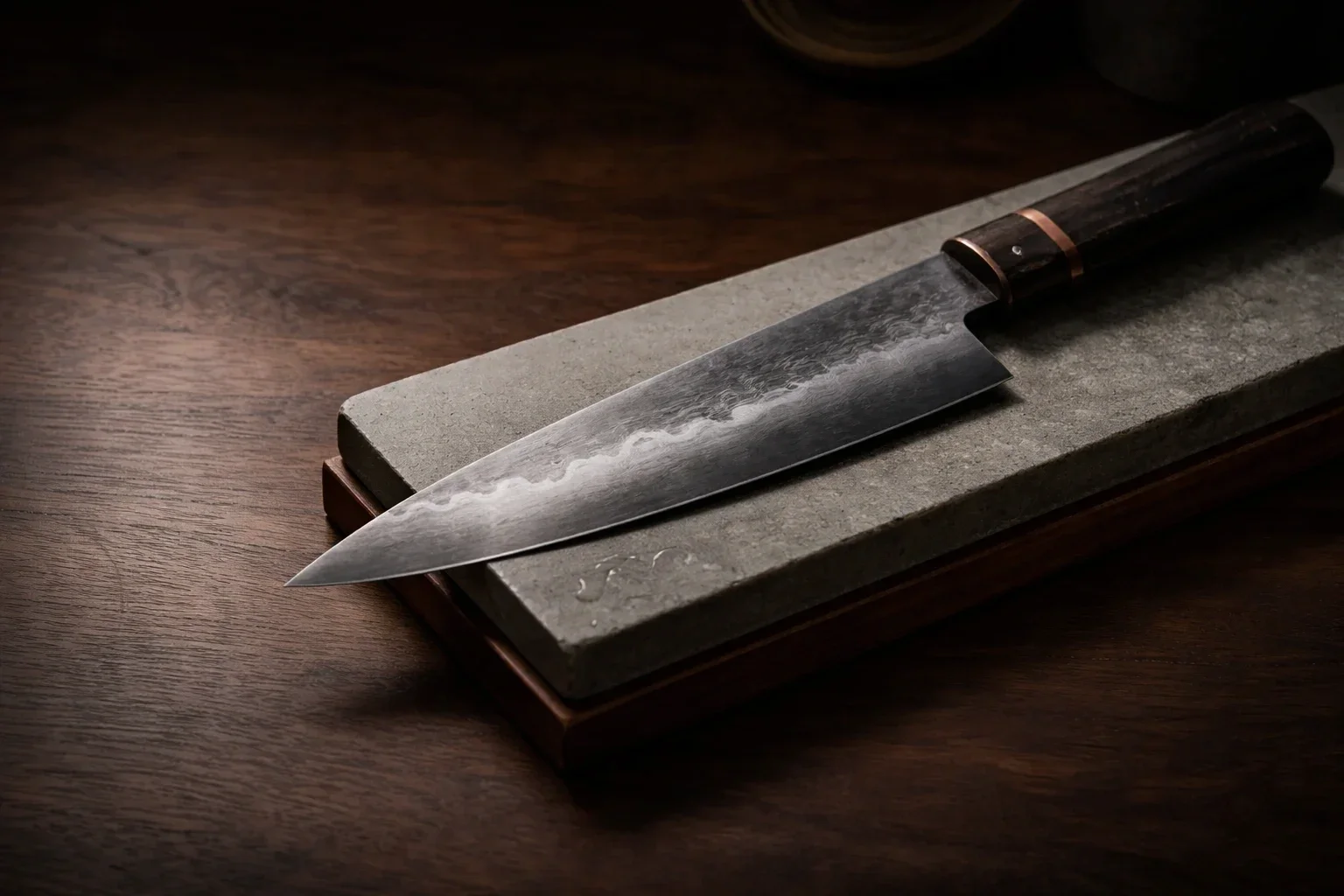
Guides & Notes from the Workshop
This blog is where I share practical explanations on Japanese kitchen knives, steel, geometry, care, and sharpening. No fluff. Just clear guidance based on real work at the anvil and the stone, so you can choose the right knife and keep it performing for years.

Japanese pocket knife: design, steel, and use
Why does a japanese pocket knife feel so quiet and precise in the cut? This guide explains the roots—from kozuka to Higonokami—plus the design logic behind hard steels, thin grinds, and simple mechanisms. You’ll also learn what these knives do best, what to avoid, and how to care for the edge.
Higonokami knife: history, sizing, steels, and care
Why does a friction folder with no real lock still feel so usable? This guide explains what a higonokami knife is, where it came from, and how the design works in daily carry. You’ll also compare common sizes (75/100/120 mm), typical steels, and the basics of sharpening and rust care.
Japanese utility knife: petty, sizes, uses, care
Need a small knife that feels precise without being fussy? A japanese utility knife—often called a petty—sits between a paring knife and a gyuto for quick prep and detail work. This guide explains the sizes (about 80–150 mm), typical tasks, and what to avoid so the thin edge stays reliable.