Japanese pocket knife: design, steel, and use
What is a japanese pocket knife, really?
A japanese pocket knife is usually a small, portable blade built around clean geometry, hard steel, and restrained style. In practice, it cuts with very little pressure, but it also prefers respectful use over prying or twisting. Most pieces are compact enough for everyday carry, yet finished with the same “hands and eyes” mindset you see in Japanese kitchen knives.
In 2026 the trend is hard to miss: people want pocket tools that feel quiet and precise, not tactical and loud. That’s why the japanese pocket knife keeps pulling in chefs, makers, and collectors from japan and beyond. These knives are designed for functionality and aesthetics at the same time, and the minimalist look isn’t an accident—it’s baked into tradition.
As a smith, I like the honesty of that approach. When a blade is thin, hard, and cleanly ground, it doesn’t hide mistakes. It either slices… or it doesn’t.
Where did japanese pocket knives come from?
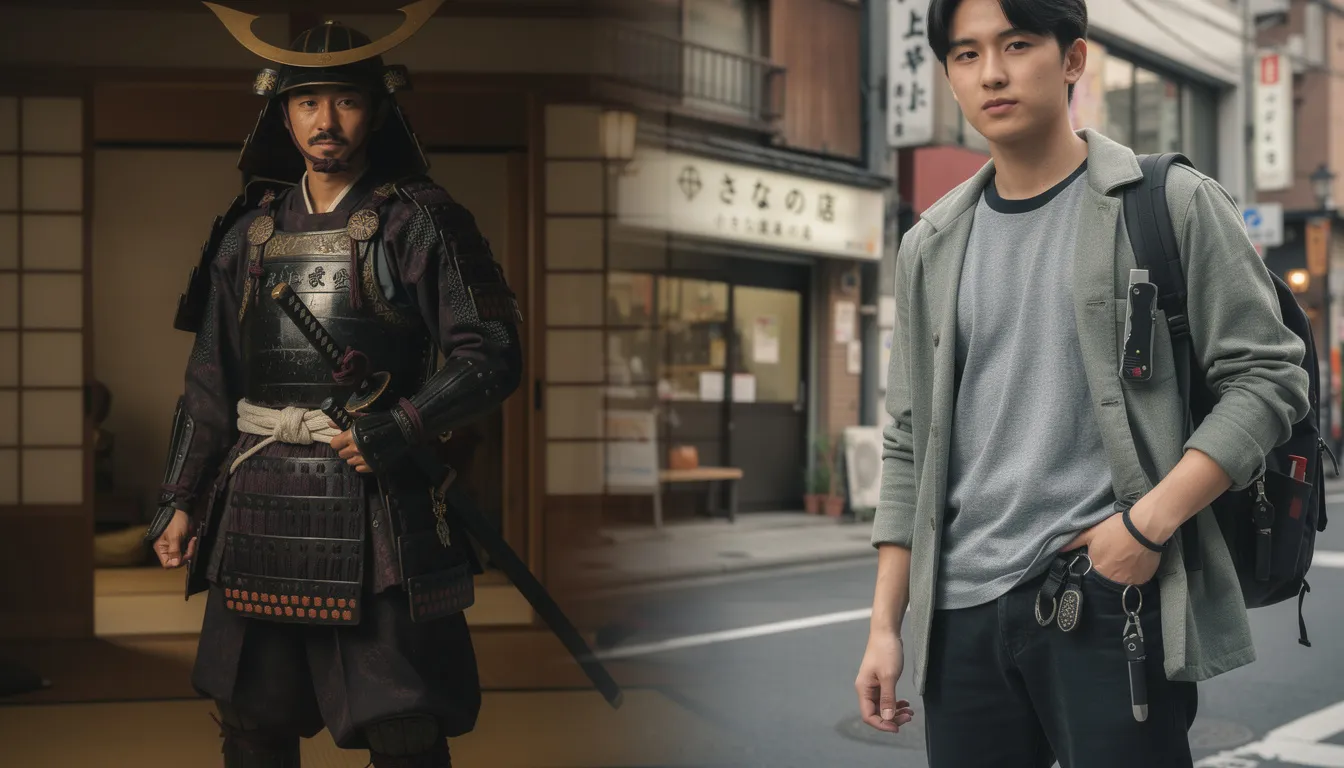
The history goes back further than most people expect. You can trace it to the Kamakura period (1185–1333), when samurai carried a kozuka, a small general utility knife worn alongside a sword. That japanese pocket culture—tools that are practical, personal, and well-made—never really vanished in japan; it just changed its clothes.
Later, the Higonokami arrived and became the landmark design. These higonokami knives, developed during the Edo period, got popular for their non-locking, friction-based approach to opening and closing. They later became a standard tool for Japanese schoolchildren (yes, literally), and over time they turned into a pocket knife classic for EDC.
Worth adding: a lot of the feel and finishing sensibility echoes artisanal techniques that grew out of sword-era craft. Not because pocket knives are “tiny katanas,” basically, but because the same priorities show up—heat, steel, geometry, and surface work done with intention. That’s the kind of knife making mindset I try to keep alive at MG Forge too: fewer excuses, cleaner cuts.
What sets the design apart?
A typical Western pocket knife often leans on thicker stock and lock-forward toughness. A typical Japanese pocket approach stays minimalist: fewer parts, simpler lines, and a blade meant to pass through material cleanly. Japanese pocket knives can differ a lot from Western tactical knives in mechanics, grind choices, and material selection, and that changes how they feel in the hand.
Many models are a perfect blend of old and new. Some keep the classic silhouette, while others add sculpted handle shapes, upgraded steels, and modern locks. The tradition keeps evolving in japan, with modern interpretations using ergonomic designs and more advanced mechanisms.
This is also where “Japanese pocket” as an idea gets interesting: portability is non-negotiable, but the blade still wants to behave like a real cutting tool. Compact doesn’t have to mean flimsy; it just means the design choices are tighter.
How do mechanics change the feel?
A hinge choice matters more than people think. The Higonokami is a traditional japanese pocket knife known for its simple friction folder setup—no true lock, just friction and a lever-like tang. That simplicity is why it’s loved, but it’s also why it’s not a pry bar, and it’s generally happier doing clean slices than brute-force tasks.
In real use, the non-locking feel encourages “cutting discipline.” Light pressure, clean strokes, smart angles. The classic Higonokami is often used as a cool letter opener rather than a hard-use EDC, and that’s not an insult—it’s an honest match between mechanism and task.
Locking designs exist too, and they shift the knife toward utility and safety for longer cuts. For example, the Moki Kronos Lockback is known for its old school lockback design, which gives a very different confidence compared to a friction folder. Some modern folding knife designs go even further with a frame lock, and that changes how secure the blade feels when you’re actually working.

What steels and grinds matter most?
This is where Japanese knife thinking really shows. Japanese blades often use high-carbon steels such as Aogami and Shirogami, prized for high hardness and sharp cutting angles. The upside is edge stability and that “sticky sharp” bite; the downside is simple: high-carbon steels want maintenance, or rust will happily show up uninvited.
Traditional high-carbon edges can rust if not kept dry and lightly oiled, and they usually want whetstone sharpening rather than quick gadgets. Japanese knives also tend to run a finer slicing angle—about 12–16°—compared to Western knives at 20–22°, which helps explain that effortless cut. Here’s the hook: a thinner, harder edge can be more brittle, so it’s happier with precision work than hard impacts.
For daily carry, stainless steels like VG-10 and AUS-8 are popular because corrosion resistance matters in pockets. A VG-10 blade is widely valued for durability in japanese pocket knives, especially when the heat treat is done carefully. That forging-and-heat-treat detail is where “japanese steel” as an idea earns its reputation—when done right, it feels different on the stone and in the cut.
Why do laminations and finishes matter?
Many japanese pocket knives use laminated construction: a hard steel core sandwiched between softer layers. In kitchen terms, it’s similar to san mai blades—hard edge for cutting, tougher sides for support. The difference is subtle, but it can reduce the “glassiness” of a very hard core and make sharpening feel more predictable over time.
One example people talk about is the Tactility by Mcusta, which features a hammered San Mai blade that’s both functional and visually satisfying. Hammering can help hide scratches and break up surface drag, even if it’s not magic. These details live in the same world as forge finishes on kitchen knives—some are practical, some are pure art, and often it’s both.
From the forge side at MG Forge, the same rule still applies whether it’s a gyuto or a small pocket knife: finish should follow function. A showy surface is fair game, as long as the geometry underneath is honest.
Which shapes and sizes fit real tasks?
Japanese pocket knives can be used for food prep, crafting, gardening, and everyday utility, but they shine when the cut is controlled. Blade shapes often include tanto and drop point, each serving different practical applications. A drop point tends to feel more general-purpose, while tanto tips can feel precise but less forgiving in slicing.
For practical sizing, many people land in a simple range: about 60–90 mm blade length for pocket carry, and a stock thickness that doesn’t feel wedgey (often roughly 2–3 mm at the spine on many EDC-style folders). The “chef knife brain” rule applies: thinner behind the edge cuts better, but it demands cleaner technique.
A quick workshop-style comparison helps. Fine slicing and detail work feels like petty-knife behavior in a pocket format. Food-related tasks often favor a drop point that behaves more like a compact gyuto. Heavier cuts? switch tools, the same way a deba exists for a reason.
Japanese pocket knives excel at precision cutting because hard steel holds an edge longer, but it asks for gentle use. Saying it plainly: they’ll punish bad cutting angles faster than a softer, thicker Western-style folder.
What do common models show about the category?
Some names come up a lot in discussions of japanese pocket knives because their fit and finish show up consistently, not just on a good day.
Higonokami knives are a traditional style, and the pattern is still loved for functionality and beauty. The Higonokami Woody is often noted for a VG10 blade and walnut handle, and it’s also described as a wooden-handled VG10 stainless option suited to everyday carry, which makes it an easy entry into the japanese pocket world.
Mcusta is widely known for japanese pocket knives, and Mcusta knives are often praised for top-notch quality, excellent fit, and impeccable finish. The Mcusta Tactility features an SPG-2 steel blade, and that model line is also known for the hammered san mai look—modern polish, old-school sensibility.
Moki is recognized for producing quality Japanese pocket knives, and Moki knives are often associated with other reputable brands like Spyderco and Kershaw, which says a lot about consistency. Speaking of Spyderco: it’s a useful example of how japan-made collaborations can blend Japanese precision with broader EDC expectations.
The Katsu Bamboo is a modern take on the Higonokami style, though it’s criticized for having an awkward handle despite the elegant design. The Ohta FK5 is considered more of a collectible than a practical everyday carry knife due to its size and price.
Z tym bywa różnie: what’s “best” depends on whether the knife lives in a pocket every day or mostly in a display case. A collectible can still cut beautifully; it just might be too large, too precious, or too “don’t scratch the inlays” to reach for.
How does care keep the edge alive?
A pocket knife lives a harder life than a kitchen knife in one way: lint, grit, moisture, and random contact. It’s important to keep the knife clean to prevent debris buildup on the blade, especially around pivots on a folding knife. Inspecting the knife for wear before each use is a good habit, because a loose pivot or gritty action can turn “fine” into “unsafe” fast.
After cleaning, dry all parts thoroughly to prevent rust. Then apply knife oil as a lubricant after cleaning and drying, which also helps protect steel from moisture. Storage matters too: keep the knife in a dry, non-humid environment to reduce corrosion risk. If you need a simple routine: clean, wipe, dry, oil, done.
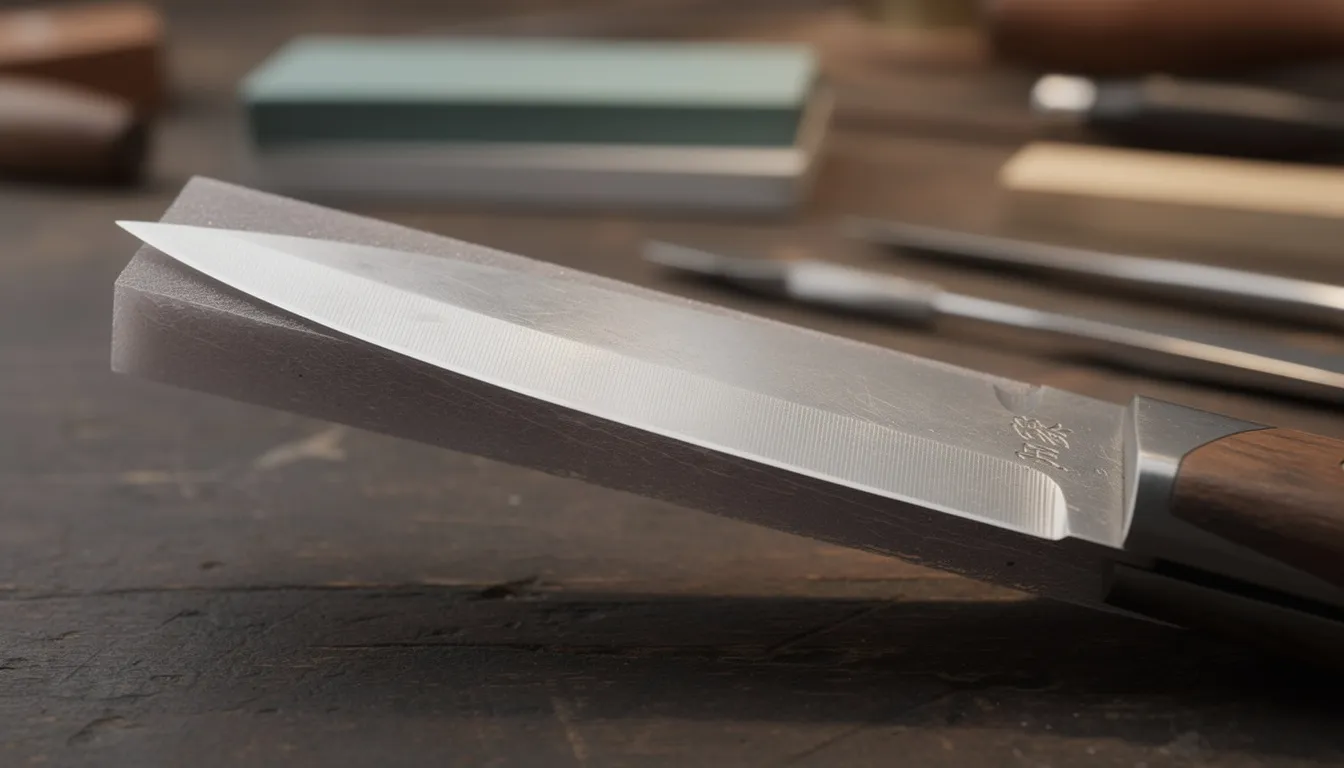
Sharpening isn’t optional if the knife is meant to work. Keeping the blade sharp is necessary so it stays fit for purpose, and either a sharpener or a whetstone can do the job—though hard Japanese steels usually feel better on stones. If the edge is ground around that 12–16° range, stones make it easier to stay consistent and avoid thickening the bevel over time.
What does kitchen knife craft teach here?
Kitchen knives teach a simple lesson: geometry beats marketing. A 210 mm gyuto and a small japanese pocket blade share the same truth—thin behind the edge cuts with less force, but it needs better habits. That’s why Japanese knives often feel “sharper,” and also why they can be more brittle than Western knives.
In knife making, the biggest mistake is chasing hardness without thinking about use. A very hard edge is great for clean slicing, but if the user hits staples, bone, or a ceramic plate, chips happen. The pocket version is twisting a cut in wood or digging with the tip, then acting surprised when the blade complains.
So the practical choice in 2026 is often a balanced stainless for carry, and high-carbon for people who actually enjoy maintenance and sharpening. And if a piece uses laminated construction, it can be a solid middle ground: stable edge feel with a bit more support through the body of the blade. Choose what fits your day, not your fantasy.
What is a Japanese pocket knife called?
A common traditional term is Higonokami, which refers to a classic friction-folder style. Historically, japan also had the kozuka, a small utility knife associated with samurai gear. Today, many japanese pocket knives are simply labeled by mechanism (folding knife, lockback) and style, because the category has grown beyond one pattern.
Does Japan have good pocket knives?
Yes—japan has a strong reputation for pocket knife quality, especially when the focus is clean geometry,, careful grind work, and hard steel. Many models use fine cutting angles that help with precision cutting and edge feel. The tradeoff is straightforward: they often prefer gentler use than thicker, softer Western folders, so durability depends as much on the user as the knife.
What are the top 5 Japanese knife brands?
In the japanese pocket knife space, names often mentioned include Mcusta, Moki, Rockstead, and Yu Kurosaki as a newer entry in that specific market. “Top 5” is context-dependent, because some brands lean collectible while others are built around daily carry tools. It’s worth matching the company’s typical steels, handle ergonomics, and mechanisms to what you actually use a pocket knife for day to day.
Is it illegal to carry a pocket knife in Japan?
Knife carry rules in japan can be strict and situation-dependent, and enforcement can vary by context. Because legality depends on blade length, knife type, and how it’s carried and used, it’s smartest to check current local regulations before you carry. When in doubt, treat a pocket knife as a tool for specific tasks, not a default accessory.
How do materials, mechanism, and finish shape the everyday role of a japanese pocket knife?
A japanese pocket knife is meant for general utility with clean geometry and japanese steel that cuts with little pressure, and that intent shows in higonokami knives where simple opening and closing reward disciplined slicing rather than forcing hard tasks; across brands, the appeal is a perfect blend of aesthetics, elegance, innovation, and honest lines that make the knife fair to the material and fair to the maker when things go wrong, so choosing a model is often less about public “tactical” image in america and more about what is worth carrying day to day—whether it lives in a case or is long meant to work—while care stays simple: wipe after use, keep grit out, and accept that art details like pearl, mother, and inlays can be beautiful but don’t change how the edge behaves; even when people explore options via amazon, the same century-old lesson applies from shop habits (pencils, touch, thought): choose the mechanism and steel for the job, not the fantasy, and a restrained finish mindset—like the one associated with MG Forge—keeps the tool practical without pretending it’s more than it is.