Yanagiba sushi knife: what it is and how to use it
What is a yanagiba sushi knife?
A yanagiba sushi knife exists for one mission: making raw fish look and eat the way it should. This sushi knife runs a long, narrow profile with a single bevel blade, built to slice boneless fish fillets for sashimi and sushi dishes without turning the surface into a torn mess. In real service, that long blade lets you cut in one clean drawing motion from heel to tip—no little chops, no “woodpecker” technique. The payoff is a smooth, glossy face on every piece, which is exactly what sushi bars chase in 2026: clean visuals and clean texture.
Where did yanagiba come from?
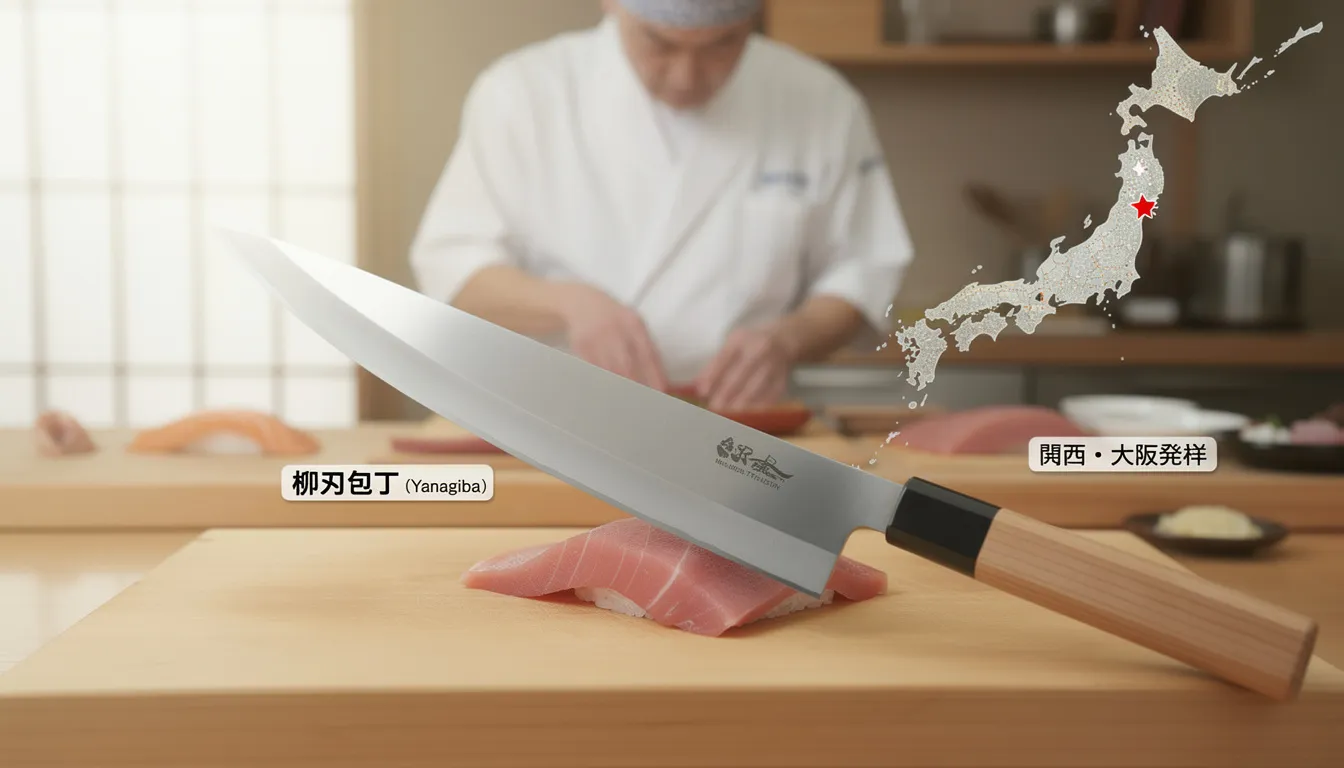
The leaf-shaped yanagiba (yanagi) originated in the Kansai (Ōsaka) region of Japan and remains the most commonly used style for sashimi work. It’s closely tied to Kansai—especially Osaka and Kyoto—where fish presentation is treated like plating, just with a knife instead of tweezers. Worth noting: there are regional and task-specific types such as Fuguhiki, Kiritsuke Yanagiba, Takohiki, and Sakimaru Takohiki. Those aren’t automatically “better”; they’re tuned to different boards, fish size, and cutting habits that vary by region and kitchen style.
Why single bevel matters?
A yanagiba knife uses a single-edged blade for a reason: it changes how slicing feels and what the cut looks like. The geometry is designed for slicing raw fish in one drawing stroke with minimal pressure on the flesh, and that matters because pressure is what roughs up the surface. Combine that with a sharp edge and a very acute edge angle, and the yanagi can reduce cellular damage so the slice reads “fresher” when it lands on the plate. Here’s the hook: single bevel also means your technique and your sharpening routine have to match the tool, or the blade will let you know.
What does the back side do?
Flip a yanagiba over and the back isn’t flat—there’s a concave grind called urasuki. That hollow reduces friction and helps sashimi slices release cleanly, especially with fattier fish where sticking can ruin the surface you worked for. From the forge side, this detail looks quiet but takes real time and control to execute. When we finish single-bevel blades at MG Forge, the goal is boring in the best way: predictable release and a clean, straight track through protein.

Which steel makes sense, including white steel?
A yanagiba sushi knife is often made from carbon steel, and yes, carbon steel knives can take a finer edge than standard stainless steels when treated and maintained properly. A classic choice is white steel, popular because it sharpens to a crisp edge and gives very clear feedback on the stone. The trade-off is not a secret: patina and rust management become part of daily handling, because carbon steel doesn’t pretend it’s stainless. That’s not a defect—it’s the price of chasing that ultra-clean edge in a true sashimi knife.
What blade length fits the work?
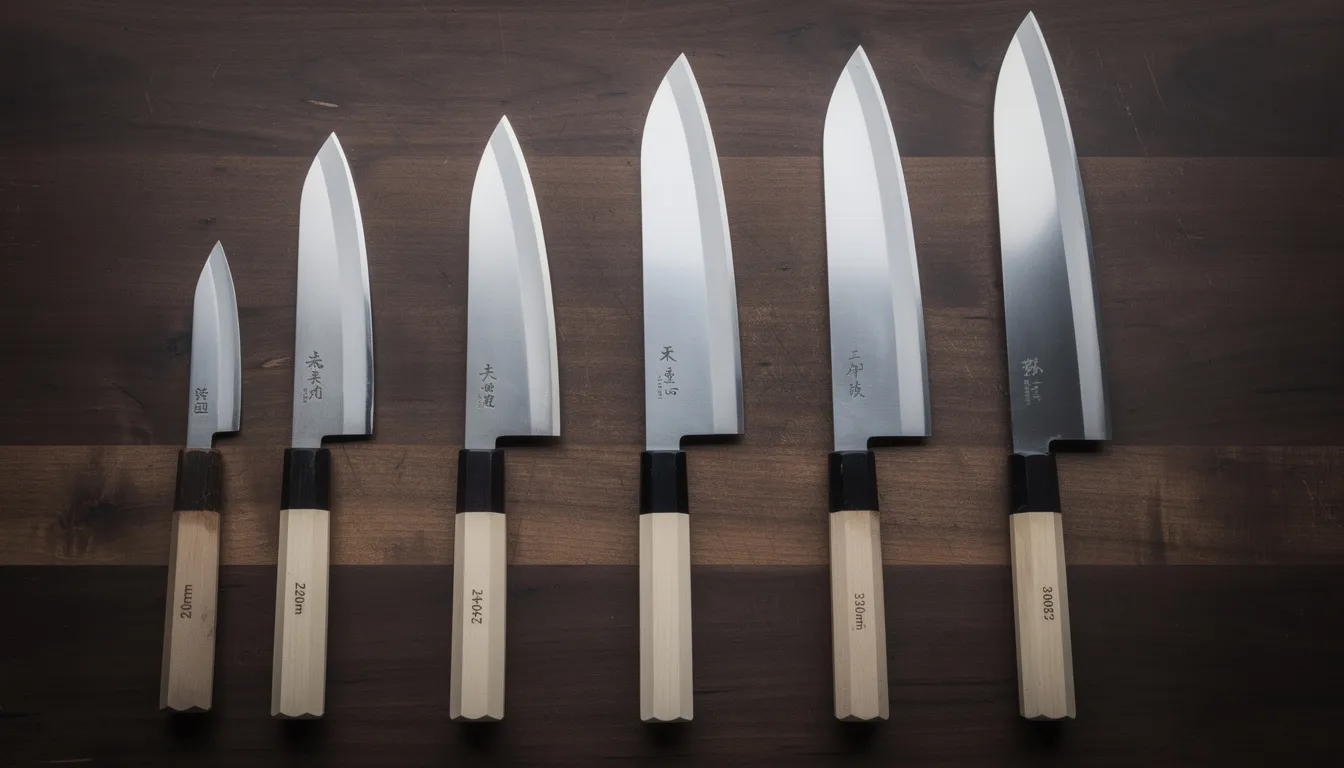
Yanagiba knives come in a range of blade length options, typically from 210mm up to 360mm. The recommended blade length for a yanagiba commonly sits in that same 210mm–360mm window, with 270mm, 300mm, and 330mm being especially popular sizes. Mówiąc wprost: many cooks hover around 30cm because it balances reach with control across typical fish portions. Prices for yanagi knives typically land between $100 and $300, depending on material choices and craftsmanship, so changing length is one of the easiest ways to manage the budget without changing the core slicing idea.
How is a yanagiba used as a sushi knife?
A yanagiba works best with a pulling motion, not a push, if you want clean cuts without crushing the fish. To slice sashimi properly, skip the sawing—use one smooth draw so the blade glides through in a single pass. That long blade isn’t there for drama; it’s there so you can use the full length and get a cleaner cut with less pressure. For control, hold the handle firmly and pinch the blade near the base with your thumb and index finger—small adjustment, big stability.
A quick bench-to-board micro-case: when someone switches from a gyuto (double bevel) to a yanagiba sushi knife, mistake one is “pushing through” like it’s a Western chef knife. Mistake two is freezing mid-cut because the knife feels long and the brain hits the brakes. Once the motion becomes one steady draw, the sashimi starts coming off glossy instead of a little frayed at the edges.
How are sharpening and care handled?
Yanagiba sharpening is specific because the geometry is specific: traditional whetstones and consistency matter. A common baseline is a whetstone around a 15-degree angle, working only the bevel side carefully and evenly, then maintaining the back side correctly so the blade stays true. This is also why pull-through sharpeners are a bad match—they ignore the geometry and can wreck the feel fast. If a single-bevel edge starts steering, it’s often not the steel; it’s uneven stone work.
Care is equally particular. Clean and dry the knife immediately after use to prevent rust, and hand wash only to protect high-carbon carbon steel from heat and harsh detergents. Dishwashers combine high heat, strong chemicals, and rattling contact—three things that don’t mix with a thin edge. For skinning fish, lay the blade flat against the skin and pull smoothly to separate it from the flesh, then wipe and dry right away, especially after working with raw fish.
Primary reference (metallurgy background): https://www.asminternational.org/
Are Yanagiba knives good?
Yes—when you use them for what they’re designed to do: slicing raw, boneless fish cleanly and smoothly for sushi and sashimi. The long blade and single-bevel geometry help you cut with minimal pressure, which is why the surface comes out glossy. They’re not a do-everything knife like a gyuto, so “good” really depends on what you cook and how often fish is in the stock rotation.
What is a Yanagiba knife for sushi?
It’s a sushi knife used to cut fish for sushi toppings and sashimi with one drawing pull, aiming for a smooth surface and intact texture rather than fast chopping. The same long, narrow blade also helps with precise skinning fish when you lay it close to flat and pull cleanly. In short: it’s designed for clean slicing and clean presentation.
Is a Yanagiba good for beginners?
It can be, but it rewards patience. The pulling cut feels different than what most beginners do with double-bevel knives, and you also need to learn how to sharpen a single bevel without lopsiding the edge. If you want an easier start, a 270–300mm length often hits the sweet spot in size and weight—enough reach to do the job, without feeling like a sword on day one.
Which is better Yanagiba or Sujihiki?
Yanagiba is better for traditional sashimi knife work because the single bevel changes how the blade tracks and how the cut surface finishes. Sujihiki is usually easier to maintain for general slicing because it’s typically double bevel, more forgiving to sharpen, and less technique-sensitive. If one knife has to cover more tasks (fish plus other dishes, maybe even that one time someone asks you to slice meat), Sujihiki often wins; if fish presentation is the priority, yanagi takes it.
What accessories and handling details support yanagiba performance and maintenance?
A wooden saya helps protect the long, single-bevel edge in storage and transit, and the knife’s weight and how you hold it influence ease of a clean one-stroke pull that avoids damaging the fish surface; among the types that originated in Kansai, it’s popular to sort blade length (often around 270–330mm) by what feels ideal for control on typical portions, with low pressure and a high focus on preserving a glossy finish, while care choices also matter—choose hand washing and thorough drying rather than a dishwasher cart, since even a good carbon-steel yanagiba needs careful handling to prevent rust, and makers like MG Forge emphasize geometry that supports clean release and predictable tracking.