Bunka knife: what makes it special and how to use it
What makes a bunka knife special?
A bunka knife is a versatile Japanese all-purpose knife with a wide blade and a distinctive k tip for precise slicing, chopping, and detail work. In day-to-day prep, the bunka knife covers most of what you’d normally grab a chef's knife for—vegetables, herbs, and boneless proteins—just without the extra length of a full gyuto. Most bunka knives land around 165–200 mm (6.5–7.9 in) in blade length, and the profile is almost always double bevel.
What separates the bunka from other japanese knives is the feel on the cutting board: a relatively flat edge, a tall spine-to-edge height, and that pointed tip that behaves like a small scalpel that drank espresso. It’s why bunka knives show up both in home kitchens and on prep tables used by professional chefs. The shape brings speed, but it also keeps control when space gets tight and the tasks get picky.
Where did the bunka shape come from?
The bunka knife is a modern Japanese knife shape that emerged in the late 19th to early 20th century, influenced by Western culinary practices. As Japan’s diet modernized to include more meat, cooks needed a compact knife that could switch from cut vegetables to cutting meat without swapping tools every five minutes. That’s the backdrop for bunka knives being marketed as modern, do-everything cutters for meat, fish, and produce.
Older single-bevel traditions never disappeared, but bunka grew in the lane of double-bevel “general purpose” work. So while yanagiba and deba stayed specialized, bunka leaned into cross-kitchen versatility. That lineage still shows in the grind and in the way the reverse tanto tip is drawn out.
What sizes and specs matter most?
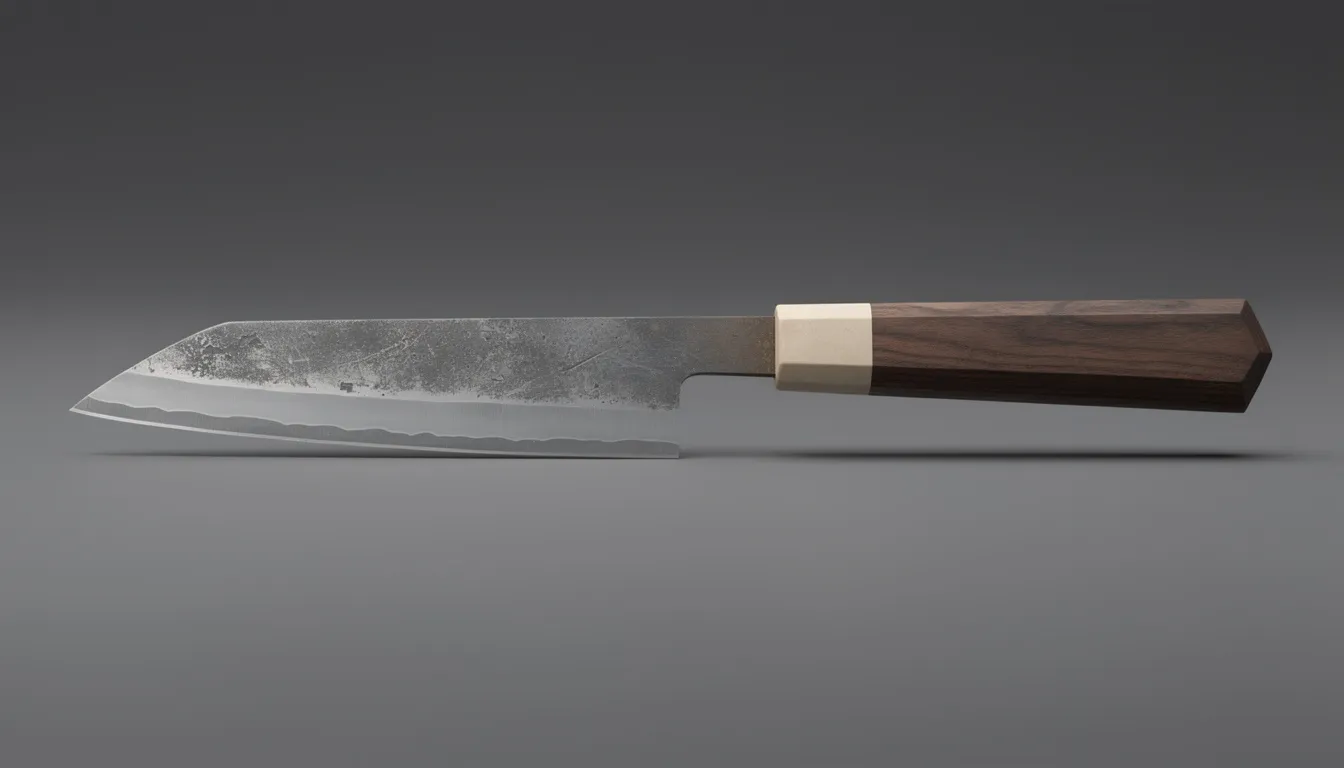
Most bunka knives are 6–7 inches long, and that range is a big reason the knife feels quick on the board. A common sweet spot is 165 mm for tight home prep, while 180–200 mm starts to feel closer to a compact chef's knife. Many also have a tall blade, which adds real knuckle clearance for straightforward chopping.
The blade is typically double bevel with a flat, sharp cutting edge, which points straight at push cutting and clean dicing. That flat section likes a vertical up-and-down motion, maximizing contact with the cutting board for crisp cuts that don’t “accordion” onions. And the wide blade isn’t just visual drama—it’s genuinely useful for scooping chopped ingredients and moving them into a pan.
How does the reverse tanto tip help?
The bunka’s signature move is the reverse tanto (k tip), and it’s built for precision work. That pointed tip is excellent for trimming silver skin, opening up chicken thighs, or doing careful shallot and garlic work without the tip wandering off course. Compared to rounder tips (like many santoku), the k tip feels like it “locks onto” the line you want.
At the forge, that tip also forces discipline in heat treat and grinding. A thin point can overheat during finishing if the maker gets impatient. When we grind k tips at MG Forge, the last passes are intentionally slow, because one careless moment can soften the tip area and it won’t hold the same bite once sharpened.

What geometry should the edge have?
Bunka knives excel at push cutting vegetables thanks to that flatter edge profile. But geometry isn’t just the edge line; it’s also thickness behind the edge and how quickly the blade tapers from heel to tip. A bunka with a thinner midsection will glide through carrots, while a thicker one can feel steadier when chopping dense squash—boneless, of course.
There’s a tradeoff that shows up fast on a cutting board: thin + hard can chip if technique gets lazy. This is where makers tune a grind to match intent. A “laser-ish” bunka can be a dream for precise cuts on cucumbers, yet it demands cleaner habits than a more robust grind.
Which steels show up in bunka knives?
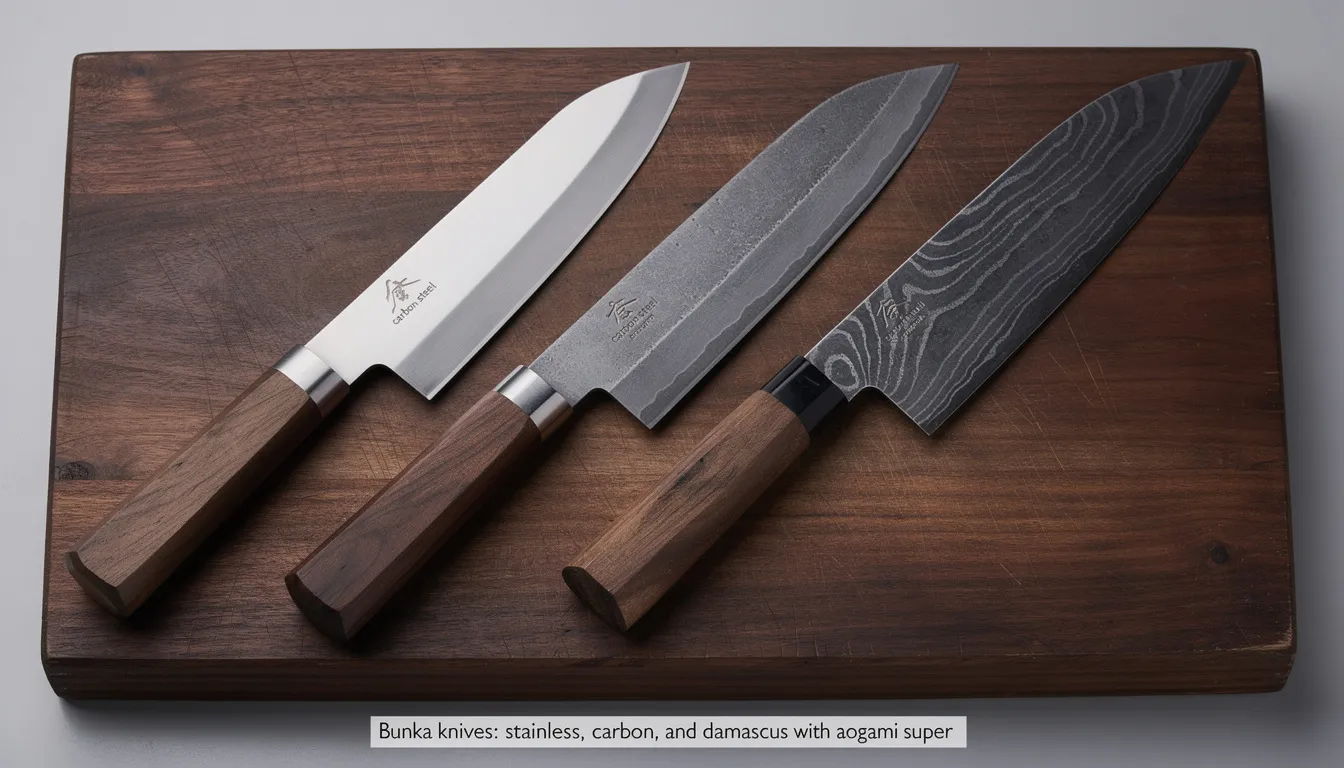
Bunka knives come in stainless steels, carbon steels, and showy builds like damascus, with carbon options including aogami super. Many are also made from advanced powder steels such as ZDP-189, SG2, and HAP-40, which can reach 62–68 HRC for high hardness, strong edge retention, and an extremely sharp working edge that stays crisp through a lot of prep. In plain terms: more performance, but less tolerance for abuse.
Carbon steels add another layer: they can take a very aggressive edge and develop patina, which some cooks genuinely enjoy. A thin layer of knife oil can help protect high-carbon blades, especially in humid kitchens. Stainless and high-carbon stainless reduce worry, but they’re still not a free pass to rough storage or the dishwasher.
What do traditional materials teach about performance?
Even when a bunka is “modern,” Japanese forging roots still matter: layered constructions, cladding choices, and heat treat discipline. Traditional materials like tamahagane or fibrous iron are a reminder that structure and cleanliness of steel affect how a knife feels on stones and at the edge. Pattern-welded options—like forged damascus—can look dramatic, but what matters in use is the core steel and the grind supporting it.
In 2026, there’s more awareness that finish doesn’t equal performance by itself. Kurouchi can help hide scratches and reduce glare, while polished damascus highlights craftsmanship, but neither replaces good geometry. When a blade comes off stones cleanly, that’s usually heat treat and carbide structure telling the truth.
How does a bunka compare with other japanese knives?
Bunka knives overlap with other japanese knives like santoku and gyuto, but they stand out with a pointed tip for fine work. A gyuto in 210–240 mm still wins for longer slicing and higher volume prep, while a bunka in 165–180 mm often feels faster for board-focused veggies and mixed tasks. A petty or paring knife stays better for in-hand work, and a deba remains the right call when fish butchery includes heavier joints and pin bones.
The cleanest way to think about it is task lanes:
Bunka: daily prep, veg-heavy work, boneless proteins, detail cuts with the k tip
Gyuto / western style chef's knife: longer push/pull slicing, bigger boards, higher throughput
Yanagiba / sakimaru: single-bevel precision for sashimi and long draw cuts, including slicing sashimi
Deba: fish breakdown and tougher work (not a bunka’s job)
This is also why bunka knives shouldn’t be used to cut through bones or frozen food. The edge can be hard and thin, and that’s a straightforward recipe for chips when impact goes up.
What sharpening and maintenance actually work?
Sharpening japanese kitchen knives is best done with a whetstone, because it matches hard steels and thin edges better than gadgets. It’s generally recommended to sharpen knives about twice a year for best performance, assuming normal home use and decent cutting boards. Between full sessions, avoid leaning on a honing steel for a bunka; hard, thin edges don’t always love that kind of contact.
Care is simple but strict: wash the knife with soap and dry immediately after use. Quality knives should never go in the dishwasher, where heat, detergent, and rattling can wreck handles and edges quickly. For storage, a saya (wooden sheath) keeps the blade protected, whether the knife lives on a magnetic strip or in a drawer.
Using bunka like a cleaver
The most common mistake is using bunka like a mini cleaver. The knife is great for chopping vegetables, mincing herbs, and dicing meat, but twisting the edge in a hard cut can chip a high-hardness blade. Another frequent issue is technique mismatch: bunka likes straight, vertical chopping more than big rocking arcs, especially when you’re trying to cut vegetables cleanly.
One more hiccup: some knives arrive needing a touch-up even when they look perfect. The Sakai Takayuki bunka knife is known for a beautiful finish but may require sharpening out of the box. That’s not “bad,” it just means the factory edge isn’t always tuned to your board, your product, and your hands.
Start with how the knife
Start with how the knife will be used and how it will be maintained, because steel and geometry punish wishful thinking. A bunka knife made from powder steel at 62–68 HRC can hold an edge for a long time, but it won’t forgive bones, frozen food, or sloppy storage. Stainless options reduce corrosion stress, yet they still need proper drying and safe protection.
A quick, practical checklist:
Length: 165 mm for tight spaces; 180–200 mm for more knuckle room and reach
Primary use: veg prep and mixed tasks favor bunka; long slicing favors gyuto
Steel comfort: carbon (patina + oiling) vs stainless (lower maintenance)
Storage plan: magnetic strip with care, or a saya if drawers are involved
In the workshop, the “right” bunka often comes down to lifestyle. If the knife will be wiped often and stored well, carbon cores are a joy. If the knife will live near a busy sink line, stainless starts making a lot of sense—less romance, fewer headaches. (And yes, at MG Forge we see that pattern repeat itself.)
What is a bunka knife for?
A bunka knife is for day-to-day prep: chopping vegetables, mincing herbs, and slicing boneless proteins. The flat edge works especially well with push cutting, and the k tip helps with precise work like trimming and detail cuts. It’s not meant for bones or frozen foods, and it rewards clean technique on a stable cutting board.
What is the difference between a Bunka and a Santoku?
Both are compact, double bevel Japanese all purpose knives, often in the 165–180 mm range. The main difference is usually the tip: bunka tends to have a pointed k tip (reverse tanto), while many santoku have a rounder tip. That shape shift changes how confidently the knife handles precision work and how naturally it lands in tight chopping and slicing tasks.
What is the difference between Bunka and Kiritsuke?
A bunka borrows the kiritsuke-style k tip but is typically shorter and more everyday-friendly. Kiritsuke profiles are often longer and can feel more specialized, especially in traditional forms. In practical cooking, bunka leans multi purpose knife, while kiritsuke leans “line-cook slicing and precision” when you have the space and board length to use it properly.
Is bunka a chef knife?
It can function like a compact chef's knife for many kitchens, especially when a 165–200 mm blade length fits the cutting board and workflow. Compared to a classic western chef's knife or a longer gyuto, it trades reach for tighter control, a flatter edge, and a sharper pointed tip. For many home cooks and plenty of professional chefs, that’s exactly why bunka is one of the most useful all purpose knives you can own.
How does bunka maintenance and workflow compare to a paring knife in home kitchens?
In home kitchens, a bunka can take over most board prep for veggies, fish, and onions thanks to its flat edge and precise tip, while a paring knife still fits better for true in-hand detail work; with a japanese handle and a k tip often described as meaning sword like, the bunka’s control comes from using the heel for steady push cuts and then using the wide blade to scoop ingredients into a pan, but sharpness and durable performance depend on simple habits—wash and dry right away, protect the edge in a box or sheath when stored, and choose a knife that feels well crafted whether it comes from a shop or a maker like MG Forge (crafted; shop; box).