Japanese utility knife: petty, sizes, uses, care
What is a japanese utility knife?
A japanese utility knife is the small, do-most-things knife that lives between a paring knife and a chef’s knife. In real kitchen use, this utility knife covers precision work, light prep, and quick board tasks when a full gyuto feels like overkill. Most run about 4.5 to 6 inches long, giving you enough edge for confident slicing while staying nimble in hand.
In Japanese cutlery this category is commonly called a petty (from the French petit). The name is useful because it signals intent: compact, controlled, accurate—more “scalpel energy” than brute force. In 2026, the pattern is clear: more cooks build a two-knife core around a gyuto plus a petty, because it trims clutter without shrinking capability for home cooks or pros.
Why does petty mean utility?
A petty is often described as a bridge between paring knives and chef’s knives, and that’s not copywriting smoke. A paring knife stays short and hand-focused; a chef's knife (gyuto) wants room on the board. The utility/petty knife splits the difference: long enough to slice cleanly on a cutting board, short enough to steer around stems, silverskin, and tight corners with real control.
Typical petty knives earn their keep on the fussy stuff: mincing garlic, trimming chicken tenders, halving strawberries, or cutting citrus supremes without shredding membranes. They also handle small vegetables prep—scallions, radishes, shallots—without needing a 210 mm blade waving around like a windshield wiper. Many Japanese utility knives are tuned to feel natural in both pro stations and home kitchens, which is why this utility knife is often the first “serious” Japanese knife people actually keep reaching for.
What sizes and shapes matter?
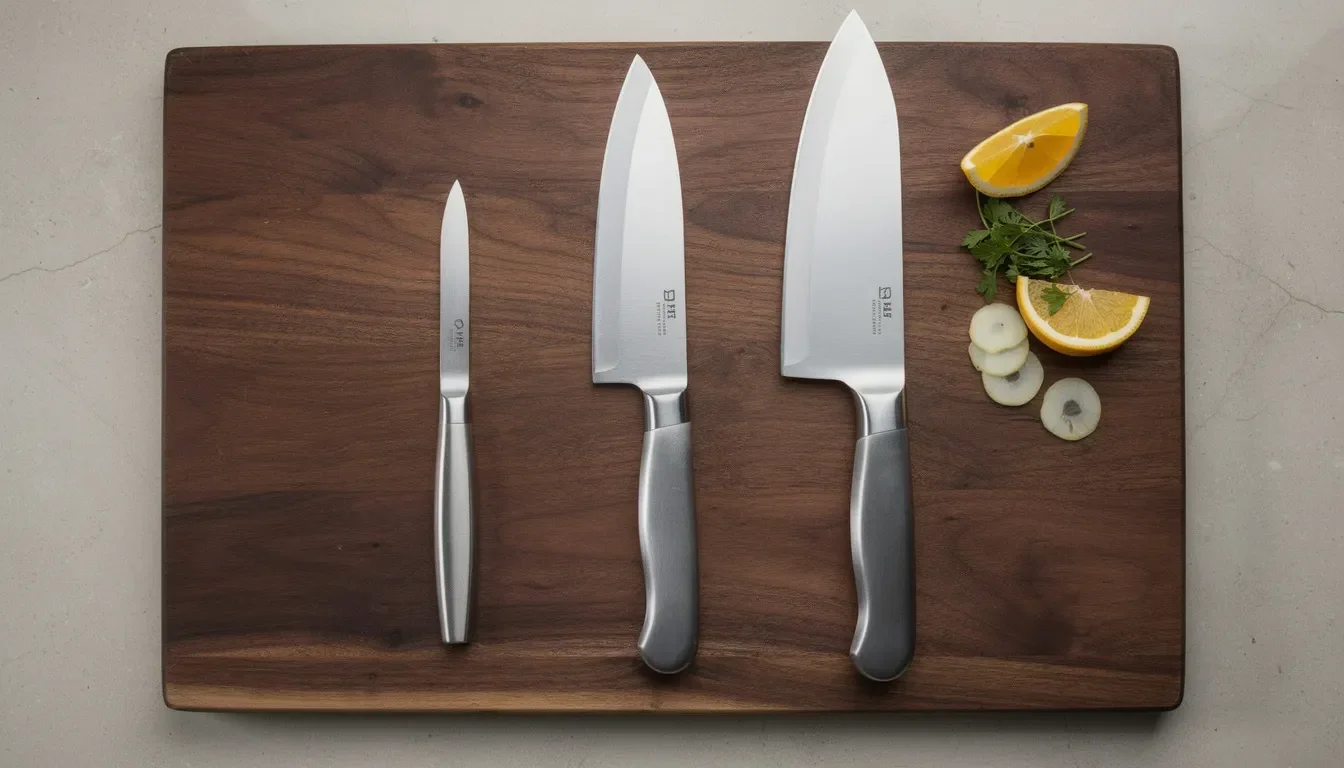
Most Japanese utility knife sizes land between 80–150 mm (3–6 inches), with many favorites clustering around 120–150 mm for board work. That range explains why petty knives can replace a lot of odd mid-size western style knives that never quite earn their drawer space. Under 100 mm, a petty starts acting like a paring knife; over 150 mm, it begins stepping into the territory of larger knives like the gyuto.
Profile matters as much as length. Many Japanese petty knives favor straighter edges, which makes detail cuts and short push-cuts feel decisive instead of wobbly. Less belly also helps when shaving thin slices off garlic or trimming mushrooms flush to the board. When people praise the “precision” of a petty utility knife, it’s often that straight profile plus a fine tip doing the heavy lifting.

How thin is too thin?
Japanese utility knives are famous for a thin blade, and that thinness is the point: lower resistance, less wedging, cleaner cuts. Many are set up with acute edge angles around 10–15 degrees per side, which can feel almost unfair on onions, herbs, and ripe tomatoes. The trade-off is simple: thin geometry punishes sloppy technique—twisting in the cut, torquing the tip, or scraping the board like you’re removing old paint can chip the edge.
Japanese-style knives tend to be harder and more brittle than western style knives, so the “oops budget” is smaller. The classic kitchen mistake is meeting a hard seed, a pit, or a plate rim at speed. In knife making it’s the same lesson: a fine edge is like a tuned race engine—super sharp when driven right, and grumpy when abused.
Which steel fits real use?
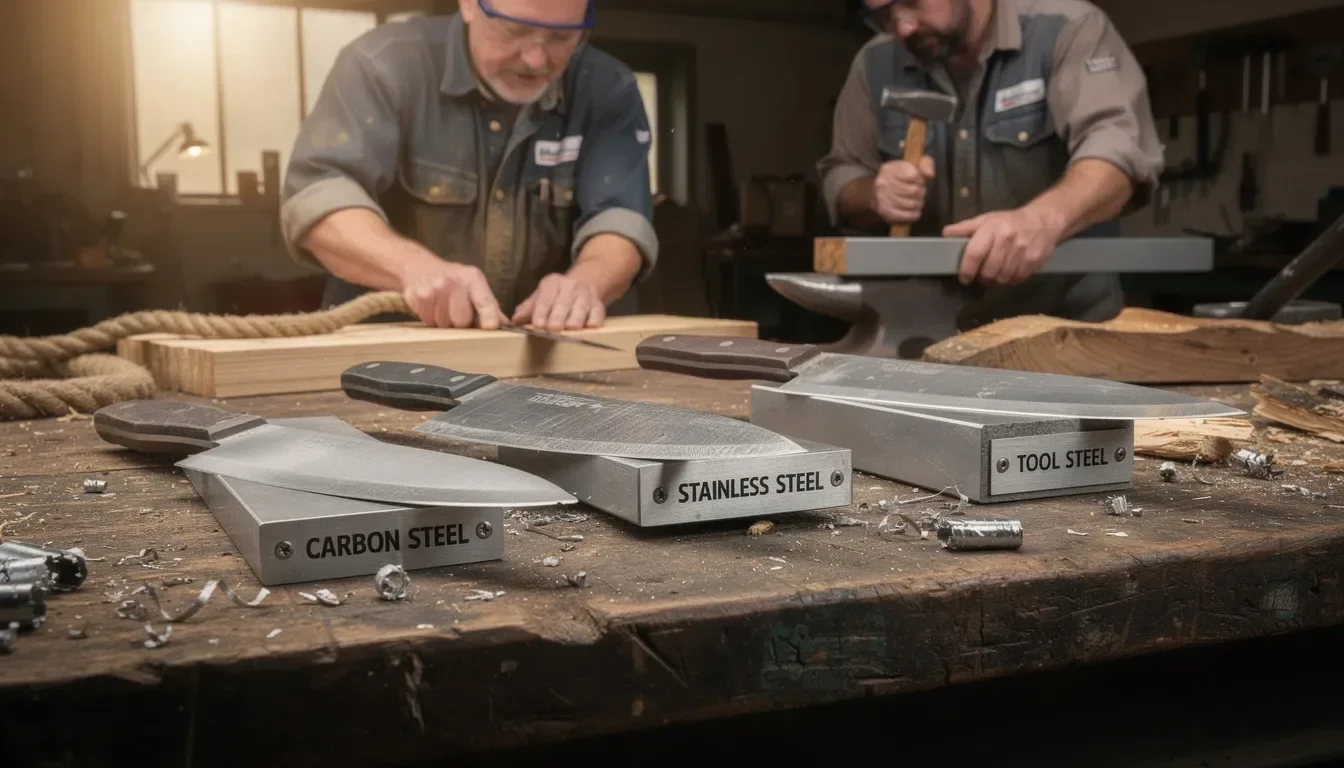
For petty knives, blade material usually shows up as high carbon steel, stainless steel, or powdered steel, each with its own maintenance personality. Carbon steel can take a very crisp, sharp edge and develop patina; stainless steel is the pick when the knife will live around wet boards, acidic fruits, and rushed cleanup. Powdered steels can blend edge retention with corrosion resistance, but sharpening feel still depends on alloy and heat treat.
Many Japanese petty knives use harder steels such as Aogami Super, which can hold a sharper edge longer than many other knives. The cost is brittleness: harder steel stays keen, but it doesn’t like lateral stress. Also, “harder is better” is only half true—hardness supports edge stability, but geometry and technique decide whether that stability survives day-to-day utility work.
What does heat treat change?
Heat treatment is where steel stops being “metal shaped like a knife” and becomes a tool with a predictable personality on the stones. In a small shop, tiny choices—how evenly the blade heats, how the quench behaves, and how temper cycles are tuned—show up later as sharpening response, durability, and chip resistance. A petty knife that deburrs cleanly and holds a stable bite usually got disciplined heat control, not just fancy steel on paper.
A quick workshop micro-case: a 150 mm petty ground very thin can feel brilliant on tomatoes, then chip on the first hard squash if the edge is left too acute for that user’s habits. The fix often isn’t “different material,” but a different compromise—slightly more edge angle, a touch more meat behind the edge, or a less aggressive finish. At MG Forge, that kind of decision typically happens at the grinder and gets verified at the stones, because the edge tells the truth fast.
What about Wa handle vs Western?
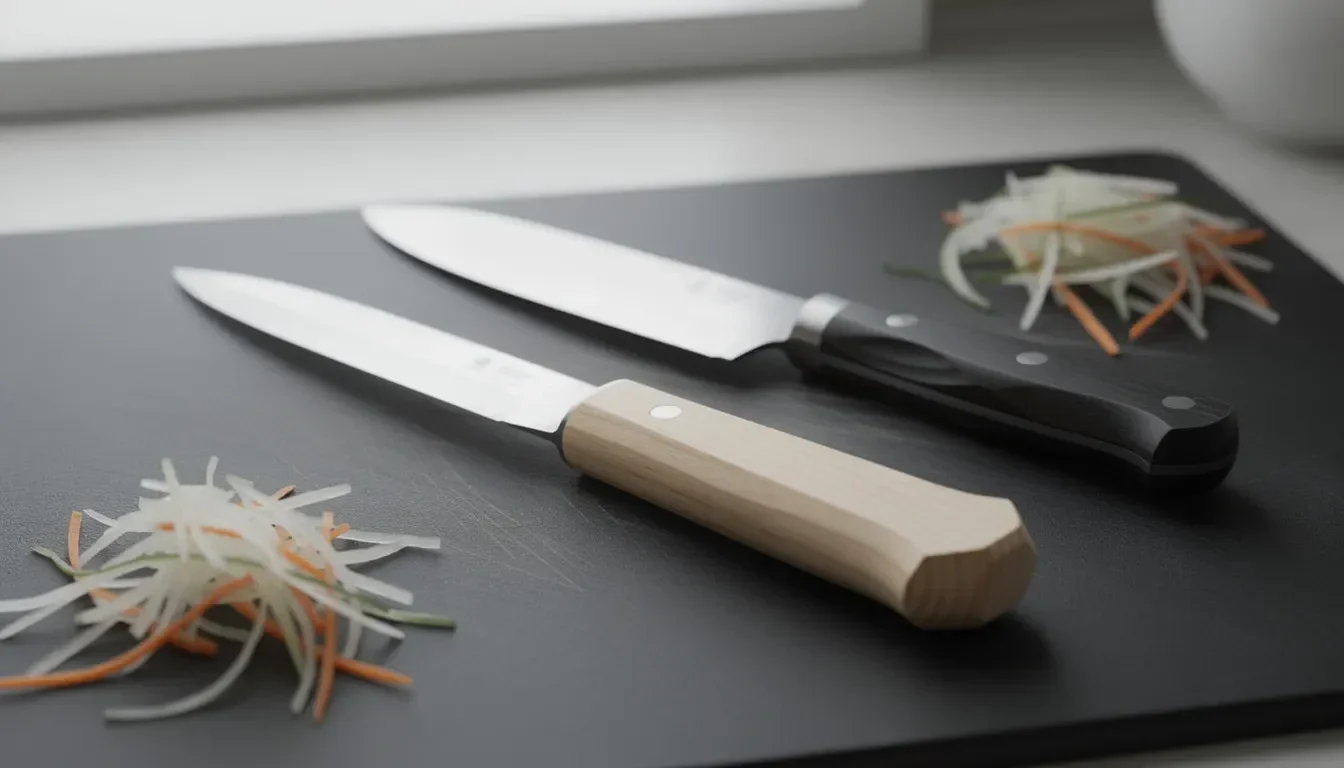
Japanese utility knives usually come with traditional wooden Wa-handles or Western-style ergonomic handles. Wa handles tend to be lighter and wood-based; Yo (Western) handles often feel more planted in the palm. Neither is universally better—each shifts balance, and balance changes how accurate the knife feels during repeated precision tasks.
Handle shape and handle material matter because petty work is repetitive and detail-heavy. A good petty utility knife should be sharp, versatile, and have a handle that stays secure when wet without feeling bulky. Many petty knives are tuned to be blade-forward in balance, which improves precision when trimming and peeling. Put bluntly: if the handle is too fat or too slick, your fingers will notice before the cutting board does.
What jobs suit a utility knife?
A japanese utility knife can do many of the same kitchen tasks as a chef’s knife—mincing shallots, chopping herbs, slicing small vegetables—just on a smaller canvas. It also shines where longer blades feel clumsy: trimming fat caps, slicing small fruits, portioning sandwiches, or cutting garnish components. This is where the utility knife earns its name: high precision, low drama, fast repetition.
Some blades add texture to improve food release. A hammered finish, for instance, can reduce sticking by breaking up surface contact, which is noticeable on cucumbers or potatoes sliced thin. That detail won’t rescue bad geometry, but it can make a small knife feel calmer and less grabby during tight prep.
What should never be asked of it?
Petty knives are not for heavy-duty work like cutting bones, because harder steel can chip. The same warning applies to frozen foods and very hard materials: Japanese utility knives are not ideal for impact, torsion, or prying, even if the edge feels confident. If the job involves force, that’s deba territory—or a tougher Western-style chef knife built to take abuse.
This is where knife collections go sideways: people try to make one piece do everything. A petty is closer to a scalpel than a cleaver, even if it can chop herbs all day. When you need fish butchery, a deba does the breaking; for sashimi slicing, a yanagiba or sakimaru steps in; for general board prep, the gyuto handles the larger knives workload.
How do care and sharpening work?
Care for Japanese utility knives is simple but not optional: hand wash and dry immediately after use. That protects the edge and the handle, especially with wood and reactive steels like carbon steel. Storage matters too—guards, saya, or a clean rack prevent mystery chips from drawer contact and other knives.
For sharpening, those 10–15 degrees per side angles are common on petties, but the “right” angle depends on how thin the blade is and what it cuts daily. A practical approach is conservative first, then adjust: if the edge micro-chips, increase the angle slightly; if it feels dull too fast, refine finishing grit and clean up deburring. As consulting requests rise in 2026, the repeat pattern stays the same—most problems come from technique plus care, not “bad steel.”
How do famous makers fit the picture?
Names like yu kurosaki and sakai takayuki come up often in petty knife discussions, especially when people compare grinds, profiles, and fit-and-finish at a given regular price. The value in those comparisons isn’t hero worship; it’s learning what to look for: thin tips, even bevels, clean handle transitions, and predictable food release. It trains your eye to see craftsmanship, not just branding and price tags.
The practical takeaway: judge a utility knife like a tool, not a display piece. Check spine and choil comfort, confirm the edge isn’t over-thinned for your habits, and choose a handle that stays secure when wet. The knife should feel quiet in motion—no fighting the cut, no awkward balance, no surprises when it matters.
What is a Japanese utility knife called?
Most commonly it’s called a petty knife, a small all-purpose blade for precision prep. The term “petty” comes from the French petit, referring to its smaller size. In use, it fills the space between a paring knife and a chef’s knife.
What is better, Miyabi or Shun?
It depends on preferences like grind feel, handle shape, and how thin an edge is tolerable for the user’s technique. Both are generally positioned as mass-market Japanese-style knives, often using stainless steel for easier care. The better choice is the one that matches maintenance habits and cutting style, especially around chipping tolerance.
What knife do navy SEALs really use?
There isn’t one single “real” SEAL knife model that applies universally, and specific issued or preferred knives vary by unit, era, and mission. For kitchen use, that conversation doesn’t translate well anyway because combat/survival designs prioritize toughness over thin slicing geometry. A Japanese utility knife is built for precision cutting, not prying or impact.
What are the best quality Japanese knives?
High quality usually shows up as consistent heat treat, clean geometry behind the edge, and solid fit-and-finish at the handle and spine. The “best” category is also task-specific: gyuto for general prep, petty for precision, yanagiba/sakimaru for sashimi, and deba for breaking down fish. In 2026, buyers tend to get the best results by matching knife type and steel to actual cutting habits and care routine.
What makes a petty knife an essential part of a minimal Japanese knife collection?
A petty is the compact utility blade often paired with a gyuto, and in real prep it covers precision cuts where other knives feel oversized, making it especially useful for home cooks who want control close to the board and around delicate items without risking fingers; the difference is that it can work on the board with a clean, accurate bit of edge while still feeling small and nimble, and when complemented by a larger knife it reduces the remaining clutter in a collection without giving up capability (other knives). To maintain performance and protection, it should be hand-washed, dried, and stored with care, because thin geometry is durable only within normal slicing and trimming, not breaking hard items or using the knife to carry force through bones; it is called a petty (history) and it can hold a keen edge when the user avoids twisting, while makers like MG Forge may review grind and heat-treat choices to create predictable sharpening feel rather than a display piece. This practical focus keeps options clear when comparing a single piece to multiple mid-size tools, and avoids treating a nice finish as the main reason to buy; even if it looks pretty, thoughtful storage and handling prevent chips, and shopping decisions should rely on function over impulse (stock) or add-to-cart habits (cart) while keeping the knife’s ideal role in mind.