Higonokami knife: history, sizing, steels, and care
What is a higonokami knife?
A higonokami knife is a small Japanese folding knife built around a minimalist idea: a blade, a pivot, and a handle that’s basically a folded metal sleeve. People describe the higonokami as the pocket knife that “just works,” and for once the internet isn’t exaggerating. No liner lock, no back lock, no springs to tune—just friction, decent tolerances, and a bit of user awareness.
It’s also a knife with a very specific vibe: part tool, part cultural object. In Japanese culture the higonokami became a symbol of utility and reliability, which is why collectors still like one in a knife roll, display, or broader collection. In 2026, with more cooks and makers paying attention to heat treatment and edge geometry, the higonokami knife gets reappraised instead of shrugged off as “cheap.”
In practical terms, most examples show up in three common blade lengths: 75 mm, 100 mm, and 120 mm. Those numbers change how it behaves in the pocket and on the cut—75 mm is a daily package opener, 100 mm is the do-most-things size, and 120 mm starts to feel like a small field knife. For kitchen-minded people, it overlaps with petty-knife tasks: quick trimming, opening bags, even light fruit work.
Where did the higonokami come from?
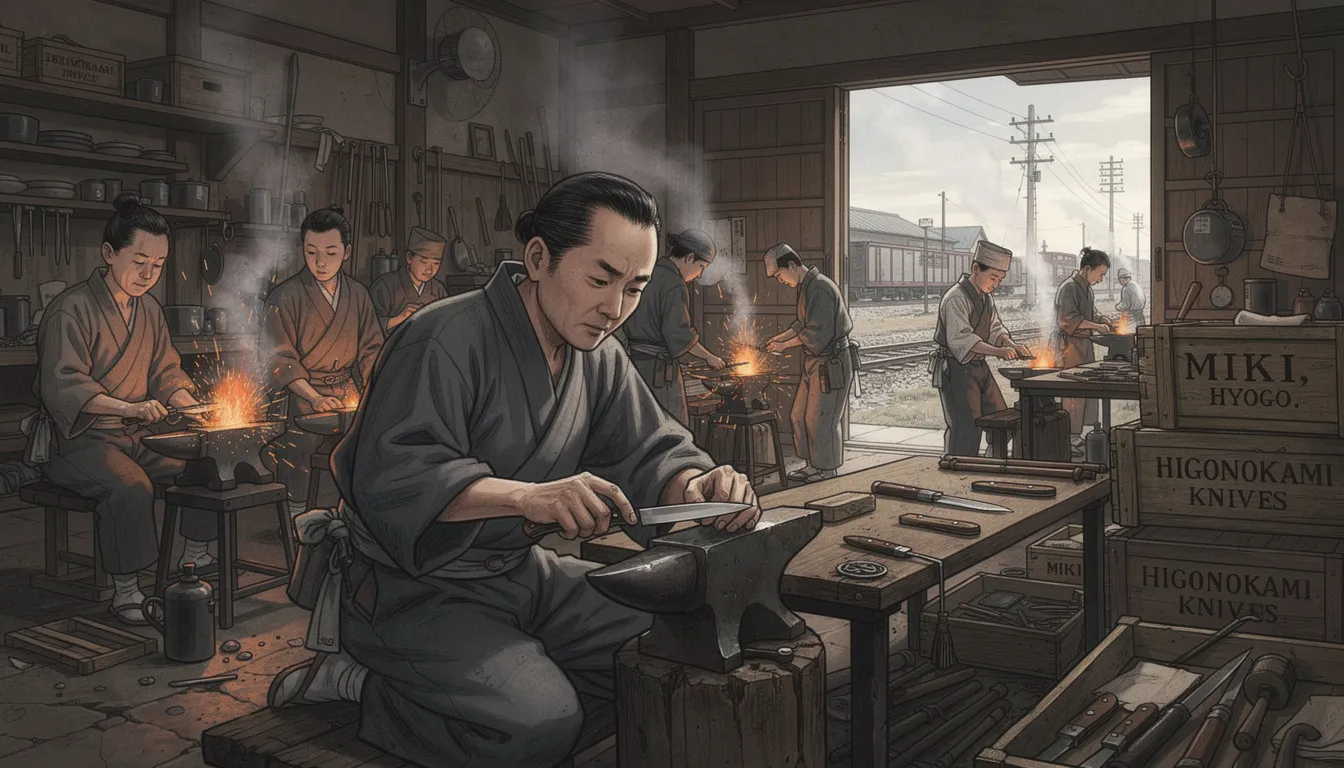
Higonokami knives have been made since the late 19th century in Japan, and the origin point that comes up again and again is Hyogo Prefecture, specifically the town of Miki. The first higonokami knives were invented by Komataro Nagao during the Meiji Era, around 1894 or 1896. That timing matters: Japan was modernizing fast, and people wanted tools that were dependable, not precious.
The name is its own little history lesson. “Higonokami” refers to the Higo province and means “lord/god of Higo,” tied to the old name of the Kumamoto area in modern-day Kyushu. Add the story that the design was admired by the prince who would eventually become Emperor Taisho, and it’s easier to see how it gained popularity well beyond “just another folding knife.”
At one point, all schoolchildren in Japan were issued a higonokami to use as a pencil sharpener. Farmers, craftsmen, and even members of the former samurai class carried them during the Meiji period, which is about as broad an endorsement as a tool can get. Later, strict knife laws enacted in 1961 contributed to a decline in everyday carry use, and that shift still echoes in how people talk about “harmless” small blades today.
How does the friction folder really work?
Mechanically, the higonokami is a friction folder, meaning it lacks a mechanical locking mechanism. The “lock” is your grip plus the friction at the pivot, which is why a well-fit pivot feels confidence-inspiring and a sloppy one feels like a tiny lawsuit. This is also why blade length and grind matter: the longer the blade, the more leverage you’re applying against that friction point.
Most higonokami include a chikiri, a thumb lever used to manually lock the blade open during use—except it’s not a true lock, it’s a lever and a control surface. In day-to-day cutting (mail, cardboard, twine), the chikiri gives your thumb a stable point, so your hand naturally resists closure under pressure. Some people also treat that little tab like a mini pry bar, which is a great way to discover the limits of friction folders.
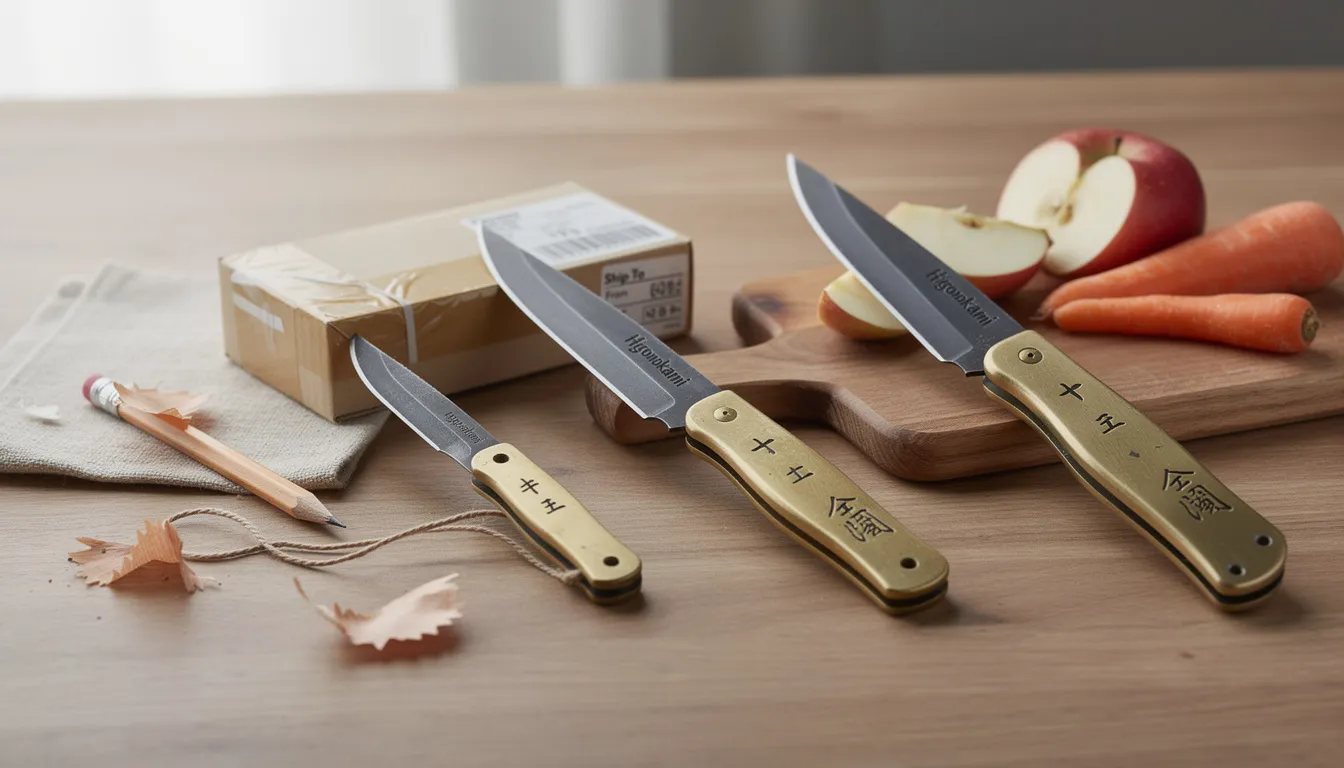
The handle is typically made from a single sheet of folded brass, which keeps the build simple and rugged. That folded-shell design explains the slim profile in the pocket and the very flat carry that EDC folks like; it’s basically built-in storage without bulk. In an MG Forge kind of mindset, it’s “honest construction”: fewer moving parts, fewer failure points, and every tolerance shows up in the feel.
What steels show up in higonokami knives?
Steel choices vary, but many higonokami knives use high-quality Japanese carbon steel such as Aogami (Blue Steel) and Shirogami (White Steel). There are also versions with blades made from SK, VG10, and traditional paper steels, depending on maker and model. In 2026, more customers recognize that the label on the steel isn’t the whole story—heat treatment, intended use, and grind still decide how the knife behaves.
A widely repeated user comment is that the blue paper steel version is favored for sharpness and ease of sharpening. That matches what tends to happen on stones: a clean burr forms quickly, feedback is crisp, and edges come back without drama. Still, a carbon steel edge can be toothy or refined depending on finishing; a 1,000-grit edge bites cardboard, while 3,000–6,000 grit feels smoother on food skins.
From the forge perspective, steel choice also affects how forgiving the knife feels as a pocket tool. Carbon steel takes a keen edge, but it also advertises misuse: twist cuts, staples, and gritty box breakdowns can leave reminders stamped right into the edge. If it helps translate the romance into reality, carbon steel isn’t fragile—it’s just honest, and it doesn’t pretend your cutting technique is perfect.
What does “warikomi” mean here?
One detail many people miss is that the blade is often a warikomi sandwich of steel and iron. In plain language, that’s a hard steel core for the edge, supported by softer iron on the sides. The softer jacket can add toughness and makes making, finishing, and later touch-ups more approachable, while the hard bit at the edge does the cutting.
This is where Japanese blade tradition shows up in a pocket format. Laminated construction is familiar if you’ve handled kitchen knives that pair a hard core with cladding—soft iron, stainless, or something decorative. In a forge shop, the same logic appears in san-mai kitchen blades, and it’s part of the reason a “simple” little higonokami can still carry serious craft.
Worth adding: laminated doesn’t automatically mean better, because fit and heat treatment still rule the day. But it does mean edge performance can be tuned without making the entire blade brittle. That mix of hard and soft is a classic Japanese compromise, not a gimmick—and it’s one reason collectors keep circling back to the higonokami.
What size fits everyday carry?
Most higonokami models are available in 75 mm, 100 mm, and 120 mm, and those sizing numbers translate directly into what feels natural in the hand. 75 mm is the “always there” tool: opening packages, slicing tape, trimming loose threads, and the occasional emergency pen rescue when you need to sharpen a pencil the old-school way. 100 mm is the do-most-things option, big enough for light food carving and still compact in a pocket.
120 mm is where the knife stops feeling like an accessory and starts feeling like a commitment. It gives more reach for outdoor tasks like cutting line and dealing with tangles, but it also increases the leverage closing against pivot friction. With friction folders, extra length is both capability and responsibility, and your grip becomes part of the mechanism.
Price plays into it too. A typical price for a 100 mm higonokami is around $15, which is part of why people use them for tasks that might damage more expensive blades. The flip side is that some view them as inexpensive and disposable, which is a shame when the knife is well-fit, the pivot is right, and the steel is treated properly.
What does it do well as a pocket knife or EDC?
The higonokami is appreciated for compact size and portability, which is why it’s often mentioned as everyday carry (EDC) or just “edc” in posts and comment threads. In real life that means boring wins: opening mail, breaking down boxes, cutting a zip tie, cleaning up a loose tag on a new apron. It’s great for opening packages and mail, and that alone covers a ridiculous percentage of modern life.
It also crosses into outdoor and kitchen-adjacent use. People use it for carving food, cutting fishing line, and managing tangles—small blade, quick access, easy to wipe down, easy to put back in the pocket. And because it’s not usually an expensive showpiece, it’s often the knife that takes the risk cuts that would make a hand-finished gyuto owner flinch.
Legality is the quiet footnote here. The 1961 tightening of knife laws in Japan is part of why everyday carry declined there, and in 2026 most responsible owners check local rules before calling anything an “EDC pocket knife.” That’s not about fear; it’s about keeping a tool a tool, and keeping access to sensible carry options from getting worse.
How is rust, sharpening, and upkeep handled?
Carbon steel higonokami knives are known to rust easily and require regular oiling to maintain their condition. In practice, that means wipe the blade after use, especially after acidic contact (fruit), sweaty pocket days, or humid weather. A thin film of oil is enough; you want a barrier, not a greasy handle that slips under pressure.
There’s also a very practical maintenance quirk: the riveted design can loosen over time. The old-school fix is a gentle tap with a hammer to tighten the pivot, which sounds crude until it works (and then it sounds like tradition). If the blade swings too freely, friction folder safety drops fast; if it’s too tight, it becomes annoying and encourages unsafe opening by squeezing, twisting, or forcing it.
Sharpening is straightforward, and that’s part of the appeal. For a working edge, many people stay around 1,000–3,000 grit and call it good, because this is a utility knife more often than a show edge. In an MG Forge mindset, this kind of small carbon blade is a reminder that sharp is maintenance, not a one-time purchase—touch-ups, angle consistency, and a sensible edge matter more than stamped marketing.
What features and cultural history explain the higonokami knife’s practicality, maintenance needs, and modern popularity?
The higonokami is one of those tools whose simplicity drives its function: a small friction folder built for everyday access, with the chikiri as a control point and the folded handle acting like medium storage that stays flat in the pocket, yet it can still feel cheap if the pivot is loose or the grind is rough, which is why makers and collectors measure fit more than hype and figure out what size matches intended use. Its history is tied to dates developed in Japan and later popularity shifts after knife laws, and while carrying can be illegal depending on local rules, the design remains a nice example of tradition—often stamped with maker marks and sometimes described as trademarked—where warikomi construction means a hard edge core and softer cladding that serves as a protector against brittleness while still showing misuse easily. Practicality shows up in boring tasks like breaking down a box, cutting line, and avoiding squeezing or twist cuts that can damage a carbon edge; upkeep is simple but real: wipe, oil, and if the rivet loosens, the stock fix is a gentle tap to restore friction at the pivot, a method that helps people discover why tolerances matter. For buying, sales vary by page and case, and some people order from amazon because it’s easy, though the reason many love it is that sharpening is straightforward and doesn’t expect perfect technique—just steady angles and regular touch-ups (tools;maker;access;box;medium;storage;point;squeezing;history;stock;measure;collectors;figure;visit;protector;stamped;simplicity;intended;discover;form;function;measurement;expect;cheap;illegal;page;vary;justin;practicality;mentioned;sales;words;dates;developed;popularity;nice;tradition;trademarked;means;perfect;easily;simple;small;bought;amazon;case;order;reason;love;great).