Gyuto knife vs chef knife: differences that matter
Gyuto knife vs chef knife: which wins?
For most cooks in 2026, the clean answer to gyuto knife vs chef knife is simple: a japanese gyuto knife wins on precision and edge life, while a chef's knife wins on toughness and forgiveness. The gyuto is built for fine slicing, straight push cutting, and tidy tip work. A western chef knife is built for speed, a rock-chop rhythm, and soaking up abuse in busy prep without throwing a tantrum.
The right pick still depends on cooking style and what hits the board every day. If prep is mostly vegetables, fish, and boneless proteins, gyuto knives feel like a scalpel that happens to be multi purpose. If your cutting tasks include rough contact—hard squash, joints, or rushed station work—the Western-style kitchen knife is often the calmer choice, even if it’s not the “perfect knife” on paper.
What does the blade profile change?
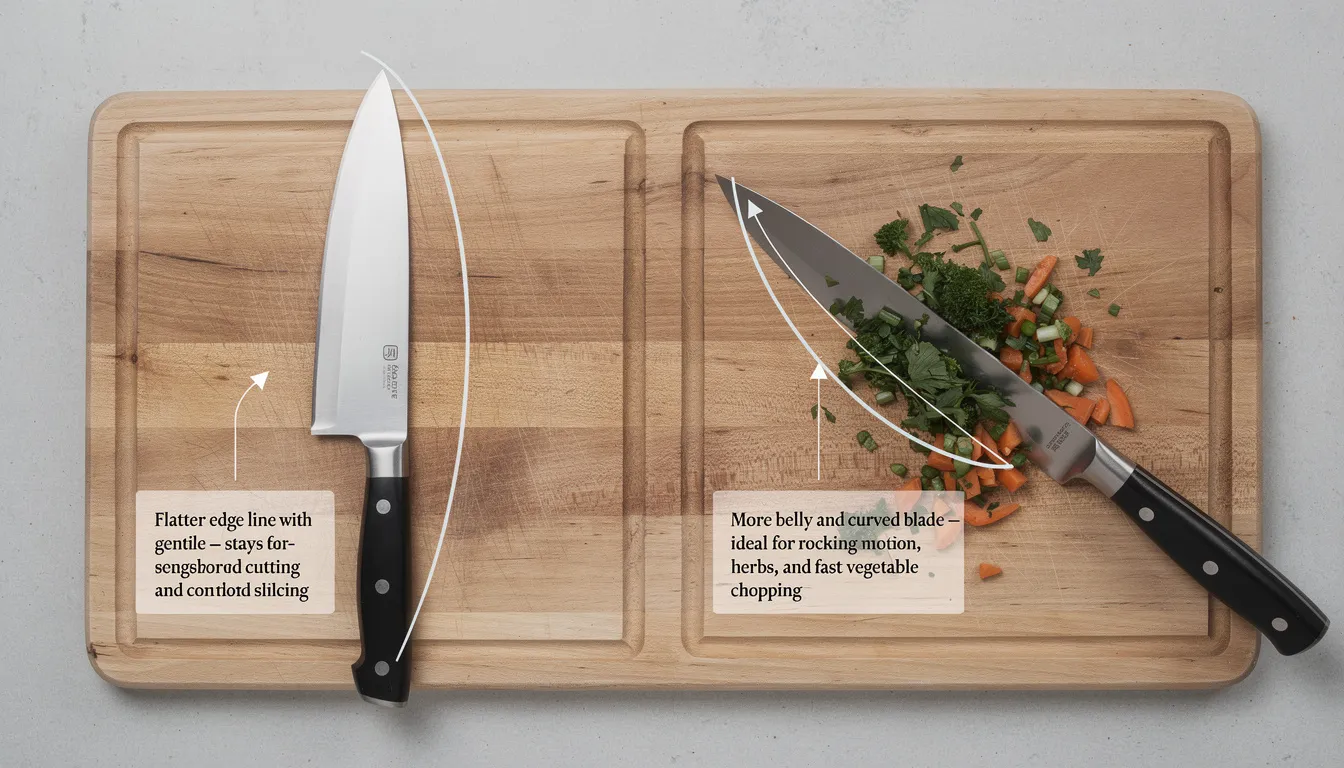
The biggest “feel” difference comes from blade profile. Gyuto knives tend to run a flatter edge line with a gentle curve, so the edge stays on the board longer during push cutting and controlled slicing. A western chef knife usually has more belly on the edge and a more curved blade overall, which is exactly why it loves rocking motion for herbs and fast chopping vegetables.
Tip geometry matters too. Many chef's knife designs lean into a pronounced pointed tip, while a gyuto tip often feels more refined—easy to place, easy to steer, great for precision tasks. In practice, that changes how cleanly the tip starts a slice on onion skins, silver skin, or fish portions, especially when you want the right blade to “bite” without extra pressure.
How do length and weight play out?
Gyuto knives are typically larger, commonly 210–270 mm in blade length. Chef's knife options are often shorter, usually 180–210 mm, which can feel safer in tight home kitchens. That length difference changes how far the tip travels and how stable long, single-pass slicing feels when you’re working through meat or big veg.
Weight is the second surprise. Gyuto knives are generally thinner and typically lighter than a western chef knife, which is thicker and heavier. Many gyuto designs also run a slightly forward balance, which makes tip-led dicing and pull-through slicing feel agile—less wrist force, more quiet efficiency during cooking.
What about steel, hardness, and edge retention?
Gyuto knives are usually made with harder steel, which boosts edge retention but can demand more skill when you sharpen. A western chef knife commonly uses softer steel in the 52–58 HRC range, which is quicker to bring back but dulls sooner. That’s the real trade: long-lasting sharpness versus easier maintenance and less drama when you bump the board.
In the shop, this shows up as geometry choices. A gyuto often runs acute edge angles—around 15° per side—so the blade bites early and cleanly with a fine edge. Softer steel tolerates thicker edges and heavier contact without chipping, which is why a chef's knife can feel “rugged” even when it’s not chasing a razor sharp edge.

What does Japanese forging really change?
The gyuto was developed in Japan as a response to the western chef knife, and even the name—gyuto, “beef sword”—points at slicing larger cuts. Japanese knife design leans into sharpness, balance, and minimalism, so the grind and heat treatment are tuned to cut first and survive second. That doesn’t mean fragile by default, but it does mean the margin for mistakes is smaller, and careful handling pays off.
Materials also shape expectations. A damascus steel look can come from layered construction, like forge-welded cladding over a hard core, and it can also be done as forged damascus patterning with different steels. In traditional work, things like fibrous iron cladding or Tamahagane-inspired approaches are as much about structure and feel as about style, but the core heat treat still decides how the edge behaves on the board. At MG Forge, that’s where most time goes—dialing the hard core so it cuts with confidence, then finishing so the knife stays practical, not precious.
How do maintenance and sharpening differ?
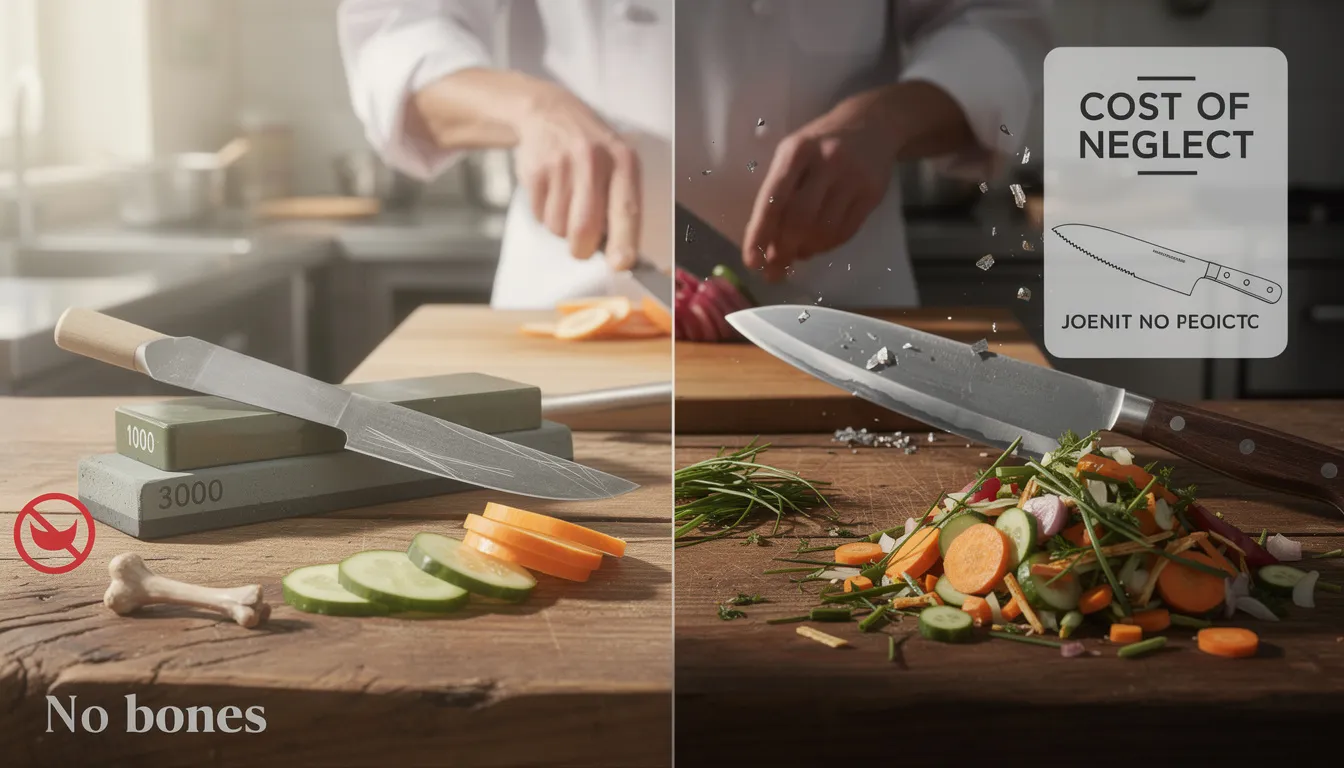
Here’s the hook: gyuto knives generally require whetstone work, and they should not be used on bones due to brittleness. A chef's knife can often be maintained with a honing rod and tolerates messy contact better. Both styles need proper care, but the “cost of neglect” is higher with hard-steel japanese edges, especially if you’re doing rock chopping all day like it’s a cardio plan.
A simple, real-world baseline looks like this:
Keep edges dry during prep; wipe between acidic items like citrus and tomatoes.
Use a wood or soft synthetic board; avoid glass and granite.
Store in a saya, edge guard, or a clean drawer insert to protect the apex.
Gyuto knives also need careful handling to prevent chipping, and some steel choices need extra attention to avoid rust. Patina on carbon steel can be normal and even helpful, but active red rust is always damage and needs removing quickly. If you accept that reality, you’ll avoid frequent sharpening and keep the edge behaving the way it should.
Which knife fits which tasks?
For precise work, a gyuto shines on boneless foods: fish portions, herbs sliced without bruising, and clean onion dice that doesn’t explode into confetti. Gyuto knives excel at slicing, push cutting, and precise dicing, and they’re famously versatile across Western and japanese cuisines. A japanese knife like a gyuto can sit beside a yanagiba or sakimaru for sushi nights, while still doing everyday cutting tasks without feeling like a specialist.
For heavy-duty tasks, a chef's knife’s robustness is often the better choice, especially in high-volume prep. Western designs are more forgiving for beginners and handle robust tasks without easily chipping, thanks in part to thicker geometry and typically stainless steel plus softer steel tempering. And when the job is truly forceful—like breaking down fish bones—this is where a deba belongs, not a thin gyuto.
Where do most people go wrong?
The most common mistake is mixing technique with the wrong geometry. A gyuto wants controlled push cuts and clean inputs; repeated rock chopping into hard board contact can stress a thin edge, especially if you keep the rocking motion aggressive. The second mistake is using a harder steel gyuto like a splitter—bones, pits, frozen foods—then blaming the steel when chips show up.
A smaller, sneaky error is oversized length for the workspace. A 240 mm gyuto can feel like the right knife on a wide board, but awkward on a narrow counter; a 210 mm often lands as the daily-driver compromise. When MG Forge tests a new gyuto grind, the check is simple: it should glide through carrots without cracking, then still shave paper after a few sessions of normal prep.
What knife does Gordon Ramsay use?
Publicly, he’s been seen using different knives over the years, often a western chef knife or other Western-style chef knives in professional settings. The practical takeaway is to match the knife to the workload: durability for fast line prep, and a thinner Japanese-style blade for cleaner slicing. If you’re trying to copy the result, focus more on sharp, consistent edge work and technique than the exact model of chef's knife.
What is a gyuto knife used for?
A gyuto knife is a Japanese chef’s knife used for slicing, dicing, and mincing across meat, fish, and vegetables. It excels at push cutting and clean, straight cuts thanks to its flatter profile and straight blade feel through the working edge. It’s best kept away from bones and hard impacts, because precision comes with less tolerance for abuse.
Should I get a gyuto or santoku?
Choose a gyuto when longer strokes matter: cabbage, brisket, melons, or big prep sessions—210 or 240 mm helps. Choose a santoku when the workspace is tight and most prep is compact, board-forward vegetable work with lots of chopping. Either way, plan on whetstones if the steel is hard, and pick based on personal preference and how you actually move the blade.
Is a gyuto a good all-purpose knife?
Yes—gyuto knives are renowned for versatility and universal use in the kitchen. They handle most boneless tasks with excellent edge retention, especially with harder steel and fine edge angles that stay crisp through normal cutting. The limit is rugged abuse: for bones or splitting, switch to a tougher chef's knife or a purpose-built deba, and your gyuto will keep doing what it does best in the gyuto knife vs chef knife debate.
How does a straighter edge profile affect performance when comparing a gyuto knife vs chef knife?
A gyuto’s flatter working edge can feel closer to a straight blade, supporting push cutting and long, clean slices with high sharpness, while a western chef knife’s rounder belly favors rocking and absorbs more board contact for better durability; historically, gyuto as “beef sword” signals its comfort with slicing larger cuts of beef, and both knives aim at the three virtues of a kitchen workhorse—slicing, dicing, and mincing—so the best informed decision comes down to whether precision and edge life (often with whetstone care, as seen in shops like MG Forge) outweigh the forgiveness of a thicker, softer, more abuse-tolerant profile.