How do you maintain a japanese knife: the basics
How do you maintain a Japanese knife?
If you’re asking how do you maintain a japanese knife, the answer is refreshingly unromantic: clean gently, dry immediately, protect the edge, and store it safely. Do those four things and a Japanese knife stays dependable for years, not just “razor sharp” for a week. Skip them and the same knife can collect rust, scratches, and tiny chips faster than most people expect.
In 2026, more cooks are buying their first japanese kitchen knife with harder steels and thinner grinds than typical western knives. That’s great for clean slicing, but it also means your habits matter more. A 210 mm gyuto or 180 mm bunka can feel like a laser—until it meets the wrong cutting board, leftover lemon juice, or a crowded drawer.
From the forge side, it’s easy to spot which blades got proper maintenance. The knives that last usually share the same pattern: gentle washing, regular edge touch-ups, and no “mystery storage.” The rest look like they lived next to a can opener.
What makes a Japanese knife different?
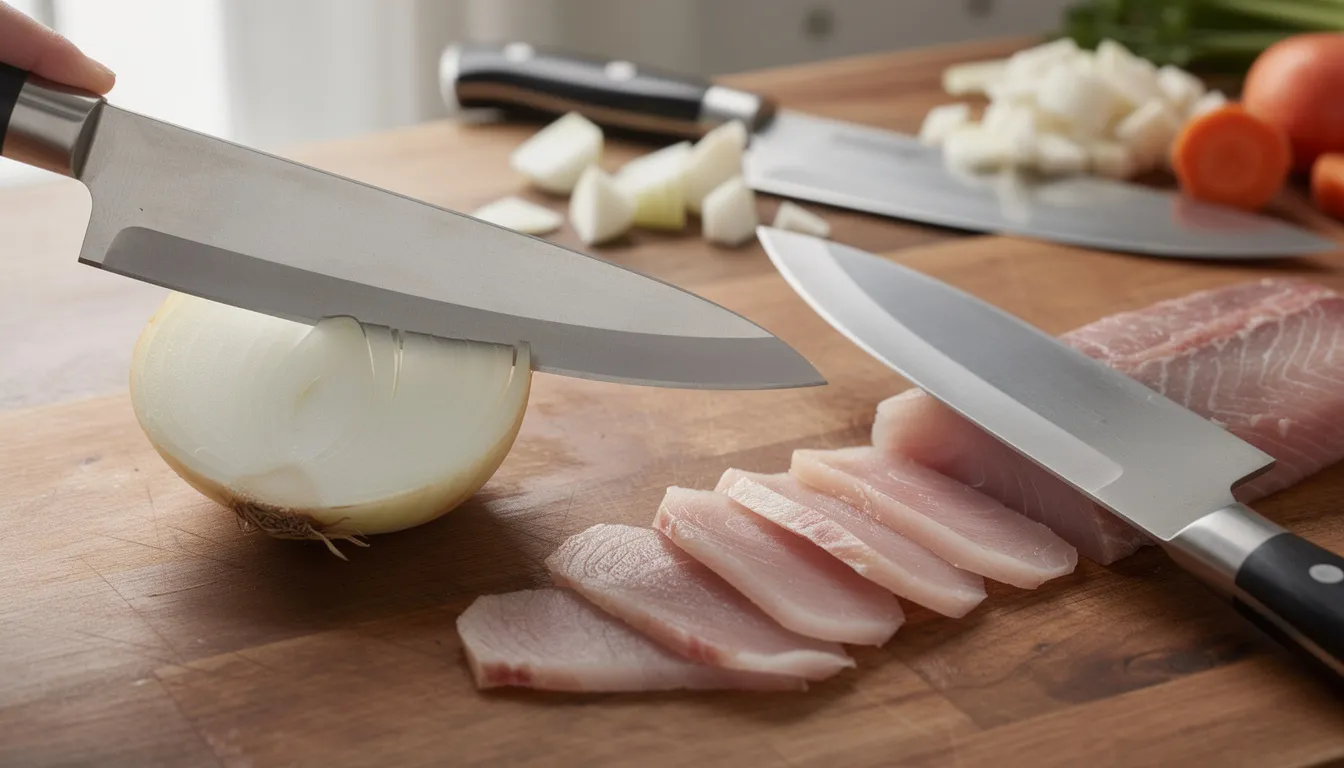
A japanese knife often leans on thinner geometry and a more refined edge profile than a typical chef's knife built for rough, all-purpose abuse. That’s why a 240 mm gyuto can glide through onions with less cracking and why a 270 mm yanagiba can leave cleaner fish surfaces. The tradeoff is simple: thin edges cut effortlessly, but they punish bad technique.
Grind and bevel style change the rules. Double bevel knives like gyuto, bunka, kiritsuke, or petty are generally friendlier for first-time owners. Single bevel knives like yanagiba, deba, or sakimaru reward exceptional precision, but they also demand more consistency in angle and board contact—exactly why sushi chefs obsess over the details.
A few shop-level numbers help set expectations. Common working lengths are 180/210/240 mm for gyuto and 120–150 mm for petty, while yanagiba often starts around 240–270 mm for comfortable sashimi pulls. Small changes in edge angle or board hardness show up faster when the blade is thin at the edge.
How do steel choices change japanese knife care?
Steel dictates how much babysitting a blade needs. High carbon steel is loved for feel on stones and crisp edges, but high carbon steel knives (and other carbon steel knives) need more attention to avoid rust than stainless steel knives. That’s not a flaw—just the reality of a steel that prioritizes sharpness and feedback.
Traditional materials influence behavior too. Tamahagane and wrought-like fibrous iron (often used as cladding in traditional builds) can add character and contrast, but they also make reactivity more visible. Forge-welded damascus (pattern-welded steel) can look wild under a satin finish, yet the “pattern” doesn’t replace proper care. Even stainless steel can spot if it’s left wet and salty for long periods—just slower, and with more smug confidence.
In the MG Forge shop, steel choice often follows the user’s rhythm. A line cook who wipes constantly can enjoy carbon steel with a stable patina, while home cooks who cook once a day may prefer stainless steel for less worry. Either way, japanese knife care still decides whether a blade is “aging nicely” or “spotting and pitting.”
What cleaning routine actually works?
The safest routine is gentle, fast, and repeatable. Wash with warm water, a soft sponge (soft side only), and a little dish soap, then dry thoroughly after each use. It’s not glamorous, but it prevents most long-term damage and keeps the finish in good shape.
Two common mistakes happen right at the sink. Most japanese knives should never go in the dishwasher: the heat, detergent, and rattling can damage steel, wooden handles, and finishes. It’s also important to avoid abrasive materials like steel scrubbies when cleaning, because they can scratch cladding and leave permanent marks you’ll remember every time you pick up the knife.
Timing matters more than people think. Food residue should be rinsed off quickly after use to prevent corrosion of the blade, especially after proteins or salty ingredients. After washing, dry immediately—no “air drying” on the rack and hoping for the best.
One more detail that surprises people: don’t wash in cold water. Warm water is the simple default, and a soft dish towel or sponge is recommended to avoid scratches. Keep it calm, keep it repeatable, and your knife care stops being a project.

How should rust and patina be handled?
First, separate “rust” from “patina.” Patina is usually a controlled darkening on reactive steel, while rust is active corrosion that keeps eating. In practice, the recipe is the same: moisture plus time (and a blade left “just for a minute” that turns into an hour).
Acidic foods speed things up. Wipe the blade immediately after cutting acidic foods to prevent discoloration, especially with carbon steel gyuto or petty that sees citrus, tomatoes, or onions. No panic required—just a quick wipe and rinse, like sushi chefs do between pulls when they want clean, precise cuts.
Drying is the boring hero here. Dry the blade and handle thoroughly with a soft towel to prevent rust, including around the choil and heel where water hides. Dry immediately after washing; stainless steel tolerates mistakes longer, but it doesn’t forgive them forever.
For carbon steel blades, oil is quiet insurance. Apply a thin layer of mineral oil (or food grade mineral oil, or camellia oil) to high carbon steel knives after cleaning to prevent rust, especially if the knife will sit for a few days. Regular oiling isn’t about making it shiny—it’s about helping prevent corrosion from turning into pits that weaken sharp edges.
If rust spots show up anyway, a rust eraser is the practical fix. Use it gently, then wipe clean, rinse, and dry with a dry cloth so you’re not trading rust for a scratched finish plus leftover grit.
Which cutting board preserves razor sharp edges?
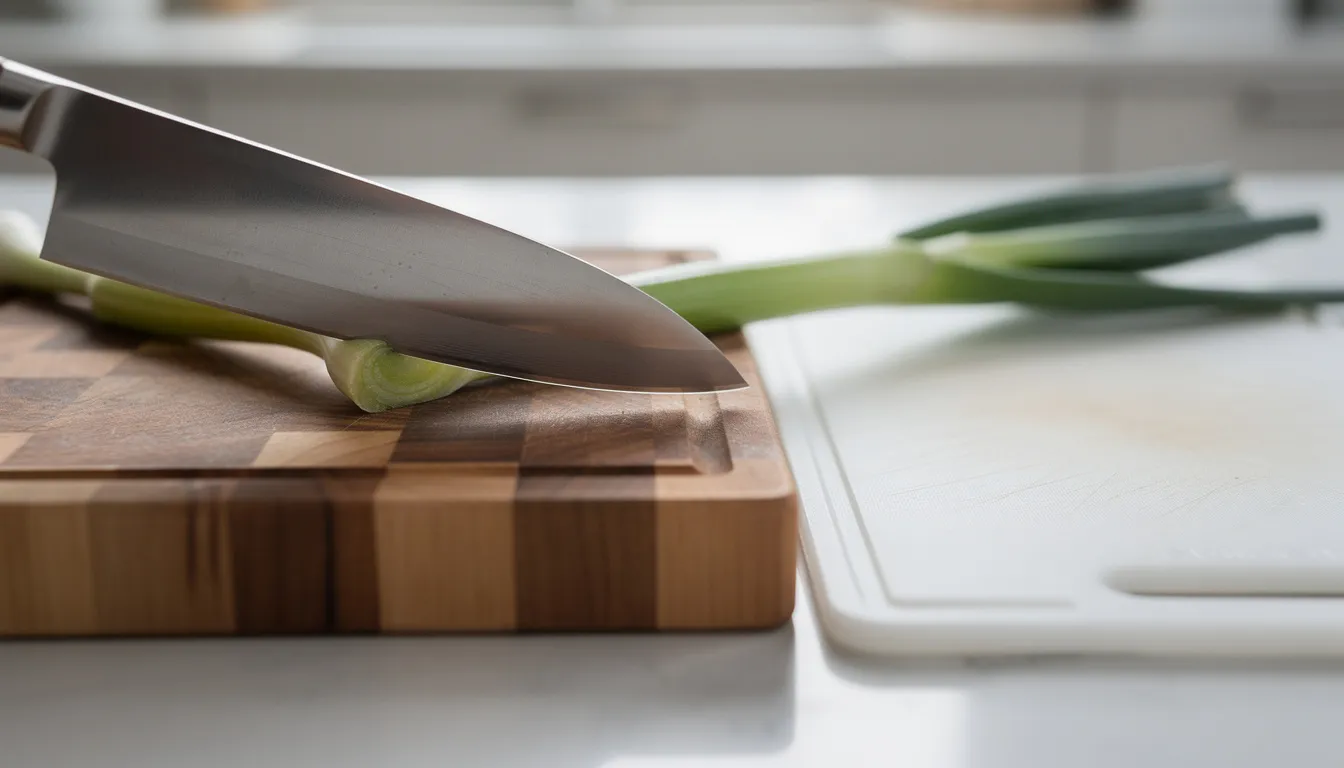
If the edge is treated like a fine tool, the cutting board needs to behave like a soft landing. Wood and plastic cutting boards are recommended with Japanese knives to preserve the blade’s edge, and end-grain wood is a favorite because it “gives” slightly under the edge.
Hard boards are where many “my knife got dull fast” stories begin. Cutting boards made from materials harder than the steel in Japanese knives—bamboo, marble, glass, slate—should be avoided because they can dull the blade quickly. Bamboo in particular can be deceptively hard and silica-rich compared to many woods.
There’s also a feel issue, not just wear. A board that’s too hard can make the knife bounce, leading to faster dulling and raising the odds of micro-chips on very thin, high-performance edges. Keep the board friendly and you maintain sharpness longer between stone sessions.
In kitchen terms, a 210 mm gyuto on a good wood board stays lively longer. A bunka used for push-cuts on a too-hard board can feel “dead” in a week. Same steel, different surface, different outcome.
What cuts should be avoided to prevent chips?
Japanese knives reward clean, controlled work. They don’t like torque, twisting, or prying—especially near the tip. Avoid cutting bones or frozen food, because it can chip the knife's edge even on thicker profiles like deba.
Technique and knife choice matter as much as steel. Use a deba for fish butchery and joints, and a yanagiba or sakimaru for clean sashimi pulls. A gyuto or western style chef knife profile can handle many tasks, but it still shouldn’t be asked to split chicken backs or smash through hard pits.
This is where geometry shows its personality. A thin kiritsuke tip is built for detail on vegetables and fine work, not levering. When chips happen, they usually start as tiny edge failures that grow if the knife keeps getting used without repair.
How does honing fit into knife care?
Honing and sharpening aren’t the same job. Honing is more like resetting the working feel of the edge between stone sessions. Regularly hone the knife using a ceramic honing rod to maintain the edge; ceramic is gentler than grooved rods that can be too aggressive on thin Japanese edges.
A honing rod is useful, but it’s not magic. Think of it as a maintenance tool that helps keep a knife sharp between sharpenings, especially for professional chefs who need consistent bite during service. Honing can be done often—even before every use—if the knife sees daily work.
A practical rhythm helps: 10–20 seconds of light ceramic honing, then a quick rinse and dry. If the edge still slides on tomato skin, that’s usually not a honing problem anymore—it’s time for stones.
When is sharpening needed, and how?
Sharpening means removing metal to rebuild the edge. Sharpen periodically with a whetstone, using a grit appropriate for maintenance or repair. A knife used regularly may need sharpening every 1–2 months, though your cutting board choice, technique, and steel can stretch or shrink that window.
Angle control beats force. Place the blade on the sharpening stone at the right angle; for many double bevel Japanese knives, people work roughly around 10–15° per side, but consistency matters more than chasing a perfect number. Stones don’t ask for strength; they ask for patience.
A typical progression depends on condition. Coarse grit is for real damage or chips, while fine grit is for refining and finishing when the edge is already in decent shape. If you rush on coarse stones, you can come back with a wavy edge that takes longer to fix than the original problem.
Single bevel blades like yanagiba are a different, more specialized approach, since the bevel face and ura (hollow) matter to how the knife tracks and releases food. If that sounds like “I should not freestyle this,” you’re correct—consider an experienced hand or a sharpening service when needed.
How should Japanese knives be stored?
Storage is where many good blades get quietly ruined. Proper storage is essential for longevity and peak performance, and a japanese knife should never be stored loose in a drawer—even if it seems fine most of the time. Drawer damage is sneaky: it dulls edges, nicks tips, and makes you blame “bad sharpening” later.
Here’s the simple reason: bumps against other tools chip and roll a thin edge. Storing knives in a drawer can also dull them through repeated contact with utensils, and those marks can look suspiciously like technique problems when you go to sharpen.
Better options are straightforward. Store knives on a magnetic strip, in a knife block, on a knife rack, or with blade guards to protect the edge. A magnetic strip works well if it’s away from splatter, and a knife block is a safe home that keeps steel from kissing steel.
For travel, guards matter more than people expect. Use blade guards in a knife bag to prevent damage, especially for thin-tipped shapes like bunka or kiritsuke. A blade can survive years of cooking and still lose its perfect edge to one loose zipper pull.
What does proper care look like long-term?
Japanese knives require regular maintenance for longevity and optimal performance. That doesn’t mean constant fussing—it means small habits stacked over time: hand wash with warm water and dish soap, wipe off food residue, dry immediately, touch up with a ceramic honing rod, and sharpen on stones when the knife stops responding.
There’s also a “future trend” element in 2026: more buyers now ask about steel origin, finish durability, and practical upkeep before looks. That’s healthy, because the prettiest damascus won’t stay pretty if it’s scrubbed with abrasives or left wet. If you’re still wondering how do you maintain a japanese knife, the long-term answer is boring on purpose: calm washing, careful storage, and consistent edge work.
In the forge, the goal is always the same: a tool that moves cleanly through food and feels predictable in the hand. With a gyuto for daily prep, a yanagiba for fish nights, and a petty for detail work, japanese knife care becomes routine—not a weekend project. The reward is a knife that stays calm, accurate, and ready, whether you’re a home cook or chasing service speed like sushi chefs.
What storage practices protect a Japanese knife edge from damage during everyday kitchen use?
Proper storage keeps thin edges from bumping into other tools, which quietly causes rolls, chips, and dulling that later looks like “bad sharpening”; to avoid slipping and impact when setting the knife down or putting it away, use a magnetic strip, block, rack, or a blade guard so the edge never contacts hard surfaces, and for setups involving wood (mộc) extras like saya-style covers, fit and cleanliness matter just as much as the material; if there’s uncertainty about the safest option for a specific grind or tip shape, expert advice from a maker or a shop like MG Forge helps keep storage from becoming the unseen source of edge problems.