Bunka: what it is, k tip, and how it cuts
What is a bunka, really?
A bunka is a Japanese all-purpose knife built for precise prep: think a wide blade, a flat-ish edge, and that unmistakable k tip (kiritsuke-style point) that behaves like a scalpel when board work gets tight. Bunka and santoku knives both grew out of the “do-most-things” idea, but the bunka leans harder into detail. Most bunka knives land in the 160–190 mm length range, which keeps them fast, controlled, and comfortable in a busy kitchen. In practice, a lot of bunka knives sit around 165–180 mm, and that size choice quietly decides what they’re great at—and what they’re a bit less thrilled about.
Why does the k tip change everything?
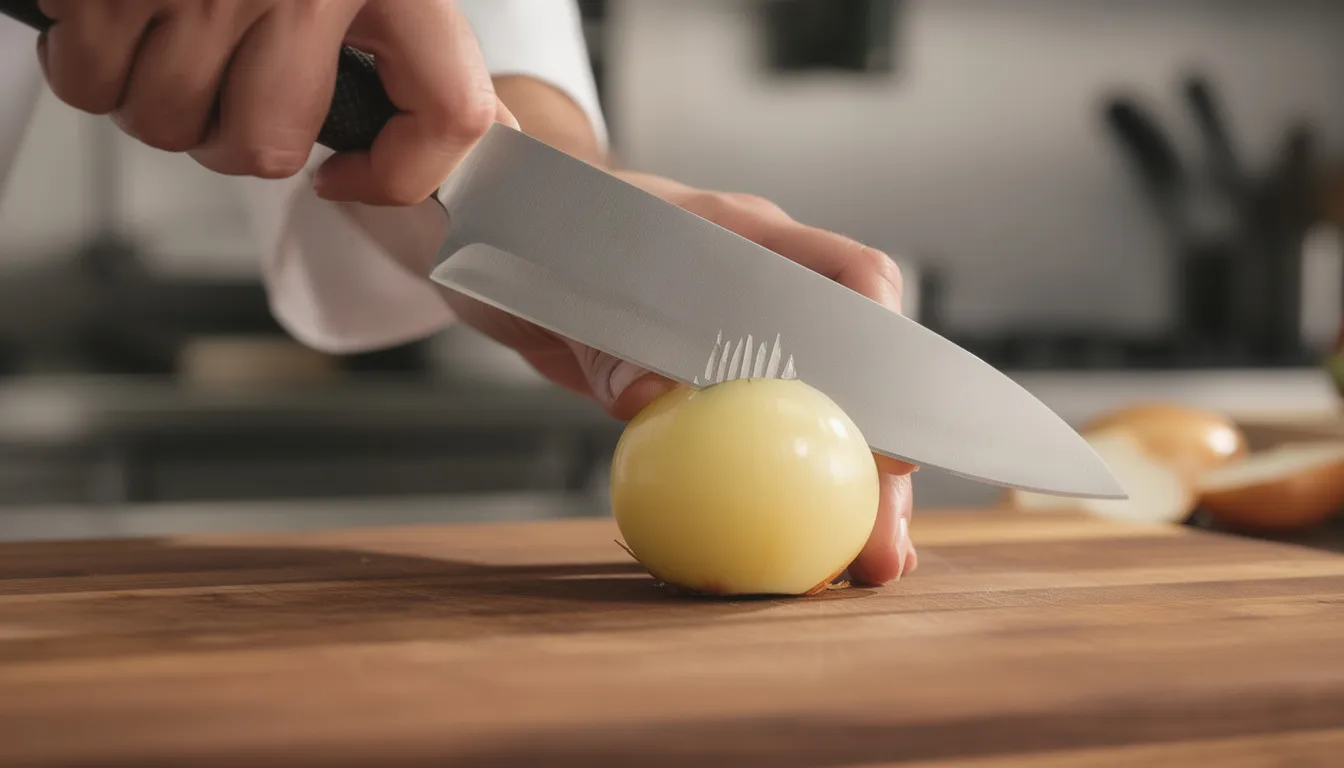
The pointed tip of a bunka knife is excellent for precision cuts, and that’s not brochure poetry—you’ll feel it on the first onion. That angular tip cut on the diagonal creates a needle-like front section for scoring fish skin, trimming silver skin, or starting a paper-thin slice without tearing. The flat edge on a bunka knife is made for push cutting vegetables, while the pointed tip is ideal for proteins and those “tiny, fussy” tasks that punish sloppy control.
Worth adding: a bunka’s tip is also more fragile than rounder profiles, so it’s a bad match for twisting through hard squash or prying at joints. If there’s one rule, it’s this: the more the tip looks like a fine pen nib, the more it demands clean, straight technique.
How do bunka knives move on the board?
Bunka knives naturally favor push cutting and chopping over a rocking motion. The wide blade gives knuckle clearance and makes fast chopping comfortable, especially on cabbage, herbs, and piles of aromatics. On a cutting board, bunka knives shine in detailed work like hollowing, slicing sashimi, and chopping vegetables with the heel, because that heel section stays stable and predictable instead of wandering.
A shop-floor pattern repeats itself: someone moves over from a Western style chef's knife and tries to rock-chop with a bunka, and the edge gets micro-stressed near the front third. The fix is simple—shorter strokes, more forward push, and letting the flat edge do the work instead of forcing a curve that the profile doesn’t really have.
Bunka knife or santoku knives?
Santoku knives feature a flat edge with a gently curved “sheep’s foot” tip, and that rounder nose forgives messy angles when time is tight. Santoku knives are versatile all-rounders for meat, fish, and vegetables, which is why santoku is so often suggested as a first Japanese blade. Both bunka and santoku knives typically sit in the same 160–190 mm length range, so the decision is rarely about reach—it’s about how much you value tip work and precision.
Compared side by side, bunka knives are usually slimmer, with a tighter spine-to-edge angle than santoku knives. Bunka knives are built to offer more flexibility for detailed work than santoku knives, especially when the job is “tiny and exact” rather than “a lot and fast.” That said, bunka knives can be less versatile than santoku or gyuto knives for heavy prep, simply because the pointed tip and overall profile are less forgiving under load.
Where does bunka sit among gyuto, kiritsuke, and petty?
A bunka can sometimes stand in for a paring knife for board-centric kitchen tasks: garlic, strawberries, shallots, garnish cuts. The extra blade height adds control that a small petty can lack, while still feeling nimble in tight spaces. In that sense, bunka knives sit in a handy middle ground—more serious than “tiny knife work,” less committed than grabbing a full chef's knife every time.
But there’s a limit. Bunka knives are generally shorter—often 165–180 mm—and that can cap their comfort for larger tasks like breaking down big melons or portioning multiple roasts. For long slicing, a yanagiba or sakimaru earns its keep; for volume prep, a 210/240 mm gyuto is simply calmer and steadier. And for heavy fish butchery, a deba exists for a reason.
What steels and laminations show up in a bunka?
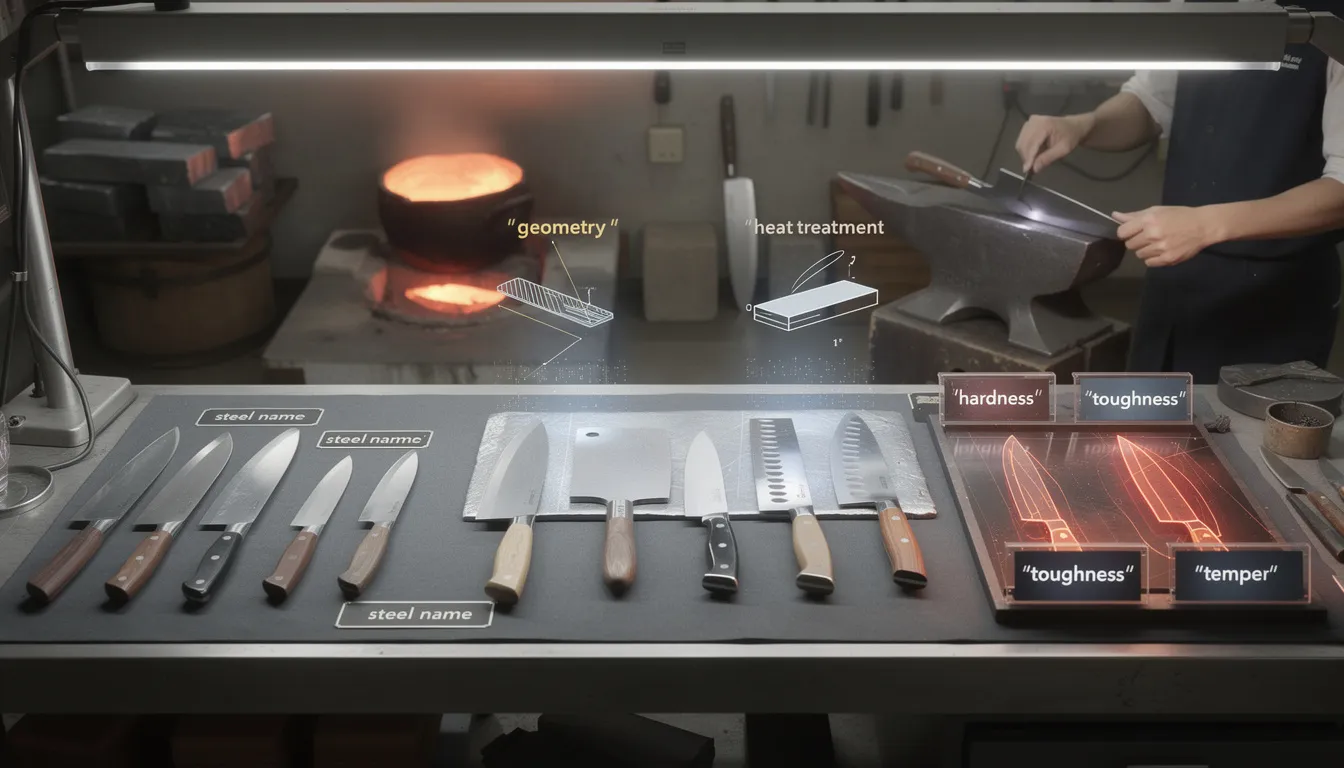
In 2026, there’s more agreement that a “steel name” is only part of the story; geometry and heat treatment decide how a knife behaves day to day. Traditional routes include tamahagane (from Japanese smelting tradition) and wrought iron (fibrous iron) for cladding, plus forge-welded damascus construction. Patterned steel can look dramatic, but the practical value often comes from lamination behavior: a hard edge core with tougher outer layers that help resist chipping and make thinning more predictable over years of real work.
In MG Forge work, the choice usually starts with kitchen reality: lots of acidic produce suggests accepting patina and picking finishes that are easy to maintain, while high-volume line cooking points toward a grind that releases ingredients cleanly even when the knife isn’t babied between tickets. Damascus can be gorgeous, but it also makes scratch patterns and refinishing choices more visible—useful info before you chase a mirror polish and then meet your first stainless scrubber.
What makes a bunka feel “sharp” beyond the edge?
“Sharp” is partly the apex, but mostly the road behind it—the grind and spine-to-edge geometry. A slimmer bunka with a tighter spine-to-edge angle will fall through onions like it’s being pulled forward, yet that same thinness can punish sloppy technique on hard product. This is why bunka knives tend to reward cooks who chase sharpness not just in the blade, but in their hands.
Heat treatment is the quiet partner here: done well, it supports a crisp edge that stays stable; pushed too hard, it can go brittle at the tip where the cross-section is smallest. In the shop, a bunka heat treat is often tuned around intent—more “fine work and clean cuts” than “survive anything.” It’s also why two bunka knives with the same length can feel wildly different once you start to cut.
How does care and culture connect to “bunka”?
Bunka (文化) means “culture” in Japanese and points to a range of cultural ideas, from tradition to modern innovation. There’s a tidy kitchen parallel: maintenance is culture, too—small habits repeated until they’re automatic. A bunka rewards that routine: wipe during acidic prep, dry before storage, and don’t punish the edge with bad habits or bad surfaces.
Bunka no Hi (文化の日) is Japan’s national Culture Day, celebrated annually on November 3rd, promoting culture, the arts, and academic endeavors while commemorating the announcement of the post-war Japanese constitution. Knife culture sits in that same mix of art and discipline—especially when the blade carries a fine pointed tip that demands respect. One more cultural note: the Bunka era (1804–1818) is remembered as a renaissance period in late Edo, with a resurgence in traditional arts and early assimilation of Western ideas; it’s a reminder that “traditional” tools still evolve with time, style, and how people cook.
What is a Bunka?
A Bunka is a versatile Japanese all-purpose knife with a wide blade and a distinctive kiritsuke-style k tip for precise slicing and detail work. It typically falls in the 160–190 mm length range, often around 165–180 mm. It’s especially strong at push cutting vegetables and careful tip work on proteins.
What does the word Bunka mean?
Bunka (文化) means “culture” in Japanese. The term can refer to cultural or civilization concepts in different contexts, including modern innovations and traditional aspects. It also appears in names like Bunka no Hi, Japan’s Culture Day on November 3rd.
What is the difference between a Bunka and a Santoku?
Both originated as general-purpose knives and usually share similar lengths (about 160–190 mm). A santoku has a flatter edge with a gently curved “sheep’s foot” tip that’s more forgiving for general prep. A bunka is generally slimmer, and its pointed k tip is better for precision cuts, but that tip is also more fragile for heavy tasks.
What is Bunka Fashion College?
Bunka Fashion College, established in 1923, is unrelated to kitchen knives, but it shares the same “bunka” word rooted in culture. The name reflects a focus on creative craft and design—another side of Japanese material culture.
How do bunka knives compare in style and motion to santoku knives on a cutting board?
Among knives in Japan, bunka sits close to santoku knives in versatility, yet the differences become clear on a cutting board: the wide blade and flat-ish profile favor push cutting, chopping vegetables, and nimble detail tasks where precision and control matter, while a chef's knife approach based on rocking motion can micro-stress the front third and change how the edge feel over time and years of work. As a double bevel option, bunka is built with a pointed k-tip and stable heel for fine cut and sashimi starts on fish and meat, but it is less ideal for heavy stock work than gyuto, and compared to nakiri it offers more tip control; the handle, profile, style, and history tie to a versatile tool that makes prep great when motion stays straight and technique is clean, which is why cooking choices often add context about ingredients, tasks, and list comparisons (bit) even when the focus is simply on what makes a knife behave. References sometimes include seki kanetsugu for category context, and in a workshop note MG Forge may highlight that geometry, not just names, decides outcomes (compared; years; time; work; list).