Deba: what makes it different and how to use it
What makes a deba different?
A deba is Japan’s fish butchery knife: heavy at the heel, precise at the edge, and made to ride close to bone without getting precious about it. In real kitchen time, that means one knife can cover the flow of fish prep—cleaning, scaling, portioning—so you’re not swapping tools every two minutes. The deba knife is traditionally used in Japan for filleting fish, and it feels like it: confidence in the hand, control at the tip, and the kind of “don’t worry, I got this” balance you notice on a whole fish. In 2026, more cooks want fewer, better tools, and deba fits that “one serious knife for one serious job” mindset.
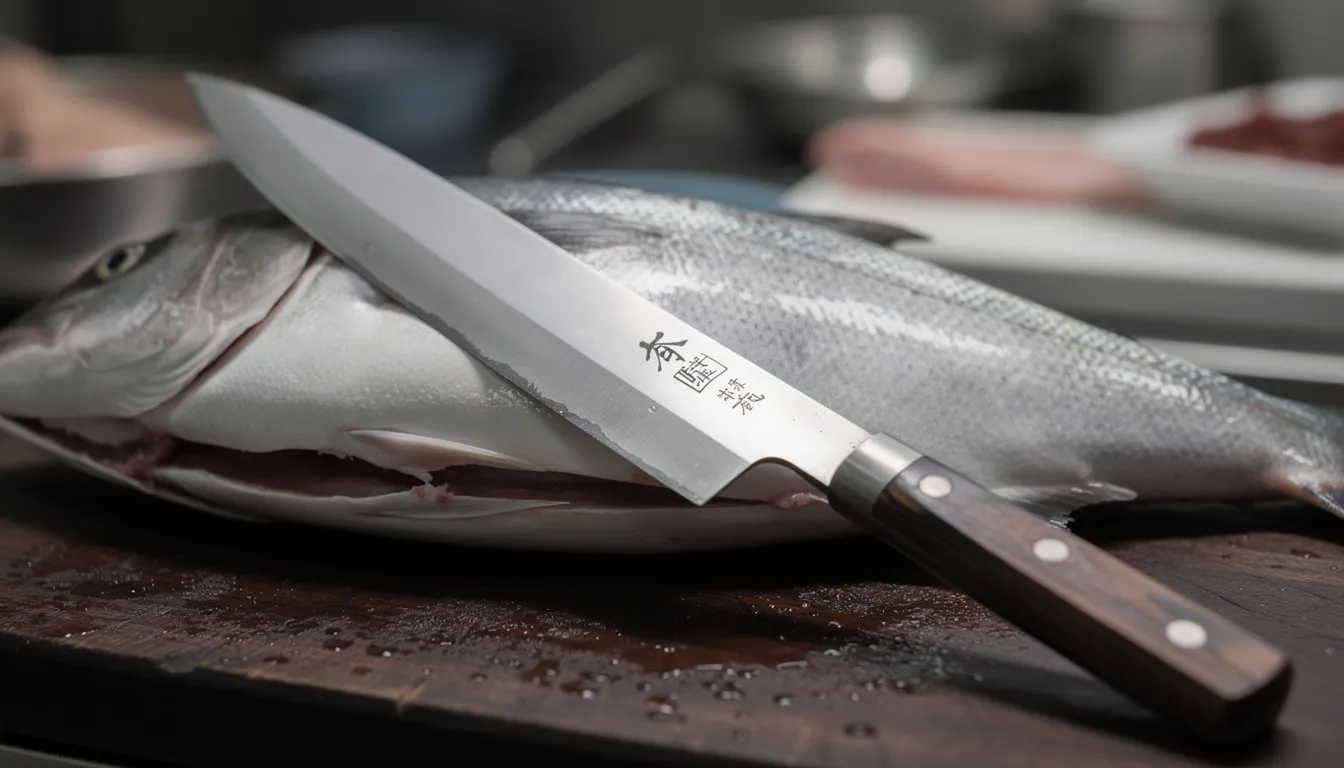
Why are deba knives so thick?
Most deba knives come with a thick spine and a stout grind because they’re designed to meet bones, not politely avoid them. Deba knives are thick and stout, making them suitable for cutting through fish bones around collars and rib cages, where a lighter blade would hesitate. Their weight also matters for the ugly-but-necessary part: the heavy heel helps with fish heads and breaking down frames when you’re building stock, without turning the board into a stress test.
There’s a very specific motion many pros repeat for consistency: head removal using the heel means cutting through the spine at the joint behind the pectoral fin, using controlled force rather than a wild swing. Still, the line matters. The deba knife is not recommended for chopping through large bones because chipping is real, so think fish frames and poultry joints—not beef femurs or heroics. When you respect that boundary, the knife stays strong instead of becoming an expensive lesson.
How does single bevel geometry change cutting?
A deba is typically single bevel, and that geometry changes how it steers through fish in a way you can feel immediately. Deba knives are ground on one side only, so the “one-sided wedge” naturally guides your cut along bones when your technique is clean. Flip it over and you’ll see another key detail: the concave back, or Urasuki, which reduces drag and helps prevent food from sticking—huge when you’re filleting something slick and small that wants to slide away at the worst moment.
This is also why deba can feel “sharp in a different way.” Clean cuts protect texture and flavor in fish flesh, especially around skin-on sections and pin-bone zones where tearing is obvious. In the MG Forge shop, this is where trade-offs get real: a slightly thicker edge holds up to bone contact and pressure, but it asks for deliberate angle control on the stones and better precision in your hands. Harder steel isn’t automatically better if the bevel is too thin for the job.

What materials and sizes matter most?
Steel and construction shape how a deba behaves before heat treatment and grind even enter the conversation. In Japanese-style forging, materials like Tamahagane, fibrous iron cladding, and forge-welded damascus (including modern Damascus steel patterns) each change feedback and durability: cladding can soften the feel on stones, while a harder core can keep a crisp apex longer. The point isn’t decoration alone—pattern-weld can look wild, sure—but the practical goal is edge stability with toughness when the blade taps bones during routine filleting.
Sizing is the easiest regret-prevention tool. Deba knives come in blade lengths from 105mm to 330mm, with 180mm recommended for home cooks—long enough to work confidently, short enough to stay controlled on the board. There are also multiple types, sold in formats that match different workflows: Mioroshi Deba, Ai-deba, and Ko-deba are common, and the names aren’t just tradition, they’re clues about intended use and feel. Some variations go even further; Fugu-deba is used to handle the bones of blowfish without chipping, which tells you how seriously Japan takes “right geometry for the right fish.”
One more 2026 reality: provenance questions are up. The deba knife is tied to origins in japan, particularly Sakai city in Osaka, and buyers increasingly ask not only what steel, but what grind, what heat-treat intent, what finish—and why. At MG Forge, that craft literacy is a good sign, because it pushes the conversation toward performance instead of marketing.
How is a deba kept sharp and safe?
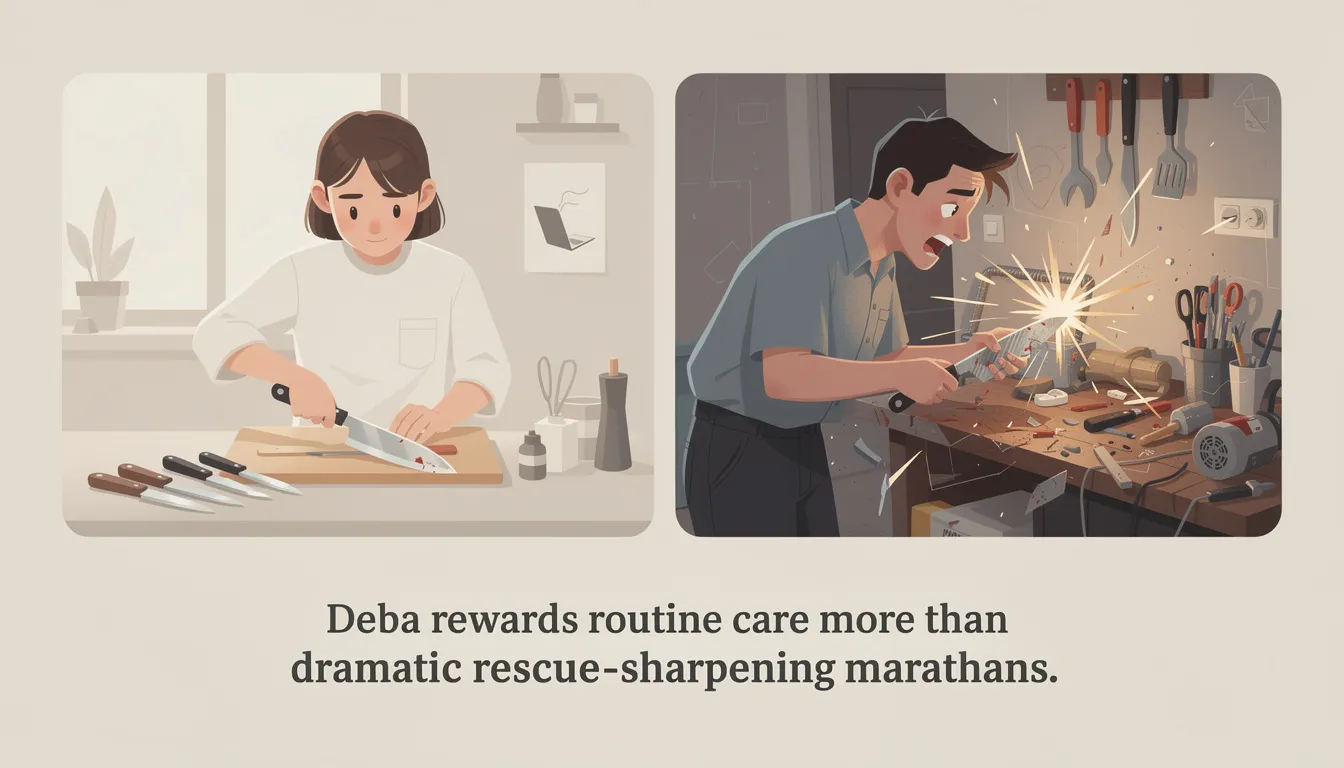
Deba rewards routine care more than dramatic rescue-sharpening marathons. It’s best to sharpen the deba knife each time before filleting fish to maintain the edge, even if that’s just a few light passes on a fine stone. Keep angles consistent (many single-bevel users hover around roughly 10–15° on the beveled side), then deburr gently on the flat side so you don’t wreck the Urasuki’s benefits. Think of it like a filter for bad habits: if your angle is sloppy, the knife tells you immediately.
In use, let mass and weight do work instead of overmuscling it. Deba knives are used to fillet fish into three pieces and to cut off the head, so the flow tends to be: head off, collar work, three-piece filleting, then portioning. Yes, a deba can stretch beyond fish—deba knives can also be used for breaking down poultry and other proteins—but the safe zone is joints and cartilage, not heavy bone chopping. And if you use it on dense vegetables, it can handle solid ingredients like Kabocha pumpkins, as long as the cut is straight and controlled, not a twisting pry that risks breaking the edge.
What is a Deba?
A Deba is a heavy, usually single-bevel Japanese knife designed for breaking down fish with control. It’s built to work around bones and joints while still delivering a clean, precise cut on the fillet, which is why it’s a staple in seafood prep. It performs best with deliberate technique, not brute chopping.
What does Deba mean in English?
“Deba” is commonly translated as “pointed carving knife” or “carving knife,” but that’s a little misleading in practice. In kitchen use, it refers to a Japanese fish butchery knife with a thick spine and a powerful heel, built for filleting and head work. The meaning is more about the role than a literal one-to-one English term.
What do you use a Deba for?
A Deba is used for the full breakdown of fish: scaling, cleaning, removing fish heads, and filleting. It’s also practical for making stock from frames, since the heel can work through joints and smaller bones without drama. Some cooks also choose it for poultry joints or dense vegetables when a heavier, thick knife feels safer and more controlled.
What does my Deba mean?
Most often it refers to markings on the blade: the maker’s name, workshop, or steel series, typically in kanji. Those stamps can hint at whether it’s single bevel, what region in japan it comes from, or which line it was sold under. If the markings are unclear, a close photo of both sides (plus the tang/handle area) usually makes identification much easier.
Why is a deba considered a thick, heavy knife for whole fish work?
A deba is a knife designed for whole fish prep, known for a thick blade and a thick spine that stay strong near bones, where weight at the heel helps with breaking and controlled force while keeping precision at the edge; in practice, the blade excels at filleting cleanly through flesh under pressure, supports remove steps like head work, and can help build stock from frames without undue chipping when used correctly, though it is commonly not for heavy meat bone chopping beyond fish and poultry joints. Options like western deba and other types are sold in different blade lengths and length ranges to fit time and choose preferences, with blade lengths often recommended around home cooks needs for control and feel; steel choices matter, and japan traditions (including osaka) shape what is called a proper deba in seafood workflows, where small technique details act like a filter against misuse and the knife remains a reliable tool to use in the cart of fewer, better essentials—as MG Forge notes when discussing geometry and upkeep.