Sakimaru knife: what it is and how it slices sashimi
What is a sakimaru knife, really?
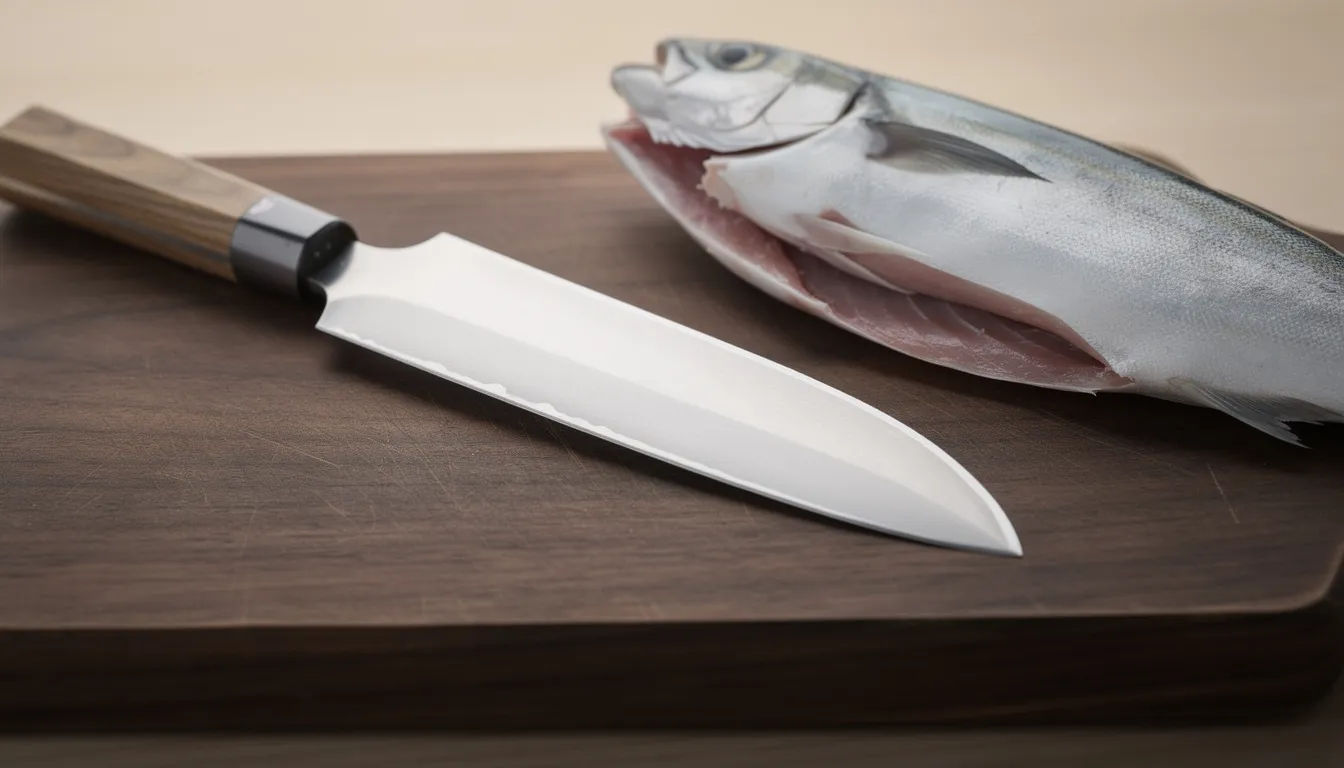
A sakimaru knife is a long, single bevel Japanese slicing knife made for clean, one-stroke cuts through delicate fish. Think of it as a japanese knife built to make sashimi look effortless (your wrist may disagree at first). It’s defined by a katana-like curved tip and a mostly flat profile, which affects how the blade tracks through a fillet and how the edge releases from the cut. Most blade lengths land around 240–330 mm, with the practical “sweet spot” often being 270–300 mm for sashimi.
Why does the tip shape matter?
The Sakimaru features a rounded tip that favors a smooth pulling motion when slicing or filleting fish. That swept point helps start a long draw cut without the tip digging in, especially on softer flesh where the first contact can make or break the surface. Done properly, it’s how you get clean, single-pull slice results on sashimi without tearing the meat, assuming the edge geometry and sharpness are dialed in.
How does a single bevel change cutting feel?
This is a single bevel knife traditionally used by master sushi chefs, and the grind is the entire personality. Single bevel geometry can “steer” a bit, so the knife rewards calm wrist alignment and consistent pull speed rather than brute force confidence. In the shop, a common micro-adjustment is keeping edge angles conservative—roughly 10–15° on the beveled side—so the blade moves through sashimi cleanly and doesn’t cling to the cut.
Where does it sit among Japanese knife shapes?
It helps to place the Sakimaru next to a normal japanese knife lineup so you don’t ask it to do a gyuto’s job and then blame the tool. A gyuto (often 210/240 mm) is a double-beveled all-purpose knife for general kitchen prep, while the sakimaru takohiki leans into long slicing cuts instead of push-chopping herbs or cracking through dense vegetables. A deba is designed for butchering and working through fish bones, which is basically the opposite mission: the Sakimaru’s blade is precision first, not impact tolerance.
A quick, practical comparison:
Sakimaru / sashimi knife: single bevel, long pull slices, fish-focused.
Gyuto: double bevel, general prep, faster board work.
Deba: thick, strong, bone and head work on fish.
Petty (utility): small detail knife, trimming and in-hand work.

What’s the deal with Sakimaru Takohiki and octopus slicing?
The Sakimaru is often compared to the Takobiki, which has a squared tip and is traditionally used for slicing octopus. The sakimaru takohiki blends the long, flat slicing feel with a more flowing Sakimaru-style point, which can make draw cuts feel smoother and more forgiving. That combo is also why some kitchens treat a sakimaru takohiki as a space-saving slicer with a little extra control, even though it still strongly prefers fish over hard produce.
What steel and finish choices show up in 2026?
In 2026, two trends are easy to spot: people want clearer steel provenance, and they want less drama during service. The sakimaru takohiki is often crafted in stainless steel choices such as Ginsan or Aogami, depending on the maker and the feel they’re chasing on stones. Stainless steel reduces worry in a wet station, while carbon-leaning options can offer a different bite and feedback (and yes, they demand stricter drying to avoid rust).
From the forge side, the usual vocabulary still matters: tamahagane, fibrous iron claddings, forge-welded damascus, and pattern-welded “Damascus” all show up in conversation. At MG Forge, these decisions usually come down to one honest question: should the blade prioritize easy care with stainless steel around constant water contact, or chase maximum tactile sharpness and stone feel for a dedicated sashimi workflow? There’s no magic answer—only a better match for your kitchen.
(Primary reference for heat-treatment background: ASM International overview material is a solid starting point: https://www.asminternational.org/)
When does it become a “tuna knife” or a status piece?
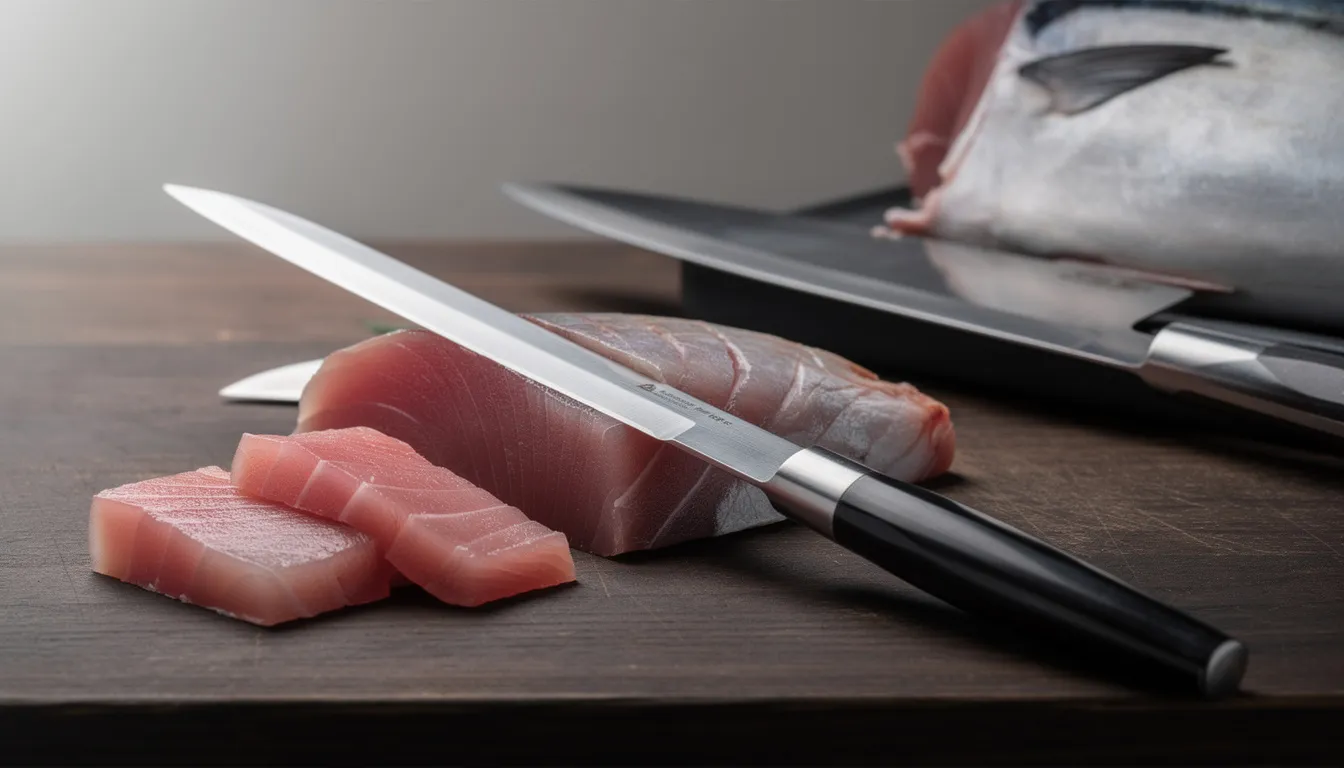
A Sakimaru is respected in professional sushi bars, and its silhouette can read like a quiet flex because it’s instantly recognizable. Still, it’s not automatically a tuna knife in the heavy-duty breakdown sense—big tuna work usually calls for more robust tools and techniques, while this knife shines when portioning and presenting clean slices. The long, delicate blade is for finishing: smooth surfaces, crisp edges, and minimal cell damage on sashimi and other fish cuts.
What care keeps the edge honest?
Daily habits beat fancy accessories, and a Sakimaru will absolutely report your bad decisions. Always handwash immediately after use with mild soap and warm water, then dry completely with a clean, soft cloth to reduce moisture-related rust risk—yes, even with stainless steel, because “stain-less” isn’t “stain-never.” Never put this knife in the dishwasher, and don’t let it soak around other steel tools where contact dings the edge.
Store it in a knife block, magnetic strip, or a dedicated blade cover or sheath, because a single bevel edge doesn’t enjoy rattling around in a drawer like loose stock in a shipping box. If you’re the “I’ll store it later” type, at least keep the tip protected and the blade free of moisture while you do whatever it is you do.
For maintenance, regular touch-ups keep sharpness consistent, but keep expectations realistic. A ceramic or steel honing rod can help maintain bite between sharpenings, yet true performance comes back on stones. When the knife stops responding, sharpen on a whetstone (or hand it to a pro) and keep the single bevel flat, because that’s the difference between “glides” and “grabs” during sashimi prep.
One hard rule from both kitchen and forge: don’t use it on bones, frozen foods, or very hard items. Thin slicers hate impact, chips are annoying, and repairs steal blade life. Treat it like the specialized tool it is, and it’ll keep delivering exceptional sharpness instead of surprise heartbreak.
What is a Sakimaru knife used for?
A Sakimaru knife is used for precision slicing of fish, especially for sashimi-style cuts made in a single pulling motion. Its long blade supports clean, continuous slice results that keep the surface glossy and intact, and the graceful blade profile helps maintain a steady line through the cut. It’s not meant for bones or frozen foods, and it’s happiest when used by right handed chefs who can take full advantage of the traditional single bevel geometry.
What is the difference between Yanagiba and Sakimaru?
The Yanagiba has a more pointed tip, while the Sakimaru features a rounded, katana-like curved tip that changes the entry and pull of the slice. Both are single-bevel fish slicers, but the Sakimaru’s tip shape tends to feel smoother on long draw cuts and can offer a touch more control right at first contact. Same core task, similar technique—different tip geometry, different feel.
What are the top 5 Japanese knife brands?
I can’t list “top 5” brands without bringing in other companies, and this review stays focused on japanese craftsmanship rather than rankings. It’s more useful to compare quality by grind consistency, heat treatment approach, steel choice (including how stainless steel is handled), and the maker’s sharpening and care guidance. If you’re building a cart for your first serious japanese knife, focus on profile, blade length, and sharpening support—those features make a bigger difference than chasing an advertised list.
What knives does Gordon Ramsay actually use?
Publicly, Ramsay has been seen using a mix of Western-style chef knives and Japanese-style blades depending on the task, but specific, current “actually uses” claims shift with projects and sponsorships. The practical takeaway is the bundle concept: one chef knife for general prep, a small utility knife for trimming and detail work, and a dedicated slicer for proteins. If sashimi is on the menu, that’s where a dedicated sashimi knife like a Yanagiba or sakimaru knife makes sense—no compromise, just the right tool for the cut.
How do blade lengths and single-bevel design affect control, efficiency, and care in a sakimaru knife?
Choosing blade lengths is part of what signals exceptional quality in a fish slicer, because the style and design of this tool are built around one pull; when used properly, the long profile helps control the first contact and keep the cut true, with the form staying stable from heel to tip for a clean task without compromise, while fat and soft flesh benefit most from that smooth entry. In review terms, the difference is not just art and artistry but how hardness and grind geometry perform in real preparation, so chefs often treat it as an upgrade within a bundle rather than an advertised status item when building a cart: a sakimaru for proteins, a smaller blade for trimming, and something else for vegetables. Handle feel and reach matter for an ideal, ready motion, and technique is to apply steady pressure rather than force to keep the edge perfect and true; true results also depend on care—after use, store the knife dry to protect quality, maintain control, and preserve efficiency, whether ordered from MG Forge or another maker (stock; focusing; similar; purposes; order; long).