Yanagiba knife: uses, single bevel, and how to choose
What is a yanagiba knife, really?
A yanagiba knife is a traditional Japanese sashimi knife built for slicing raw fish in one clean pull. It’s long, slim, and tuned for precision instead of brute force. In practice that means less tearing, cleaner faces, and sashimi slices that can be paper-thin or intentionally thicker for presentation. This style is closely tied to Japan’s Kansai region, especially Osaka and Kyoto.
You’ll also hear it called a sushi knife, because it’s used for sashimi and toppings for sushi rolls. Either way, the mission stays the same: clean cuts that keep raw fish glossy and intact, not chewed-up. That’s why chefs treat it as a specialist tool, not a “one knife to rule them all” situation. In 2026, more home cooks are buying specialists like this because they’re finally comfortable maintaining them (or at least admitting they should).
Why does the blade geometry matter?
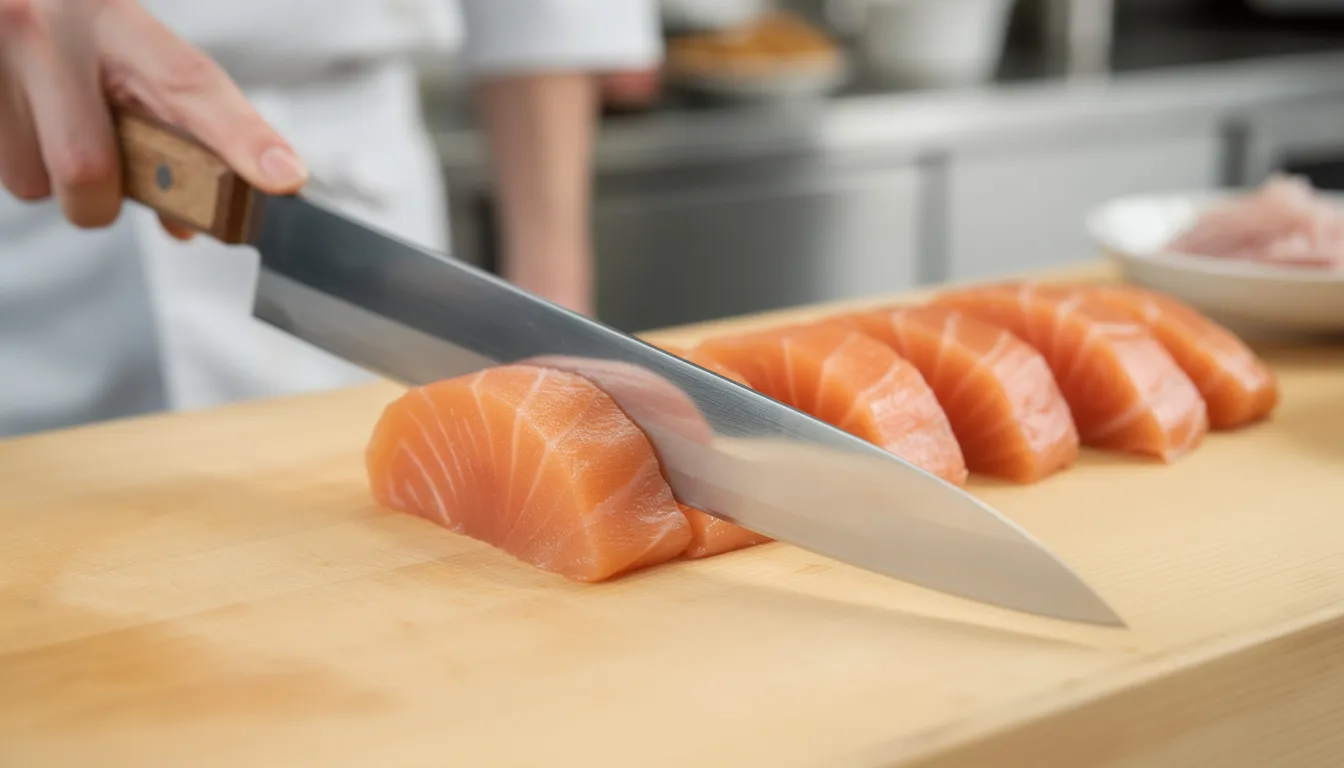
The yanagiba’s long, slender blade is the whole point. Many blades live in the 240–300mm range, and it’s common to see length up to about 330mm, because the knife is meant to finish a slice in a single motion. That length gives you room to draw through the fish instead of chopping down into it. The result is calmer cutting and a cleaner surface on the sashimi.
The edge is typically a single bevel blade, meaning only one side is sharpened like a chisel. That geometry helps the knife track straight and release food predictably, especially when the grind and ura (the hollow on the back) are well executed. It also means technique matters more than force. The tradeoff is simple: a single bevel rewards clean habits and punishes messy ones.
How does a single bevel change use?
Single-bevel yanagiba are often made from carbon steel knives, because carbon steel can usually be sharpened to a finer edge than stainless. That fine edge is a big reason sashimi looks “cut” rather than “torn.” But the same thinness that makes it pretty also makes it fragile. A yanagiba knife is not suitable for cutting through bone or hard materials, because chipping is a real risk.
It can handle side tasks, just not the heavyweight ones. Skinning fish and trimming fish can be done with a yanagiba, though it’s not designed for tough breakdown work. In modern kitchens it also shows up as a slicer for boneless cooked meat, like carving roast beef or portioning proteins for plated dishes. The knife is still doing the same job: long, quiet slicing with minimal damage to the flesh.
What steels and finishes show up most?
Across the market, yanagiba knives come in both stainless and carbon steel, and price often follows that choice. For traditional builds, white steel is a common reference point because it sharpens very cleanly and gives clear feedback on the stone. In the forge, that crisp feel usually comes from simple chemistry plus careful heat treatment, not branding. The same steel can feel dull or lively depending on hardening and finishing.
Traditional Japanese metallurgy also shows up in materials like tamahagane, fibrous iron (often discussed as wrought-like), and forge-welded laminations. Forge-welded damascus and Damascus steel aesthetics can reflect real craftsmanship, but the practical gain depends on construction. Softer cladding can add toughness and make thinning easier later, while a hard core carries the edge retention. At MG Forge, this is where the blade’s personality gets decided—before polishing ever starts.

How are size, handedness, and price picked?
Most yanagiba are made for right-handed users, and left-handed versions are usually custom-made and more expensive. The reason isn’t hype; the blade profile and bevel orientation change, so the grind work changes too. Some models are specifically designed for left-handed users and don’t just “flip” the bevel—they change how the knife steers through food. If a lefty uses a right-handed single bevel, it often feels like the cut wants to drift.
Length is the next practical choice. Typical yanagiba lengths run from 240mm to 300mm, and the longer end helps finish cuts in one pull—especially on wider boneless fish fillets. The typical price range sits around $100 to $300, but prices vary significantly based on material and craftsmanship. A simple stainless build can be lower-stress to own, while a carefully forged carbon steel blade pushes cost up because time and precision go up.
A quick picking checklist helps:
240mm: smaller fish, tighter prep stations, home boards
270mm: common “do-most-sashimi” length for many cooks
300mm+: large fillets, confident technique, more space
What technique makes a yanagiba shine?
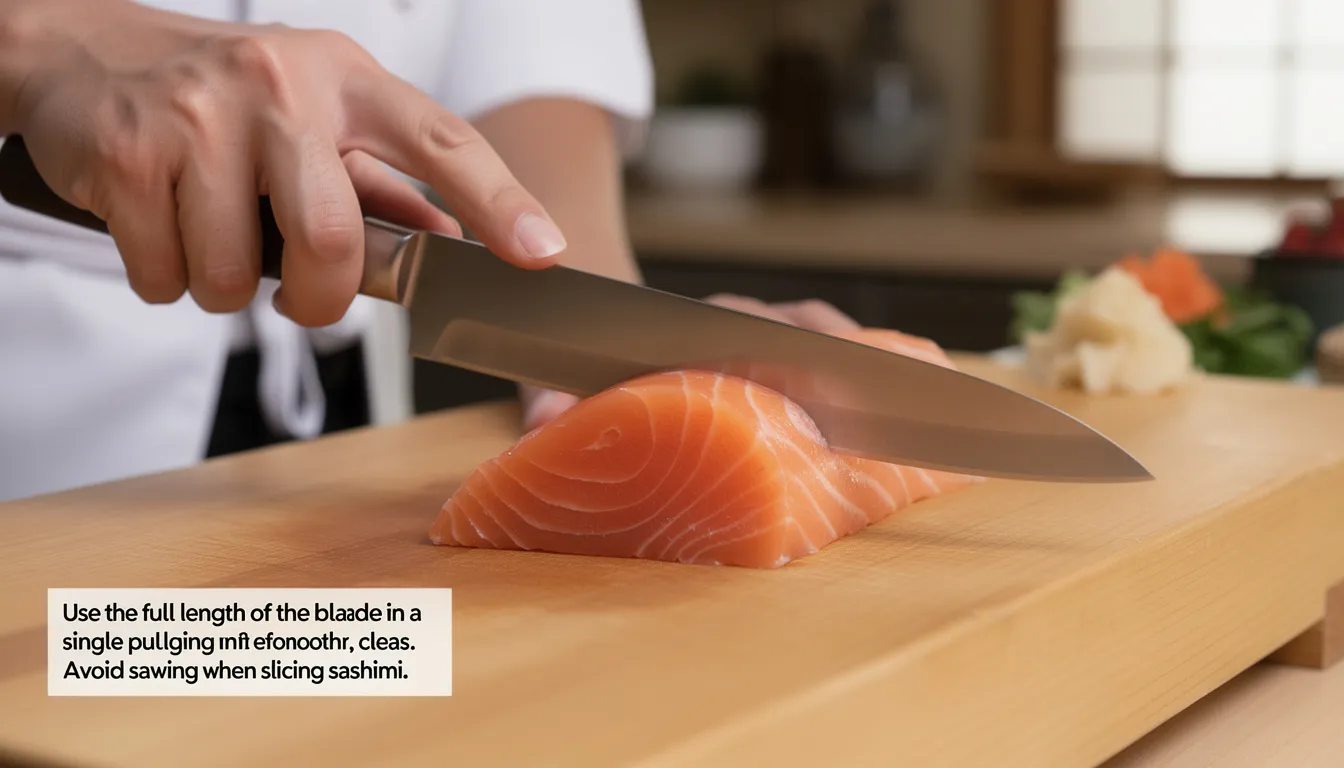
A yanagiba knife is designed around one idea: use the full length of the blade in a single pulling motion. That long pull is what creates the smooth, clean cut on raw fish. Sawing back and forth is exactly what this sushi knife is trying to prevent, so avoid sawing movements when slicing sashimi. If the knife is sharp and the angle is correct, the fish should separate almost silently.
Grip matters more than people expect. A stable hold is usually a firm handle grip plus a pinch near the blade’s base with thumb and index finger for control. That pinch steadies the long blade and keeps the edge from wandering mid-slice. In the shop, it’s the same logic used when checking tracking on paper or soft protein: if the hand is loose, the slicing line gets wavy.
It’s also worth noting the yanagiba is one of the “big three” in Japanese pro kitchens—along with deba and usuba—because each covers a different motion. Deba handles heavier fish breakdown, usuba handles straight vegetable work, and yanagiba handles finishing cuts for sashimi and sushi. Mix the jobs up and the edges pay for it.
How is sharpening and care handled?
A yanagiba needs specialized whetstone sharpening techniques because of the single bevel and the flat back side. A common baseline is sharpening on a whetstone at about 15 degrees, working only the beveled side carefully and evenly. The back side is treated differently—more about keeping it flat and clean than “adding a bevel.” This is why a sashimi knife can feel easy to maintain once it clicks, but confusing at first.
For routine maintenance, sharpening every 1–2 months is often recommended to keep performance consistent. Frequency still depends on board choice, workload, and whether the knife is used only for fish or also for cooked proteins. In a typical home kitchen, the bigger issue is not “too little sharpening,” but inconsistent angles and rushed deburring.
Care is straightforward but non-negotiable with carbon steel. Clean and dry the knife immediately after use to help prevent rust, and consider a light layer of oil for storage—especially on carbon steel knives. Hand washing is strongly recommended to avoid harsh detergents and high heat. A yanagiba can earn a stable patina over time; rust spots from sloppy drying are a different story.
A common workshop micro-case: a slicer comes back “mysteriously dull,” and it’s almost always a combo of micro-chips from hard contact plus a wire edge left on the stone. The fix is rarely exotic—slightly higher finishing grit, more deliberate deburring, and stricter rules about what the blade is allowed to touch. MG Forge sees this pattern a lot: great steel, avoidable habits. Beautiful cutting isn’t only about steel; it’s about discipline.
What is a Yanagiba knife used for?
It’s used to slice boneless fish fillets into sashimi and toppings for sushi with clean, smooth surfaces—classic sushi knife work. The long blade helps complete the cut in a single pulling motion, which minimizes tearing when slicing raw fish. It can also carve boneless cooked meats, but it’s not meant for bones or hard ingredients.
What knives does Gordon Ramsay actually use?
There isn’t one fixed, official list that can be verified across all his kitchens and shows. In practice, chefs at that level use a mix: a Western-style chef knife for general prep, plus specialists like Japanese knives (gyuto, petty, or a slicing-focused sashimi knife) depending on the station. The more useful takeaway is matching the knife to the task, not chasing a celebrity setup.
Are Yanagiba knives good?
Yes—when the job is sashimi, they’re excellent. The single bevel and long blade support smooth, precise slicing, and a well-made sashimi knife can deliver extremely clean surfaces on raw fish. They’re less forgiving than double bevel Japanese knives, and they can chip if used on bones or hard ingredients. “Good” really depends on whether you need a dedicated traditional japanese sashimi knife and whether you’ll maintain it.
Which is better Yanagiba or Sujihiki?
Yanagiba is better for traditional sashimi work thanks to its single bevel feel and purpose-built geometry. Sujihiki is usually double bevel, often easier for mixed kitchens, and typically more forgiving for varied proteins and day-to-day slicing. If the focus is raw fish presentation and clean sashimi cuts, yanagiba wins; if the focus is general slicing with simpler upkeep, sujihiki is often the safer pick.
How do yanagiba knife specifications affect slicing tasks and overall ease of use?
A yanagiba is commonly called a sushi knife for seafood finishing cuts, and its specifications style mainly reflects its single bevel edge rather than a double bevel approach, which changes sharpness, steering, and how correct technique prevents damaging delicate meat in plated dishes; practical details like spine thickness, weight, tip, heel, and size influence how the hand can hold the blade steady over time, and many cooks sort choices by what originated in the Kansai region and what feels ideal for their station, while a wooden saya helps protect the end in storage and reduces low-risk contact that can dull the edge, with care centered on disciplined drying and (aesthetics) like patina rather than rust; buying decisions also get shaped by review culture and shopping flow in a quick shop environment—checking sale pricing, adding to cart, comparing types, and balancing ease against performance—especially when MG Forge-style workmanship is valued for how it supports perfect pulls through ingredients.