
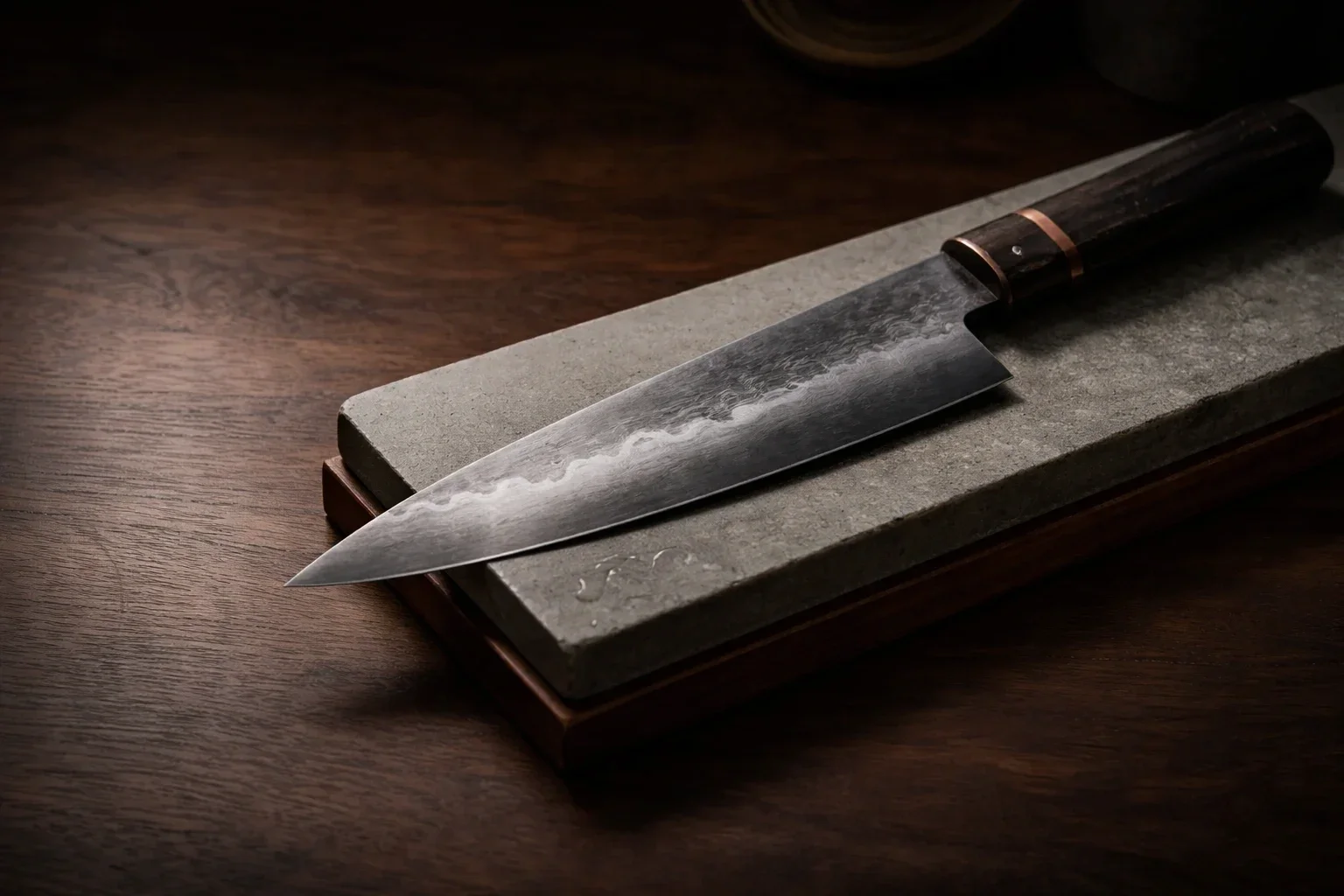
Guides & Notes from the Workshop
This blog is where I share practical explanations on Japanese kitchen knives, steel, geometry, care, and sharpening. No fluff. Just clear guidance based on real work at the anvil and the stone, so you can choose the right knife and keep it performing for years.
Sakimaru: what it is and how it slices sashimi
A blade that looks like a small sword but cuts with scalpel control—why does that matter on a fish board? This guide explains what a sakimaru really is, how a sakimaru takohiki differs in geometry and feel, and why technique matters for clean, single-stroke slices. You’ll also learn what to expect from common lengths (270–330mm), steels, and care.

Yanagiba knife: uses, single bevel, and how to choose
One clean pull can be the difference between glossy sashimi and torn fish. This guide explains what a yanagiba knife really is, why its long single-bevel geometry matters, and what it’s built to do. You’ll also learn how to choose length and handedness, plus the basics of sharpening and care.

Japanese deba knife: uses, types, and single bevel
Ever felt a knife “stay on rails” while working near bones? A japanese deba knife is built for breaking down whole fish—removing heads, opening joints, and pulling clean fillets without the blade wandering. This guide explains its geometry, main types, and how to choose length, bevel, steel, and care.
Deba: what makes it different and how to use it
Why does a fish knife need to be thick, heavy, and single bevel? This guide explains what makes a deba different, how it rides close to bone, and where it shines in real fish prep. You’ll also learn what to look for in sizes and materials, plus how to keep the edge sharp and safe.
Sakimaru knife: what it is and how it slices sashimi
What makes a sashimi slice look clean in a single pull? A sakimaru knife is a long, single bevel Japanese slicer with a katana-like rounded tip designed for one-stroke cuts through delicate fish. This guide explains how its geometry changes feel, where it sits among common Japanese knife shapes, and how to care for the edge.
Yanagiba sushi knife: what it is and how to use it
Ever wonder why sashimi slices look glossy instead of torn? This guide explains what a yanagiba sushi knife is, how its single-bevel geometry and urasuki affect the cut, and what that means on the board. You’ll also learn practical basics for sizing, use, sharpening, and daily care.
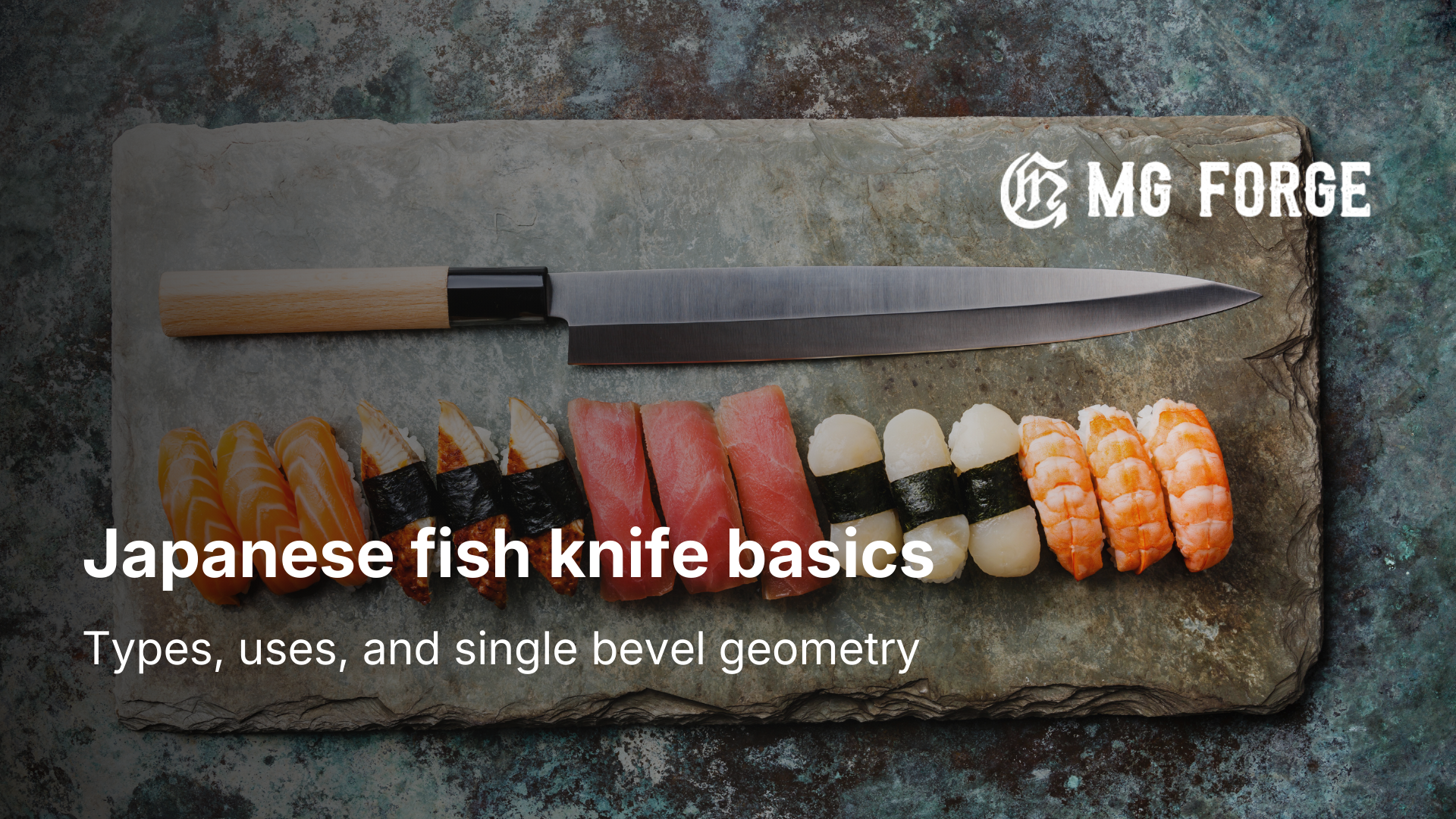
Japanese fish knife: types, uses, and key geometry
Fish shows every mistake: drag, tearing, and the glossy “paste” that comes from rough cuts. This guide explains what a japanese fish knife is, why geometry and single bevel grinds matter, and which blade fits each job—from breakdown to sashimi slicing.