
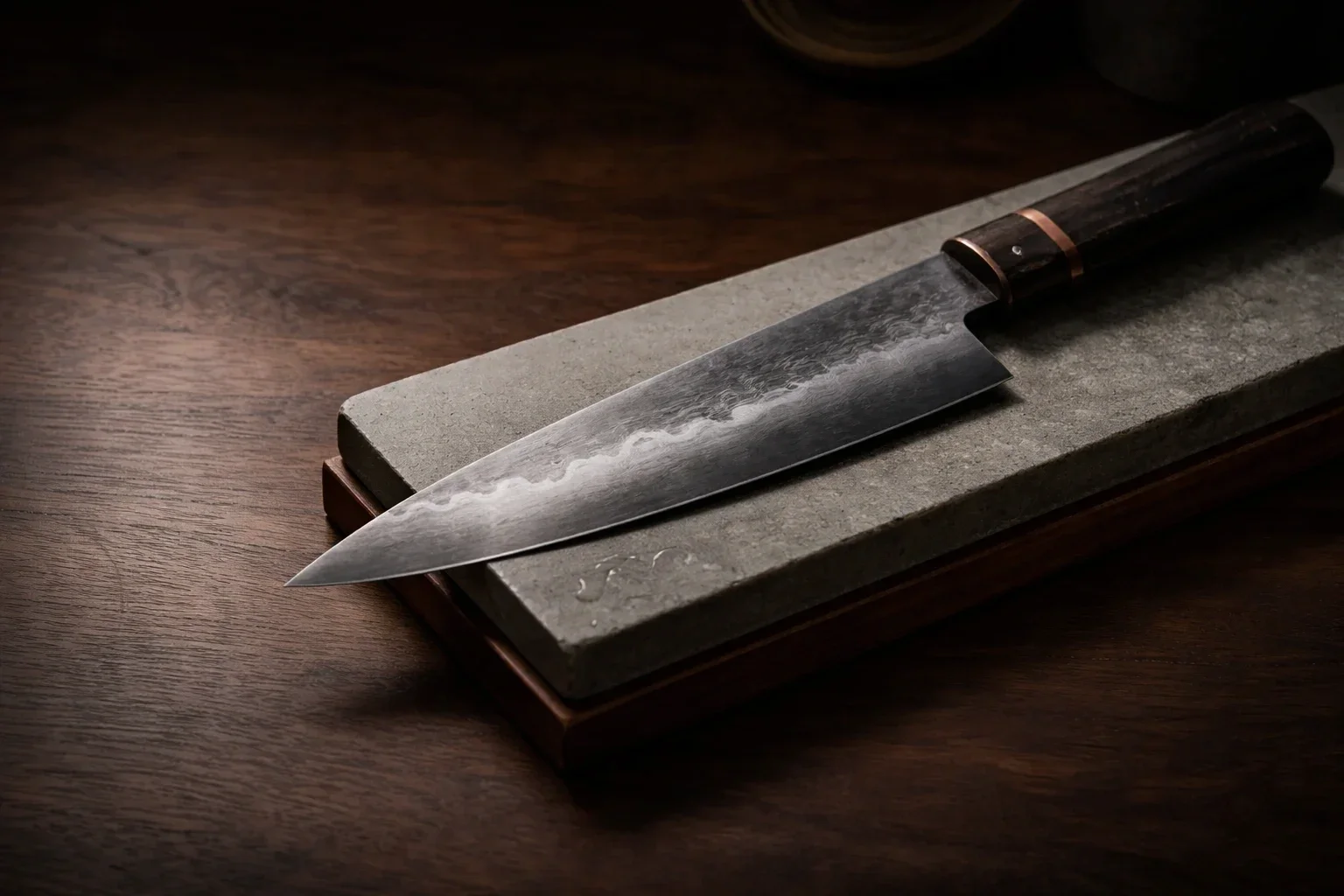
Guides & Notes from the Workshop
This blog is where I share practical explanations on Japanese kitchen knives, steel, geometry, care, and sharpening. No fluff. Just clear guidance based on real work at the anvil and the stone, so you can choose the right knife and keep it performing for years.
Tamahagane steel katana: why it still matters
Why does a tamahagane steel katana still matter in 2026—beyond whether it can cut? This guide breaks down how tamahagane is made, how the blade is built (including folds and hamon), and what trade-offs it brings versus modern steel.
Tamahagane steel: verdict, process, and real trade-offs
Is tamahagane steel a real performance upgrade, or mostly heritage you can feel and see? This guide breaks down how it’s made from iron sand in a tatara, why it varies by piece, and how forging, folding, and quenching shape its look and behavior. You’ll also learn where it matches modern carbon steels—and where it demands more skill, geometry discipline, and maintenance.
Tamahagane steel knife: worth it & how it performs
Is a tamahagane steel knife worth it—or just romantic hype? This guide explains what Tamahagane steel is, why it varies, and how that affects edge retention, sharpening, and maintenance. You’ll also see which knife styles fit Tamahagane best and where tradition matters most in real use.