
Guides & Notes from the Workshop
This blog is where I share practical explanations on Japanese kitchen knives, steel, geometry, care, and sharpening. No fluff. Just clear guidance based on real work at the anvil and the stone, so you can choose the right knife and keep it performing for years.
Higonokami knife: history, sizing, steels, and care
Why does a friction folder with no real lock still feel so usable? This guide explains what a higonokami knife is, where it came from, and how the design works in daily carry. You’ll also compare common sizes (75/100/120 mm), typical steels, and the basics of sharpening and rust care.
Kiritsuke knife: what it is and how to use it
A long, flat edge with a sharp k-tip can feel precise—or unforgiving. This guide explains what a kiritsuke knife really is, how it differs from a gyuto or santoku, and what the geometry is built to do. You’ll also learn how length (240–330 mm), bevel choice, and technique affect everyday performance.

Tamahagane steel: verdict, process, and real trade-offs
Is tamahagane steel a real performance upgrade, or mostly heritage you can feel and see? This guide breaks down how it’s made from iron sand in a tatara, why it varies by piece, and how forging, folding, and quenching shape its look and behavior. You’ll also learn where it matches modern carbon steels—and where it demands more skill, geometry discipline, and maintenance.
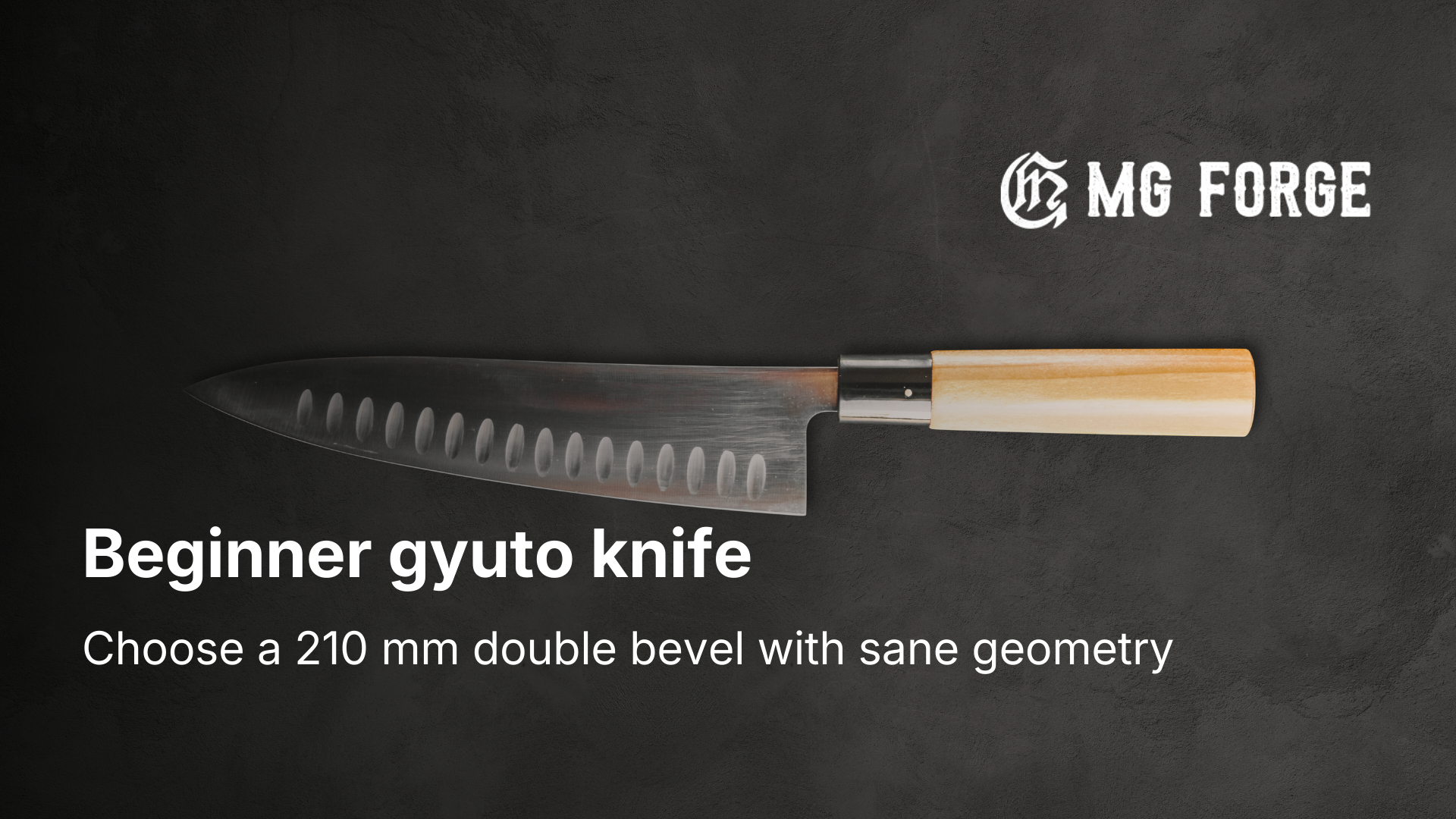
What is the best Japanese chef knife for beginners
A 210 mm gyuto is the “boring” pick that usually makes the most sense for home cooks. This guide answers what is the best japanese chef knife for beginners by breaking down blade styles, bevels, steels, and what to check before buying. You’ll also learn the common mistakes that chip edges or cause stains—and how to avoid them.

Tamahagane steel knife: worth it & how it performs
Is a tamahagane steel knife worth it—or just romantic hype? This guide explains what Tamahagane steel is, why it varies, and how that affects edge retention, sharpening, and maintenance. You’ll also see which knife styles fit Tamahagane best and where tradition matters most in real use.
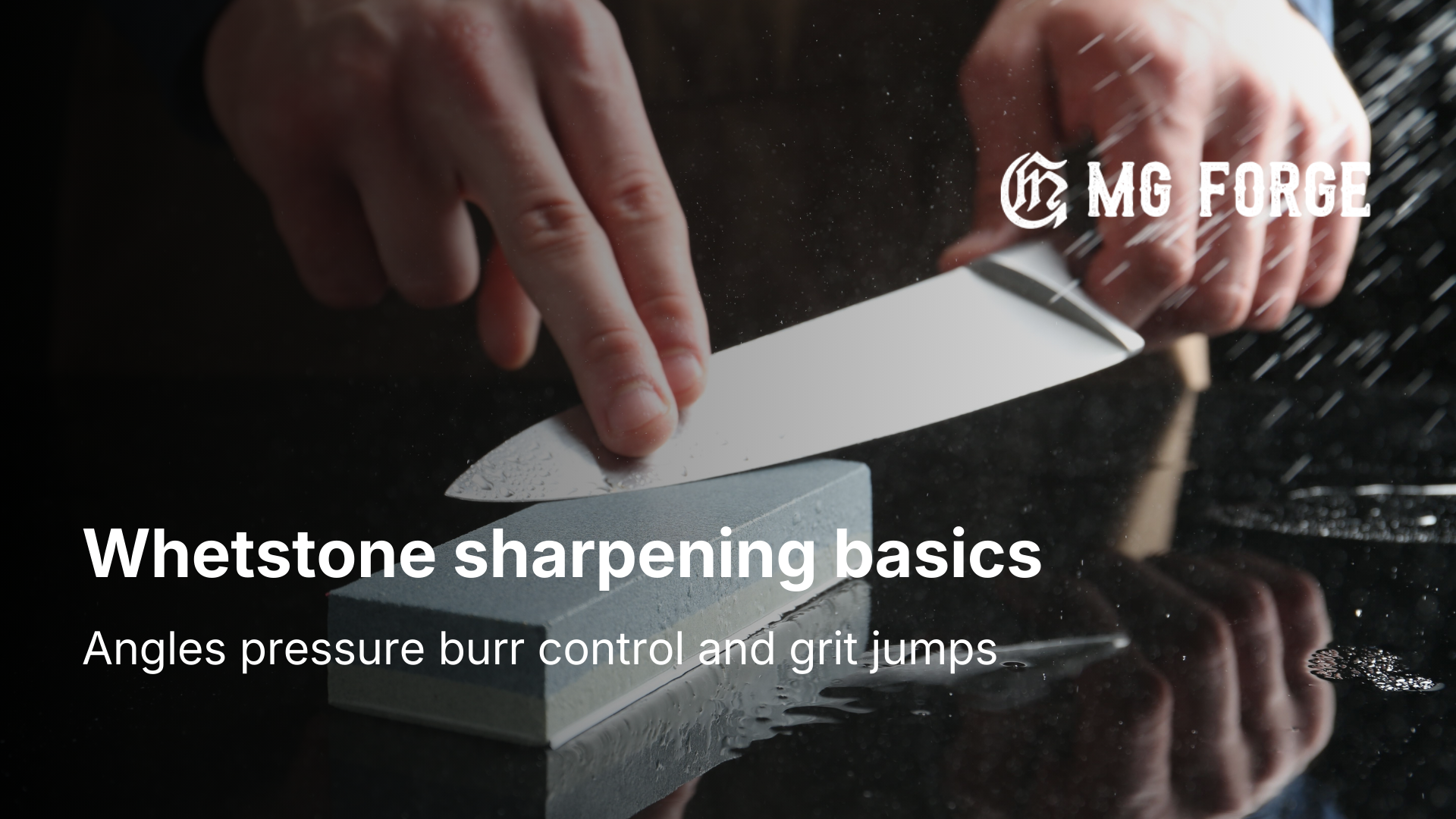
Whetstone sharpening tutorial: angles, burr, grit
Sharpness is mostly geometry: angle, pressure, and a clean apex- not “magic steel.” This whetstone sharpening tutorial shows how to choose grits, build and remove a burr, and keep consistent angles for double and single bevel knives.
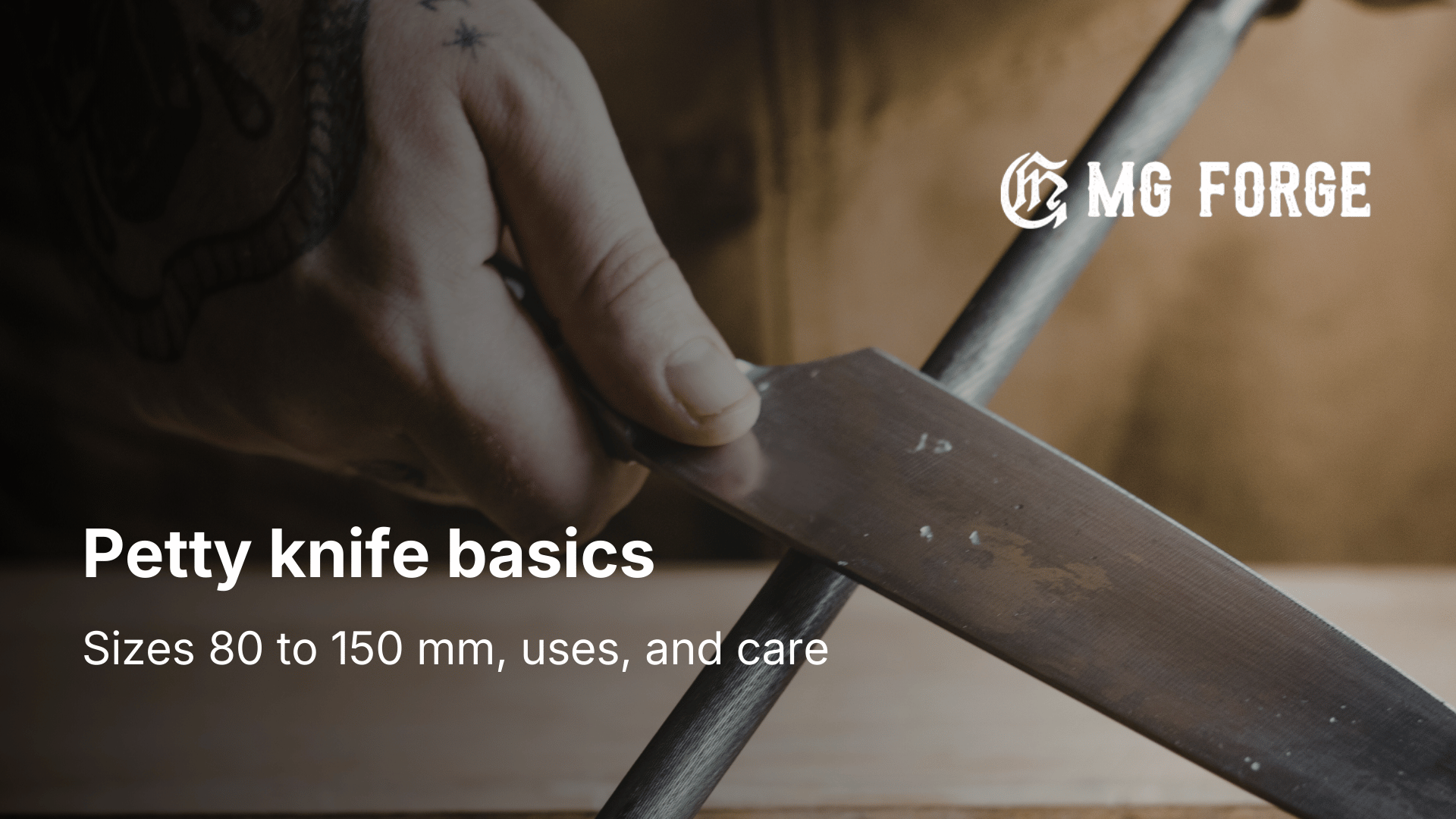
Japanese utility knife: petty, sizes, uses, care
Need a small knife that feels precise without being fussy? A japanese utility knife—often called a petty—sits between a paring knife and a gyuto for quick prep and detail work. This guide explains the sizes (about 80–150 mm), typical tasks, and what to avoid so the thin edge stays reliable.